

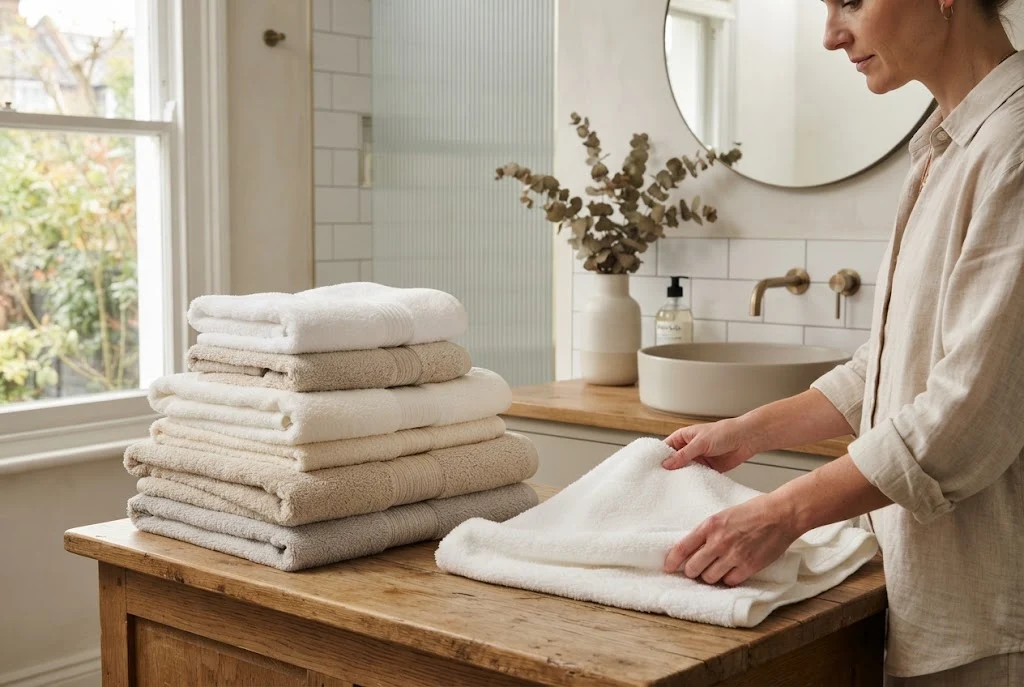
Learning how to keep towels soft is less about adding extra products and more about using the right washing and drying routine. Towels can gradually become stiff, rough or less comfortable when detergent builds up, the washing machine is overloaded or they are dried incorrectly. Fortunately, a few simple changes can help maintain their softness while keeping them clean and absorbent.
Whether you have new bath towels that you want to protect or older towels that have started feeling rough, the same basic principles apply. Wash them correctly, avoid unnecessary product build-up and make sure they dry thoroughly. With consistent care, towels can remain comfortable without sacrificing their ability to absorb moisture.
How to Keep Towels Soft Without Damaging Their Fibres
The first step in learning how to keep towels soft is understanding that softness and absorbency need to work together. A towel that feels extremely smooth because it is coated in fabric conditioner may not perform as well when drying your skin.
Towel fibres need to remain clean and relatively free from residue. That means using an appropriate amount of detergent, giving towels enough room in the washing machine and avoiding products that leave a heavy coating on the fabric.
It is also important not to treat every towel in exactly the same way. Always check the care label, particularly for towels made from speciality materials or blends. Cotton towels can usually handle regular machine washing, but the recommended temperature and drying method can vary.
How Do You Keep Towels Soft in the Washing Machine?
If you are wondering how do you keep towels soft during regular laundry, start with the washing machine itself. Overloading the drum is one of the easiest mistakes to make.
Towels become considerably heavier when wet. If the drum is packed too tightly, the towels may not move freely through the wash. This can affect cleaning and rinsing, while also increasing friction between the fabrics.
Leave enough space for the towels to move around during the cycle. You do not need to wash a single towel at a time, but avoid cramming a large pile into a machine simply because everything fits inside the drum.
Choose a suitable wash programme and temperature according to the care instructions. For everyday cotton towels, a standard cotton cycle is often appropriate, but the label should always take priority.
Use the Right Amount of Detergent
More detergent does not automatically produce softer or cleaner towels. In fact, using too much can leave residue behind, particularly when towels are washed in an overloaded machine.
Measure detergent according to the manufacturer’s instructions and adjust for the load size and water conditions where appropriate. If your towels regularly feel coated or stiff after washing, excessive detergent may be worth investigating.
A thorough rinse can also help when residue is a recurring problem. If your washing machine has an extra-rinse option, it may be useful for heavily loaded or particularly absorbent laundry, provided the additional water and cycle time are suitable for your household.
How to Keep Towels Fluffy When Washing Them
Knowing how to keep towels fluffy starts before you even press the washing machine’s start button. Separate towels from delicate garments and, where practical, wash them with similar fabrics.
Towels can produce lint, especially when they are new. Washing them with lightweight clothes can therefore be inconvenient and may transfer lint onto other fabrics.
It is also sensible to separate towels by colour. White towels can be washed with other suitable whites, while dark and coloured towels should generally be grouped with similar shades.
Do not use unnecessarily aggressive cycles simply because towels are thick. A suitable cycle with enough time for proper washing and rinsing is usually more useful than choosing the strongest possible programme.
Should You Use Fabric Softener on Towels?
One of the most important points when learning how to make my towels soft is understanding the difference between softness and absorbency. Fabric softener or conditioner can make fabrics feel smoother, but it can also leave a coating on towel fibres.
That coating may reduce how effectively towels absorb water. For bath towels, this can defeat the purpose of using a towel that is designed to soak up moisture.
For this reason, regular fabric softener is generally not the best solution when your goal is soft, absorbent towels. Instead, focus on correct detergent dosage, suitable washing temperatures and proper drying.
If you want to explore this issue separately, our guide on whether you should use softener on towels covers the relationship between fabric conditioner, towel fibres and absorbency in more detail.
How to Get Towels Soft Again
If your towels have already become rough, do not assume that they need to be replaced immediately. Several common laundry habits can contribute to stiffness, so correcting the underlying routine may improve how they feel.
First, check how much detergent you are using. If you have been adding more than the recommended amount, reduce it to the appropriate dosage. Then make sure the washing machine is not overloaded.
Next, consider whether your towels are being rinsed properly. Detergent residue can remain trapped within thick fibres if the load is too large or the machine is struggling to rinse effectively.
Drying also makes a significant difference. Towels that are left damp for long periods can develop an unpleasant smell and may feel less fresh even after washing.
If your towels have accumulated residue and you are considering a vinegar rinse, read our dedicated guide on washing towels with vinegar first. Vinegar is sometimes discussed as a way of dealing with laundry residue, but it should not be used indiscriminately in every washing machine or mixed with other cleaning chemicals.
How to Keep Towels Soft Without a Dryer
You do not need a tumble dryer to maintain comfortable towels. If you prefer air drying, the key is to give the towels enough airflow and space.
After the washing cycle finishes, remove the towels promptly and shake each one out before hanging it. This separates the fabric and prevents the towel from drying in a tightly compressed shape.
Hang towels where air can circulate around them. Avoid folding a wet towel over itself in a cramped indoor space because the thicker layers can take much longer to dry.
Outdoor drying can be particularly effective when weather conditions allow. If you are drying towels indoors, ventilation is important. A well-ventilated room can help moisture escape and reduce the time towels remain damp.
Air-dried towels may not feel exactly the same as tumble-dried towels. However, proper spacing, airflow and complete drying can still help maintain good towel condition.
How to Soften Towels in the Wash
If you want to know how to soften towels in the wash, resist the temptation to keep adding products. The washing process itself is usually the best place to start.
Use the recommended amount of detergent and select a suitable wash programme. Avoid overloading the drum and make sure the towels receive an adequate rinse.
It is also worth checking your washing machine settings. Some eco programmes use less water and may take longer, while other cycles are designed for different types of laundry. The best option depends on your machine, detergent and towel care instructions.
If your towels remain rough despite changing your washing routine, consider whether your water supply may be contributing to the problem. Hard water contains minerals that can interact with soap and detergent and may contribute to deposits on fabrics and appliances.
Rather than immediately changing products, make one adjustment at a time. This makes it easier to identify what is actually improving your towels.
How to Get Soft Towels Without Losing Absorbency
Softness should never come at the expense of performance. A good bath towel should feel comfortable while still absorbing water effectively.
That is why the best way to get towels soft is to maintain the fibres rather than coat them with products. Use appropriate detergent, wash towels at the recommended temperature and avoid unnecessary fabric conditioner.
Drying matters too. If you use a tumble dryer, follow the care label and avoid excessive heat. If you air dry, give the towel enough room for air to circulate.
Finally, do not store towels until they are completely dry. Even a small amount of trapped moisture can contribute to musty smells when towels are folded and placed in a cupboard.
How to Keep Towels Soft and Fluffy in a Tumble Dryer
A tumble dryer can help towels feel fluffy, but the drying cycle still needs to be appropriate for the fabric. Always follow the towel’s care label and the manufacturer’s instructions for your dryer.
Do not cram too many wet towels into the dryer. A heavily packed drum can restrict airflow and make drying less effective.
Once the cycle is complete, remove the towels promptly. Give them a shake before folding them. This can help prevent them from remaining compressed after drying.
Avoid relying on extremely high heat simply to make towels feel softer. Excessive heat can contribute to fabric wear over time. The aim is to dry the towels thoroughly while treating the fibres reasonably gently.
Why Do Towels Become Hard and Rough?
There is rarely one single reason why towels become stiff. Several factors can work together.
- Too much detergent: Excess product can accumulate in absorbent fibres.
- Overloading the washing machine: Towels may not rinse or move properly.
- Fabric softener: Regular use can leave a coating that affects absorbency.
- Poor drying: Slow or incomplete drying can leave towels feeling unpleasant.
- Excessive heat: Repeated high-temperature drying can contribute to fabric wear.
- Hard water: Mineral deposits can affect fabrics and laundry equipment.
- Age and wear: Even well-maintained towels eventually lose some of their original texture.
Identifying the likely cause is more useful than repeatedly changing laundry products. For example, if every towel in the household has gradually become rough, reviewing the detergent dosage, washing-machine loading and drying process may be more productive than simply buying a stronger conditioner.
How to Keep Towels Soft When Storing Them
Good storage helps preserve the results of your laundry routine. Before folding towels, make sure they are completely dry.
Store them somewhere clean and dry with enough space for air to circulate. Avoid packing a cupboard so tightly that towels are compressed against one another.
If a towel develops a musty smell after storage, check whether it was completely dry before being put away. Also consider ventilation and humidity in the storage area.
Rotating towels regularly can help prevent a few towels from receiving all the wear while others remain unused. It also makes it easier to maintain a consistent washing routine throughout the household.
Simple Routine to Keep Towels Soft
If you want a simple answer to how do i keep towels soft, focus on these habits:
- Wash towels with similar colours and fabrics.
- Do not overload the washing machine.
- Use the correct amount of laundry detergent.
- Choose a suitable temperature based on the care label.
- Avoid regular fabric softener if towel absorbency matters.
- Use an extra rinse when appropriate for your machine and laundry.
- Remove towels promptly after washing.
- Shake them out before drying.
- Give air-dried towels plenty of ventilation.
- Dry towels completely before folding and storing them.
Final Thoughts on Keeping Towels Soft
Understanding how to keep towels soft does not require a complicated laundry routine. In most cases, the biggest improvements come from avoiding common mistakes rather than adding more products.
Give towels enough room in the washing machine, use the correct detergent quantity and follow the care label for temperature and drying. Avoid relying on fabric softener to create softness, particularly if you want your towels to remain absorbent.
For towels that have already become rough, review the complete process from washing through to storage. Small changes to rinsing, drying and detergent use can make a noticeable difference over time.
With consistent care, you can keep everyday bath and hand towels feeling fresher, more comfortable and useful for longer. Good towel care is ultimately about keeping the fibres clean, properly rinsed and thoroughly dried after every wash.
