

If you have checked a care label recently you may have seen a new option alongside dry cleaning: wet cleaning. The debate around wet cleaning vs dry cleaning matters because the two methods treat fabric very differently, and choosing the wrong one can mean faded colours, lost shape or, at the other extreme, a garment that never quite smells fresh. Many UK cleaners now offer both, so it is worth understanding what actually happens to your clothes in each process before you hand them over.
What Is Dry Cleaning?
Dry cleaning uses a liquid solvent instead of water to wash garments. Clothes are placed in a large machine, immersed in solvent, gently agitated, then dried with warm air. Because there is no water, fabrics that shrink, felt or bleed dye in a normal wash, such as wool suits, silk dresses and structured jackets, keep their shape.
Dry cleaning is particularly effective on oil-based stains, grease and makeup, which water struggles to dissolve. It is the established choice for tailored clothing, embellished garments and anything labelled “dry clean only”. Its drawbacks are the chemicals involved, a higher cost per item, and the fact that water-based marks such as sweat salts sometimes survive the process.
What Is Wet Cleaning?
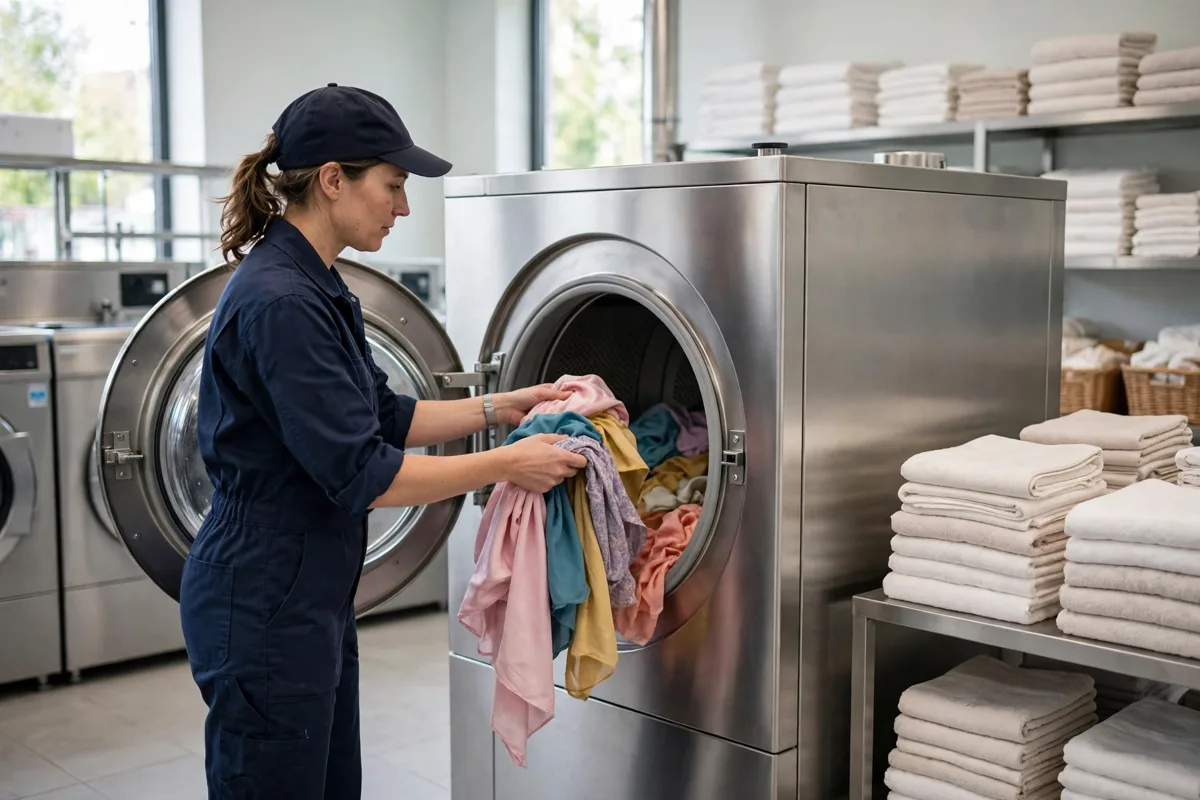
Wet cleaning is a professional process that uses water, computer-controlled machines and biodegradable detergents to clean delicate garments safely. The machines regulate temperature, drum movement and moisture removal with far more precision than a domestic washing machine, and specialist finishing equipment presses garments without stressing the fabric.
Because it is water-based, wet cleaning handles sweat, food and drink stains better than solvent cleaning, and it leaves no chemical smell behind. It is also the more environmentally friendly option: no solvent waste, lower energy use and detergents that break down safely. For another low-impact laundry habit, see our guide to using white vinegar in the laundry as a natural fabric softener alternative.
Reading the Care Label Before You Decide
The care label is your starting point, but it is not the whole story. A “dry clean only” label often reflects the most cautious advice for the most delicate component of a garment, such as a lining or trim, rather than the main fabric. Experienced wet cleaning specialists regularly clean items labelled dry clean only, because they can test dyes, control water temperature precisely and finish the garment by hand. The reverse also applies: an item marked machine washable may still benefit from professional wet cleaning if it has stubborn odour or staining. Bring the garment in, point out any marks, and let the cleaner assess the fabric, construction and label together. That short conversation is the most reliable way to choose between the two processes for anything you would be sorry to lose.
Wet Cleaning vs Dry Cleaning: The Key Differences
- Cleaning agent: dry cleaning uses solvent; wet cleaning uses water and specialist detergent.
- Best on: dry cleaning lifts grease and oil; wet cleaning removes water-based stains and odours more completely.
- Fabric risk: dry cleaning protects structure and shape; wet cleaning is gentler on fibres and colours but depends heavily on operator skill.
- Environmental impact: wet cleaning is the greener process, with biodegradable products and no solvent disposal.
- Finish: both are professionally pressed, but wet-cleaned garments typically smell fresher because no solvent residue remains.
Which Fabrics Suit Each Method?
Structured tailoring, such as the suits discussed in our guide to how often you should dry clean a suit, generally still belongs with a good dry cleaner, because internal canvas and padding can distort in water. Silk, wool knitwear, cashmere and delicate dresses are often excellent wet cleaning candidates in trained hands, as are down jackets and items with sweat or food staining.
Leather, heavily embellished pieces and vintage garments need a specialist conversation either way. A trustworthy cleaner will tell you honestly which process they recommend for a specific item, and may even refuse a method they think is risky. That honesty is one of the signs our guide to choosing a reliable dry cleaning service recommends looking for.
What About Duvets, Curtains and Bulky Items?
Large household items follow slightly different rules. Duvets, feather bedding and washable curtains usually suit professional wet cleaning well, because water and detergent can flush out the dust, allergens and body oils that build up deep inside the filling, and commercial machines have the drum capacity that a home washer lacks. Solvent cleaning can leave bulky items smelling of chemicals and does less for allergens. Heavy interlined curtains are the exception: shrinkage risk pushes many cleaners towards dry cleaning or a specialist on-site treatment. Whichever route you choose, bulky items benefit from a professional clean once or twice a year, and from a thorough airing in between.
Cost and Convenience
Prices are broadly similar, with wet cleaning sometimes marginally cheaper because it avoids solvent costs. Turnaround is comparable too, although fewer cleaners currently offer wet cleaning, so you may need to look beyond your usual high street shop. For bulky everyday loads rather than delicate garments, a launderette is usually the practical answer; our guides to self-service laundry facilities, finding a launderette near you and 24 hour laundry services cover how to make the most of them.
Which Should You Choose?
Choose dry cleaning for structured suits, oil-stained items and anything whose shape matters more than anything else. Choose wet cleaning for delicate natural fibres, garments with water-based stains or odours, and whenever you want the lower-impact option. When in doubt, ask the cleaner to assess the garment: the wet cleaning vs dry cleaning decision is ultimately about the fabric, the stain and the finish you want, and a good professional will match the method to all three.
Whichever you pick, regular maintenance still does most of the work. Airing, brushing and prompt spot treatment, the habits covered in our practical student laundry guide and across our clothing care articles, will keep both processes as occasional refreshers rather than weekly necessities.
