

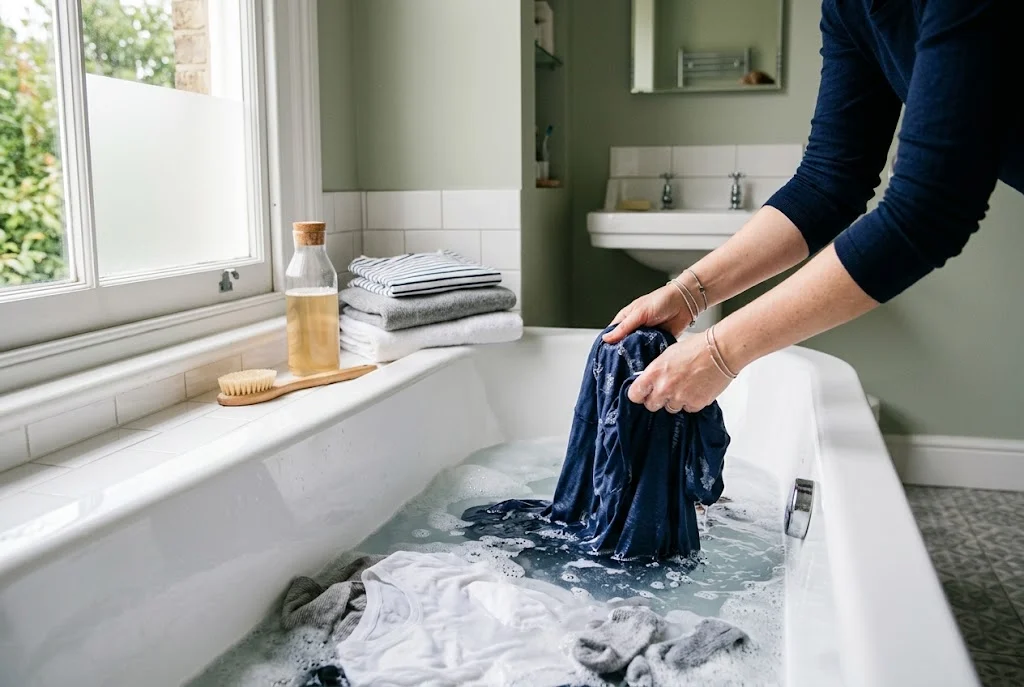
Knowing how to wash clothes without a washer can be extremely useful when your washing machine breaks down, you are travelling, living somewhere without laundry equipment, or simply need to clean a small load quickly. With a clean bathtub, sink, bucket or large tub, you can wash many everyday garments using water, laundry detergent and a little manual effort.
Although handwashing takes longer than using a machine, the process is straightforward. The most important steps are sorting your clothes, preparing the right amount of water and detergent, gently agitating the garments, rinsing them thoroughly and removing excess water before drying. The method below can help you manage laundry without a conventional washer while reducing unnecessary wear on your clothes.
When You Might Need to Wash Clothes Without a Washer
There are several situations where washing clothes manually makes sense. A broken washing machine is an obvious example, but it is not the only one. You might also need an alternative laundry method while camping, travelling, moving house, staying in temporary accommodation or dealing with a particularly small load.
Manual washing can also give you greater control over delicate garments. Instead of putting a sensitive item through a machine cycle, you can gently clean it by hand if the care label recommends handwashing.
Before starting, always check the care instructions on the garment. They should guide you on the appropriate water temperature, washing method and drying requirements.
What You Need to Wash Laundry Without a Machine
You do not need specialised equipment to wash clothing manually. Most of the items you need are already available in a typical household.
- A clean bathtub, sink, basin, bucket or large tub
- Suitable laundry detergent
- Clean water
- A clean towel for delicate garments
- A drying rack, clothesline or suitable drying area
A bathtub is particularly useful when you need to wash several garments because it provides considerably more space than a kitchen or bathroom sink. For just one or two small items, however, a basin or sink may be more convenient.
How to Wash Clothes Without a Washer Step by Step
1. Check the Clothing Labels
Start by checking the care labels on every item. Different fabrics can have different washing requirements, and using an unsuitable temperature or cleaning method can cause shrinking, colour loss or other damage.
If an item says it should only be dry cleaned or requires specialist treatment, do not assume that soaking it in water is safe. Follow the manufacturer’s instructions instead.
2. Sort Your Laundry
Separate clothing by colour before washing. Keep whites and light-coloured garments away from dark or strongly coloured items where possible.
You can also separate heavily soiled clothing from lightly soiled garments. This makes it easier to give dirtier items additional attention without unnecessarily exposing delicate clothing to prolonged washing.
3. Choose a Suitable Washing Area
Select a clean sink, basin, bucket, bathtub or tub that gives your clothes enough room to move through the water. Clean the washing area first so that dirt or cleaning-product residue does not transfer onto your laundry.
If you are using a bathtub, make sure the plug and surrounding surface are clean before filling it with water.
4. Fill the Tub With Water
Use the water temperature recommended on the garment’s care label. Cool or lukewarm water is often suitable for many everyday items, but specific fabrics may have different requirements.
Add laundry detergent according to the product instructions. Avoid adding large quantities simply because you are washing by hand. Excess detergent can make rinsing more difficult and may leave residue behind.
5. Put the Clothes Into the Water
Place the clothing into the detergent solution and make sure each item becomes thoroughly wet. Do not overcrowd the tub. If you have a large amount of laundry, work in smaller batches.
Gently move the clothes around in the water so that the detergent can reach the fabric. Allowing the garments to soak for a short period can help loosen everyday dirt and perspiration before further cleaning.
6. Agitate the Clothing Gently
Use your hands to move the garments through the water. Gently squeeze and release the material rather than scrubbing it aggressively.
Pay additional attention to areas that commonly become dirty, including collars, cuffs, underarms, hems and visible stains. If you need to treat a stain, use a suitable product and follow its instructions rather than relying on excessive rubbing.
Remember that wet fabric can be more vulnerable to stretching and damage. Gentle handling is particularly important for delicate garments.
7. Drain the Dirty Water
Once the clothes have been washed, drain the dirty water. If it is visibly very dirty, you may want to repeat the wash with fresh water and an appropriate amount of detergent.
For a larger load, washing in separate batches can produce better results than trying to clean everything at once. Overcrowding prevents garments from moving freely through the water and makes thorough cleaning more difficult.
How to Wash Laundry in a Bathtub
Learning how to wash laundry in a bathtub is particularly helpful when you need to clean a full load without a washing machine. First, clean the bath and fill it with an appropriate amount of water. Add detergent and distribute it through the water before adding the clothing.
Place a manageable amount of laundry into the bathtub and gently agitate it with your hands. You can move through the load methodically, making sure that the detergent solution reaches all the garments.
After washing, drain the water and refill the bathtub with clean water for rinsing. Repeat the rinse process until the detergent has been removed sufficiently. Avoid standing on clothing or using excessive force to agitate it, as this can cause unnecessary fabric damage.
How to Wash Clothes in the Tub Without Overworking Them
When using a tub for laundry, it can be tempting to scrub, twist and squeeze clothes as hard as possible. However, more physical force does not necessarily mean cleaner clothing.
Instead, focus on consistent, gentle movement. Press garments beneath the water, move them through the detergent solution and gently squeeze areas that need additional cleaning.
For delicate clothing, minimise friction. If the care label recommends handwashing, treating the garment gently throughout the process is usually more appropriate than attempting to replicate the vigorous agitation of a washing machine.
How to Rinse Clothes Without a Washing Machine
Rinsing is an important part of manual laundry. Once the detergent wash is complete, drain the dirty water and replace it with clean water.
Move each garment through the fresh water and gently press it to help release detergent. Drain the water and repeat the process when necessary.
Continue until there is little or no obvious detergent residue. Poor rinsing can leave clothing feeling stiff, soapy or uncomfortable after it dries.
For a smaller load, you can rinse each garment individually under clean running water if appropriate. However, using a clean basin can make the process more practical when washing several pieces.
How to Remove Excess Water From Hand-Washed Clothes
Do not automatically wring every garment as hard as possible. Twisting can stretch fabrics and alter the shape of some clothing, particularly when the material is delicate or heavy with water.
Instead, gently press excess water from the clothing. For delicate garments, place the item on a clean towel, roll the towel around it and press gently. The towel can absorb moisture without requiring aggressive twisting.
Once excess water has been removed, transfer the clothing to the appropriate drying area.
Drying Clothes After Washing Them Manually
Dry clothes according to their care labels. Some garments can be hung on a washing line or drying rack, while others may need to be dried flat to help retain their shape.
Leave enough space between garments to encourage airflow. Avoid piling wet clothing together because trapped moisture can slow drying and create an unpleasant damp smell.
If you are drying laundry indoors, good ventilation can help moisture leave the room more effectively. Keep delicate fabrics away from excessive heat unless their care instructions specifically permit it.
How to Wash Clothing by Hand More Efficiently
If you regularly need to wash clothing without a machine, developing a simple routine can make the process much easier. Start with the least dirty garments and work towards more heavily soiled items, changing the water when it becomes dirty.
Do not try to wash too many garments at once. Smaller loads are easier to agitate, rinse and handle properly.
It is also worth measuring your detergent rather than estimating. Using the correct amount helps you clean effectively while making the rinsing stage easier.
If you normally use a washing machine, you may also find it useful to understand how to wash clothes in a washer correctly once your machine is available again.
Common Mistakes to Avoid
Manual laundry is simple, but a few common mistakes can make the process harder or increase the risk of damaging clothing.
- Using too much detergent: Excess detergent can be difficult to rinse away.
- Using unsuitable water temperatures: Always follow the garment care label.
- Overcrowding the tub: Clothes need enough room to move through the water.
- Scrubbing aggressively: Excessive friction can damage fibres and finishes.
- Wringing delicate garments: Twisting can stretch or distort some fabrics.
- Rinsing too quickly: Remaining detergent can leave residue after drying.
- Drying without checking the label: Different fabrics require different drying methods.
Can You Wash a Full Load Without a Washer?
Yes, although it generally requires more time and physical effort than using a washing machine. A bathtub or large tub provides enough space for a reasonable amount of laundry, but large loads should still be divided into manageable batches.
The goal is not simply to get clothes wet and add detergent. Each garment needs sufficient contact with the washing solution, gentle agitation and thorough rinsing. Taking your time can produce much better results than trying to rush through a large load.
When Professional Laundry Services Make Sense
Manual washing is useful for occasional laundry, but it may not be practical for every household or every type of garment. Large quantities of clothing can take considerable time to wash and dry, while specialist fabrics may require professional care.
If you have a particularly difficult item, a large volume of laundry or clothing with specialist cleaning requirements, a professional laundry service can save time and reduce the risk of unsuitable home treatment.
For everyday garments, however, knowing how to wash clothes without a washer gives you a reliable backup method whenever conventional laundry equipment is unavailable.
Final Tips for Washing Clothes Without a Washer
- Always read clothing care labels before washing.
- Separate colours and fabrics where appropriate.
- Use a clean sink, basin, bathtub or tub.
- Use the correct amount of suitable laundry detergent.
- Wash manageable batches rather than overcrowding the container.
- Gently agitate clothing instead of aggressively scrubbing it.
- Rinse thoroughly to remove detergent residue.
- Press out excess water rather than aggressively twisting delicate garments.
- Dry each item according to its care instructions.
- Use professional cleaning when a garment requires specialist treatment.
Once you have the basic process down, how to wash clothes without a washer becomes a practical and manageable household skill. Whether you use a bathtub, sink, basin or tub, careful sorting, gentle washing, thorough rinsing and proper drying can help keep your clothes clean until you have access to a washing machine again.

1 Comment
Pingback: How to Hand Wash Clothes: A Simple Guide