

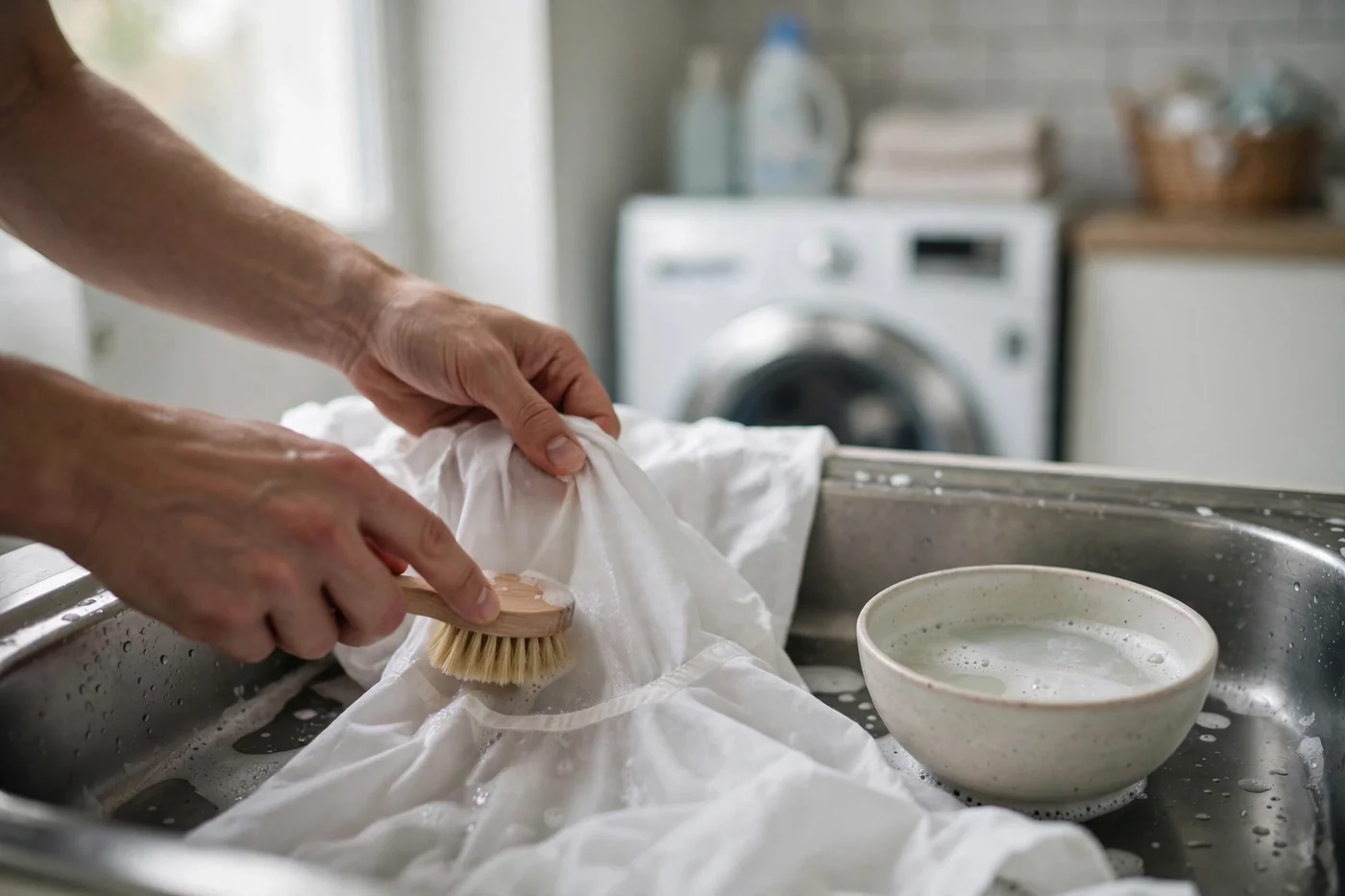
If you are wondering how to remove deodorant stains from clothes, start by treating the mark before the garment goes through a hot wash. Those chalky white streaks on a dark top and the stiff, yellow patches under the arms of a white shirt look different, but both usually come from deodorant building up in the fibres and reacting with sweat. Most everyday marks respond well to simple treatments you probably already have at home, as long as you check the care label first and work patiently.
This guide explains why the stains happen, what you need, and which method suits white shirts, dark clothes and delicates. It also covers what not to do, because heat and harsh scrubbing can make a mark harder to shift. If you have been asking how do you get rid of deodorant stains without ruining a favourite top, the answer is rarely to scrub harder. It is to loosen the build-up first, then wash it away properly.
Why Deodorant Stains Happen
Antiperspirants often contain aluminium compounds that help reduce sweating. When those compounds mix with sweat, salts and natural body oils, they can leave a stiff, yellow stain in the underarm area, especially on white and pale cotton. The longer the build-up stays in the fabric, and the more often it is washed and dried without being treated, the more stubborn it becomes.
White marks are usually different. They are often fresh deodorant transferred onto fabric as you get dressed, so they sit on the surface rather than deep in the fibres. That is why a white streak on a black dress may disappear with a damp cloth, while an older yellow patch needs a soak. Understanding which type you have helps you choose the gentlest method that will work.
What You Need Before You Start
You do not need a cupboard full of products for removing deodorant stains. Most of the methods below use one or two of the following:
- White vinegar
- Bicarbonate of soda
- Washing-up liquid
- Lemon juice, for suitable white and light fabrics only
- A soft brush or old soft toothbrush and a clean cloth
- A washing-up bowl or basin for soaking
- Your usual laundry detergent
- An oxygen-based specialist stain remover, optional for stubborn build-up
Always read the care label before you begin. Turn the garment inside out, test any treatment on a hidden area such as an inside seam, and stop if colours run or the fabric changes. If the label says dry clean only, do not soak it at home. Take it to a cleaner and point out the stain instead.
How to Remove Deodorant Stains from Clothes Step by Step
Whatever method you choose, this simple routine for how to remove deodorant stains safely gives you the best chance of success.
Step 1: Turn the garment inside out
Deodorant builds up on the inside of underarms first. Turning the item inside out lets the treatment reach the worst of it. Shake or gently brush away any loose, flaky residue over a bin.
Step 2: Pre-treat and leave it to work
Apply your chosen treatment from the methods below and leave it for the time suggested. Do not rush this part. Giving the product time to loosen the build-up matters more than scrubbing.
Step 3: Wash cool and as the label allows
Rinse in cool water, then wash with your usual detergent on the coolest suitable programme the care label allows, often 30 degrees for everyday clothes. Wash similar colours together and do not overload the machine.
Step 4: Check before you dry
Look closely at the underarms before drying. If a mark remains, repeat the treatment rather than drying the garment. Heat from a tumble dryer or an iron can set the stain and make it much harder to remove later.
Method 1: White Vinegar Soak
A diluted white vinegar soak is a good first choice for yellow underarm build-up and stiff patches, and it is often how to clean deodorant stains on washable cotton without using anything harsh. Fill a basin with cool water and add a cup of white vinegar, then soak the garment for 30 to 60 minutes. Gently work the underarm area with your fingers, rinse well, then wash as usual.
Use a basin rather than pouring vinegar straight over clothes, keep it away from bleach, and never mix the two. For more detail on safe use, see our guide to white vinegar in laundry. If the stain is very old, you may need a second soak before you see a real improvement.
Method 2: Bicarbonate of Soda Paste
Bicarbonate of soda suits thicker build-up and odour around the underarms. Mix three to four tablespoons with a little cool water to make a spreadable paste, apply it generously to the stain, and leave it for 30 to 60 minutes. Work it in very gently with a soft brush, rinse in cool water, then wash.
This is a practical answer to how do you get rid of deodorant stains on shirts when the fabric feels stiff as well as marked. It is also useful when you are working out how to take deodorant stains out of shirts that have been worn and washed many times. Rinse the paste out thoroughly, because any residue left behind can itself leave a pale mark.
Method 3: Washing-Up Liquid for Fresh Marks
If you need to know how to remove deodorant marks from clothes quickly after getting dressed, start here. A tiny drop of washing-up liquid worked into a fresh white mark with damp fingers or a clean cloth can lift the surface residue. For underarm build-up, apply a small drop, leave it for 10 to 15 minutes, rinse in cool water, then wash as usual.
Washing-up liquid is designed to cut through grease, which helps with the oily part of sweat and deodorant. Use only a little, because too much creates excess foam in the machine. This gentle approach is also a good first step for how to remove deodorant marks from shirts before you try a stronger treatment.
Method 4: Lemon Juice for Whites Only
Lemon juice can help brighten pale yellow marks on white, colourfast fabrics, which is why people use it when learning how to clean deodorant stains from shirts made of sturdy cotton. Apply fresh juice to the stain, leave it for up to 30 minutes, rinse thoroughly in cool water, then wash. Test a hidden area first.
Do not use lemon juice on dark colours, silk, wool or anything that is not colourfast, because its acidity and lightening effect can change the colour. Do not leave it on for hours, and rinse it out well before washing.
Method 5: Specialist Stain Removers
People often ask, how can you get deodorant stains out of clothing when several washes have already failed? When home methods are not enough, an oxygen-based stain remover made for laundry can help with stubborn, built-up marks. Follow the packet instructions exactly, soak only for as long as directed, and check that the product suits the colour and fabric.
Do not be tempted to reach straight for chlorine bleach, and never mix cleaning products together. If you are considering bleach at all, read our guidance on bleach for clothes first, and only use it where both the product and the care label allow it. Using several products at once rarely works better and can damage fabric.
White Shirts, Dark Clothes and Delicates
White shirts
For white shirts, focus on the yellow underarm area. Try a vinegar soak or bicarbonate paste first, then an oxygen-based remover if needed. Wash whites separately so they stay bright, which our guide to how to whiten clothes explains in more detail. This careful routine is how do you get rid of deodorant stains on clothes that need to look smart for work or school.
Dark clothes
On dark clothes, the problem is usually a white surface mark rather than a yellow stain. Turn the item inside out, rinse the area in cool water, then use the washing-up liquid method or a well-diluted vinegar soak. Learning how to get deodorant stains out of clothes without fading them means rinsing thoroughly, avoiding lemon juice and bleach, and checking the colour before the garment dries.
Delicates, wool and silk
If you are wondering how do i get deodorant stains out of clothes that are delicate, slow down. Use cool water and a small amount of detergent made for delicates, soak briefly if the label allows washing, and do not scrub or wring. Avoid lemon juice and strong stain removers. For silk, wool with a dry clean only label, or anything valuable, professional cleaning is the safer choice.
What Not to Do
- Do not wash an untreated stain in hot water first. Heat can set yellow marks.
- Do not tumble dry or iron the garment until the stain has gone.
- Do not scrub hard with a stiff brush. You may damage fibres and spread the mark.
- Do not use chlorine bleach on colours, wool, silk or elastane.
- Do not mix bleach with vinegar or any other cleaning product.
- Do not apply lemon juice to dark or delicate fabrics.
Many people ask how do you get rid of deodorant stains when the first attempt fails. Usually the honest answer is to repeat a gentle treatment, not to use a stronger chemical straight away. Old build-up took time to form, so it can take two or three treatments to lift.
How to Prevent Deodorant Stains
Prevention is easier than removing deodorant stains again next month. Let deodorant dry fully before you get dressed, and use only as much as you need. Putting a top on carefully, rather than pulling it straight over freshly applied deodorant, reduces white transfer marks.
Wash shirts promptly instead of leaving them in the laundry basket for days, and occasionally pre-treat the underarms before washing if you know a top is prone to build-up. An undershirt or vest can also protect a smart shirt. These small habits are the simplest answer to how do you get rid of deodorant stains on shirts for good.
Final Thoughts
Knowing how to remove deodorant stains from clothes is mostly about matching the treatment to the mark. Fresh white transfer marks often need only a damp cloth or a drop of washing-up liquid, while yellow underarm build-up needs a soak, time and a proper wash before drying. Start gently, check the care label, and repeat a treatment if you need to. With patience, most everyday shirts and tops can be rescued without harsh products or hard scrubbing.
