

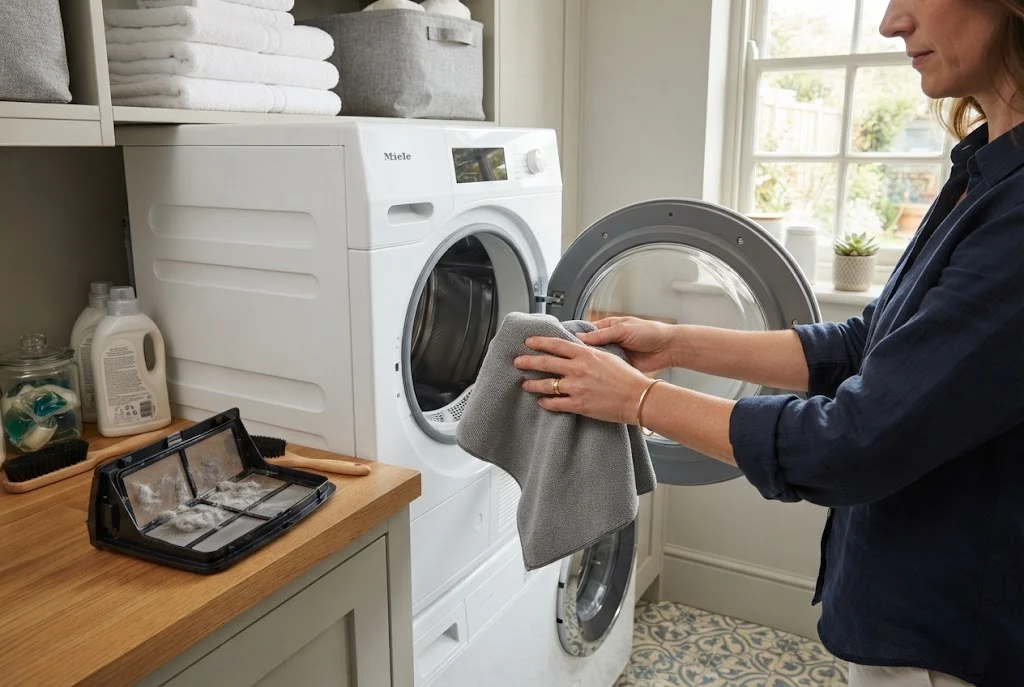
Knowing how to clean tumble dryer properly is an important part of keeping your laundry appliance efficient, hygienic and safe to use. A tumble dryer collects lint, fibres, dust and moisture during normal cycles, and these materials can build up around the filter, drum, door seal and other accessible components.
Fortunately, routine tumble dryer cleaning does not have to be complicated. With a soft cloth, vacuum cleaner and a few minutes of regular maintenance, you can keep many parts of the appliance in good condition. This guide explains how to clean a tumble dryer from the inside out while highlighting the areas that deserve the most attention.
Why Is It Important to Clean a Tumble Dryer?
Every drying cycle can release fibres and lint from clothing. Towels, fleece, bedding and other fabrics may produce particularly noticeable amounts of fluff. If this material is allowed to accumulate, it can restrict airflow and affect drying performance.
A dirty dryer can also develop unpleasant smells. Residue, dampness and trapped fibres around the door area can create an environment where odours linger. Regular cleaning helps keep the appliance fresher and makes it easier to identify unusual changes in performance.
There is also a safety consideration. Electrical Safety First recommends cleaning tumble dryer lint and fluff from the filter and around the door after every use. Keeping the appliance maintained according to the manufacturer’s instructions is therefore an important part of responsible dryer ownership.
What You Need to Clean a Tumble Dryer
You do not normally need specialist equipment for routine cleaning. Prepare the following:
- A soft microfibre cloth
- A vacuum cleaner with a narrow attachment
- Warm water
- A small amount of mild washing-up liquid
- A soft brush where appropriate
- A clean, dry towel
Before cleaning, switch off the tumble dryer and allow it to cool. Follow your appliance manual for any additional safety instructions. Never spray water directly onto electrical controls, switches or other electrical components.
How to Clean Tumble Dryer Step by Step
1. Start With the Lint Filter
The lint filter is one of the most important components to maintain. It catches fibres released from clothes during the drying cycle and should generally be checked after every load.
Remove the filter following the instructions for your particular model. Clear away loose lint and fluff carefully. If the manufacturer says the filter can be washed, clean it appropriately and allow it to dry completely before reinstalling it.
Do not assume every filter should be soaked in water. Some filters require a specific cleaning method, so the manufacturer’s guidance should take priority.
If you want a more focused explanation of this task, see our guide on how to clean a dryer filter.
2. Wipe the Door and Door Seal
Open the dryer door and inspect the seal, door frame and surrounding edges. Lint and small fibres can become trapped in these areas over time.
Remove loose debris before wiping the surfaces with a soft, slightly damp cloth. If there is stubborn residue, use a small amount of mild detergent where permitted by the manufacturer.
Pay particular attention to the lower edge of the door and the areas around the seal. Once cleaned, wipe away any remaining moisture with a dry cloth.
3. Clean the Inside of the Drum
The drum can accumulate dust, fibres and residue from clothing. Although it may look clean at first glance, wiping it periodically can prevent residue from building up.
Use a microfibre cloth dampened with warm water to wipe the drum’s accessible surfaces. For marks or residue, a small amount of mild washing-up liquid can usually help, provided it is compatible with the appliance.
Afterwards, wipe the drum again with a clean damp cloth to remove any cleaning-product residue. Finish with a dry towel and leave the door open so the interior can air-dry.
4. Vacuum Around the Filter Housing
Removing the filter does not necessarily remove every piece of lint from the surrounding area. Loose fibres can collect inside or around the filter housing.
A vacuum cleaner with a narrow attachment can help remove accessible dust and fluff. Work gently and avoid pushing debris further into the appliance.
Do not remove internal panels or electrical covers simply to reach difficult areas. If the appliance requires internal servicing, follow the manufacturer’s instructions or use a suitably qualified professional.
5. Clean the Exterior
The outside of a tumble dryer can collect dust, detergent residue and general household dirt. Wipe the top, front and sides using a soft, slightly damp cloth.
Keep moisture away from electrical controls and displays. If you use a cleaning solution, apply a small amount to the cloth rather than spraying the appliance directly.
Dry the exterior afterwards, particularly around buttons, control panels and door edges.
6. Check the Ventilation Area
If you have a vented tumble dryer, inspect the accessible ventilation area and hose for visible dust, lint or signs of restricted airflow. The ventilation system needs to remain suitable for the appliance and should be maintained according to the manufacturer’s instructions.
Never improvise ventilation arrangements or make modifications that are not approved for your dryer. If you suspect a significant blockage or damage, arrange an appropriate inspection.
Our related guide to cleaning a dryer duct covers this maintenance topic in greater detail.
How Often Should You Clean a Tumble Dryer?
Not every part of a tumble dryer needs to be cleaned at the same frequency. The lint filter deserves attention after every drying cycle, while deeper cleaning can be performed periodically.
A simple maintenance schedule can include:
- After every load: Remove lint and fluff from the filter and check around the door.
- Weekly: Inspect the door seal and wipe away visible fibres or residue.
- Monthly: Clean the accessible drum surfaces and vacuum around the filter housing.
- Periodically: Inspect ventilation areas and complete manufacturer-recommended maintenance.
The ideal schedule depends on how frequently you use the appliance and what types of laundry you dry. A household that runs several loads every week may need to clean accessible areas more often than someone who uses the dryer occasionally.
How to Clean a Tumble Dryer That Smells
An unpleasant smell from a tumble dryer can have several causes. Start by checking the lint filter and removing any accumulated fibres. Then inspect the door seal and wipe the drum to remove residue.
Allowing the drum to dry fully between uses can also help. After cleaning, leave the door open when appropriate so moisture does not remain trapped inside.
However, a burning smell should not be treated as an ordinary odour problem. Stop using the appliance if you notice a persistent burning smell, smoke, scorch marks or another unusual sign, and seek appropriate professional or manufacturer advice.
How to Clean a Tumble Dryer Without Damaging It
The safest cleaning method is gentle and model-specific. Dryer construction varies, so a cleaning technique that is suitable for one machine may not be appropriate for another.
Use soft materials on accessible surfaces and avoid abrasive pads. Do not pour water into the appliance, spray liquid into openings or use aggressive chemicals unless the manufacturer’s instructions specifically recommend them.
It is also important not to dismantle the dryer for routine cleaning. Internal electrical and mechanical components should only be accessed when the appliance documentation specifically permits it or when the work is carried out by an appropriately qualified person.
Cleaning Different Types of Tumble Dryers
The basic cleaning routine is similar across many machines, but some components differ according to the dryer’s design. Vented dryers use an external ventilation system, while condenser and heat-pump dryers manage moisture differently.
If your machine is a condenser model, pay particular attention to its condenser and related maintenance components. Our dedicated guide on how to clean a condenser tumble dryer explains that process separately.
Keeping these topics separate is useful because general drum and filter cleaning applies to many dryers, whereas condenser maintenance requires more model-specific attention.
Common Tumble Dryer Cleaning Mistakes
Leaving the Lint Filter Dirty
One of the most common mistakes is cleaning the dryer drum while ignoring the lint filter. The filter should be checked regularly because it collects fibres during normal use.
Putting a Wet Filter Back
If your filter is washable, it must be completely dry before being returned to the appliance. Moisture should not be introduced into areas where it could cause an electrical or operational problem.
Using Harsh Chemicals
Strong cleaners may damage plastic, rubber seals or internal finishes. Unless the manufacturer specifies otherwise, mild cleaning methods are a safer choice.
Overlooking the Door Area
Lint can gather around the door seal and frame even when the drum itself appears clean. Make this area part of your regular inspection.
Trying to Clean Internal Components Yourself
Deep internal cleaning is different from routine household maintenance. If a problem appears to require dismantling the appliance, professional servicing may be safer than attempting the repair yourself.
Tumble Dryer Cleaning and Household Safety
Regular maintenance should form part of your normal laundry routine. Electrical Safety First recommends removing lint and fluff from the filter and around the door after each use and following the manufacturer’s instructions for other maintenance tasks.
It also recommends not using an extension lead to power a tumble dryer and advises against leaving a tumble dryer running while asleep or away from home.
For further UK-specific guidance, Electrical Safety First’s tumble dryer safety guidance provides additional advice on safe operation and maintenance.
Tips to Keep Your Tumble Dryer Cleaner
Good laundry habits can reduce the amount of debris that reaches your dryer. Empty clothing pockets before washing and drying, particularly when dealing with tissues, paper and small objects that could create additional mess.
Clean the lint filter consistently, avoid overloading the appliance and follow the drying instructions on clothing labels. Separating heavily lint-producing fabrics when practical can also make filter maintenance easier.
Keep the area around the dryer reasonably clean and make sure ventilation openings are not obstructed. A clean surrounding area makes it easier to notice dust accumulation, damage or other changes that could affect operation.
When Should You Stop Using a Tumble Dryer?
Cleaning can resolve ordinary maintenance issues, but it cannot fix every dryer problem. If the machine develops an unusual burning smell, visible scorching, smoke, damaged electrical cables, repeated overheating or another serious fault, stop using it.
Do not continue running the appliance simply to see whether the problem disappears. Refer to the manufacturer’s troubleshooting information and seek appropriate professional assistance when necessary.
Final Thoughts
Learning how to clean tumble dryer is a straightforward way to support better appliance maintenance. Start with the lint filter, then clean the door seal, drum, filter housing and accessible exterior surfaces using gentle methods.
Regular cleaning is more effective than waiting until the appliance becomes visibly dirty. By making filter checks part of every laundry cycle and carrying out deeper maintenance periodically, you can keep your tumble dryer cleaner and make it easier to identify potential problems early.
For households managing several laundry appliances, maintaining each component separately is worthwhile. Once your tumble dryer is clean, you can also turn your attention to related maintenance tasks such as the dryer filter and washing machine filter to keep the complete laundry area in better condition.
