

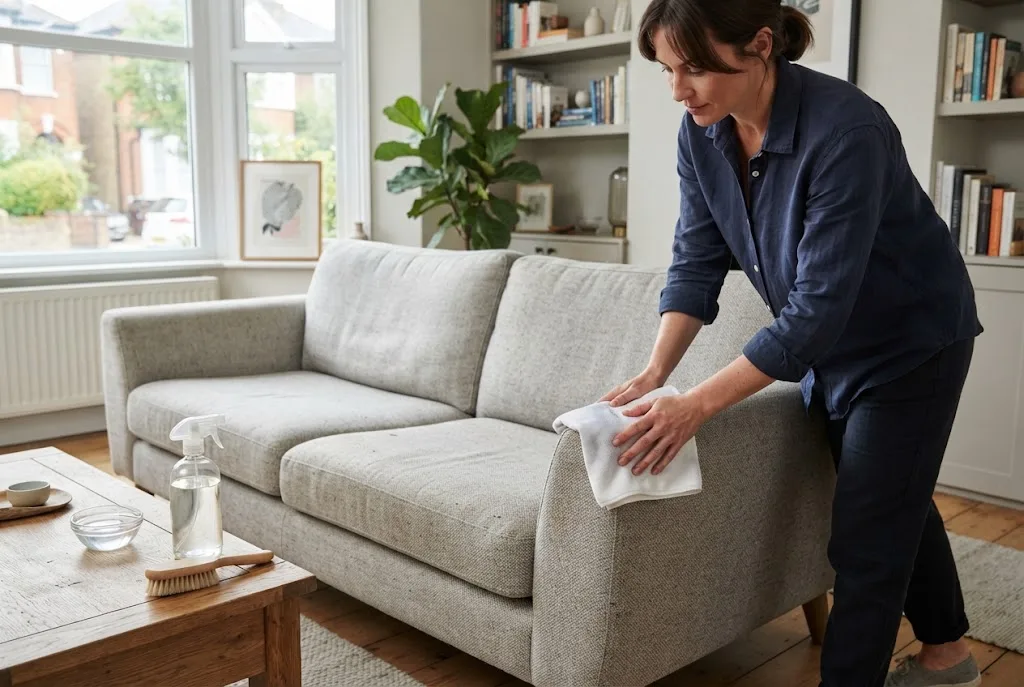
Knowing how to clean a sofa properly can make a noticeable difference to the appearance, comfort and freshness of your home. Sofas collect dust, crumbs, pet hair, body oils and everyday spills, even when they look reasonably clean. Fortunately, regular sofa cleaning does not always require specialist equipment. With the right approach, you can clean sofa upholstery at home while reducing the risk of stains, excess moisture or fabric damage.
The most important step is to identify the upholstery material and check the manufacturer’s care instructions before using any cleaning solution. Different fabrics can react differently to water, detergents and other products. If your sofa has delicate upholstery, old stains or significant odour problems, professional sofa cleaning may be a more suitable option.
How to Clean a Sofa Safely
The best approach to cleaning a sofa is to work gradually rather than soaking the entire piece of furniture. Start with dry cleaning methods, remove loose dirt, test any solution on an inconspicuous area and only then move on to targeted stain treatment.
Before you begin, check the sofa’s care label or manufacturer’s instructions. If the instructions specify that the upholstery should only be professionally cleaned, avoid experimenting with household cleaning products.
1. Remove Cushions and Loose Items
Take removable cushions off the sofa and clear away blankets, toys and other items. Check between and underneath the cushions because crumbs, dust and pet hair often collect in these areas.
If the cushions have removable covers, check their washing instructions separately. A removable cover does not automatically mean it is suitable for a standard washing machine cycle.
2. Vacuum the Entire Sofa
Thorough vacuuming is an important part of cleaning a sofa. Use an upholstery attachment to vacuum the seat cushions, back cushions, arms, sides and accessible areas underneath the cushions.
Move slowly over heavily used areas instead of quickly passing over the surface. For sofas with textured upholstery, work carefully so the attachment does not pull or damage loose fibres.
Regular vacuuming can also help remove dust and allergens from soft furnishings. UK local authority guidance recommends regular vacuuming of soft furnishings as part of reducing household dust and allergens.
3. Check the Fabric Before Using Water
Do not assume that every sofa can be cleaned with water. Look for the manufacturer’s care label or cleaning instructions and follow them carefully.
If the upholstery is suitable for water-based cleaning, prepare a small amount of the recommended cleaning solution. Always test it first on a hidden section of the sofa. Allow the test area to dry before checking for colour changes, marks or texture changes.
4. Treat Stains Individually
For visible marks, avoid immediately scrubbing the entire sofa. Instead, concentrate on the affected area. Blot liquid spills with a clean absorbent cloth rather than rubbing aggressively, as rubbing can spread the stain or push it further into the fibres.
For dried marks, gently remove loose residue before applying a suitable upholstery cleaner. Use only the amount recommended by the product manufacturer. More cleaning solution does not necessarily produce a cleaner sofa and can leave unwanted residue behind.
5. Clean the Upholstery Gently
If the sofa’s care instructions allow suitable wet cleaning, work in small sections. Apply the appropriate solution carefully and avoid saturating the upholstery.
Use a clean cloth or suitable upholstery brush according to the fabric manufacturer’s recommendations. Work gently rather than aggressively scrubbing the surface. This is particularly important with delicate, textured or easily marked materials.
When using household cleaning products, follow the product instructions and keep the room well ventilated. UK local authority guidance advises ventilation when using cleaning products and recommends following product instructions to minimise exposure to pollutants.
How to Clean Your Sofa Without Over-Wetting It
One of the most common mistakes when people clean sofa upholstery at home is using too much water. Excess moisture can take a long time to dry and may create additional problems if it becomes trapped inside cushions or padding.
Instead, use controlled amounts of cleaning solution and avoid repeatedly soaking the same area. After cleaning, allow plenty of air circulation around the sofa and keep the room ventilated where practical.
If the sofa remains noticeably damp for an extended period, avoid covering it or placing cushions back immediately. The upholstery should be properly dry before normal use.
How Can I Clean My Sofa Naturally?
Some homeowners prefer a simple cleaning approach using minimal products. Dry vacuuming is one of the safest first steps because it removes loose dirt without introducing moisture.
For a water-safe sofa, you may choose a manufacturer-approved mild upholstery cleaning solution rather than experimenting with strong household chemicals. Natural does not automatically mean safe for every fabric, so always check the upholstery care instructions first.
Avoid mixing different cleaning products. In particular, never combine bleach with other cleaning products because chemical reactions can produce harmful fumes. When stronger products are involved, follow the manufacturer’s safety instructions carefully.
How to Clean Sofas With Common Stains
Different spills require different approaches, but the basic principle remains the same: act promptly, avoid aggressive rubbing and use a cleaning product that is suitable for the upholstery.
Food and Drink Spills
Remove solid residue carefully and blot liquid spills with a clean cloth. Avoid spreading the affected area by rubbing outward repeatedly. Once the surface residue has been removed, use an appropriate upholstery cleaner according to its instructions.
Pet Hair and Everyday Dirt
Vacuuming should be your first step. For stubborn pet hair, use an upholstery-safe tool designed to collect hair without pulling at the fabric. Pay particular attention to the areas where pets regularly sit or sleep.
Greasy Marks
Greasy marks can be more difficult to remove because they may penetrate upholstery fibres. Avoid applying an unsuitable household degreaser without checking the manufacturer’s instructions. A purpose-designed upholstery cleaning product may be more appropriate.
Odours
Persistent odours can sometimes indicate that more than the surface of the sofa needs attention. Begin by vacuuming thoroughly and identifying the source. If an odour continues after routine cleaning, professional upholstery cleaning may provide a more thorough solution.
How to Clean a Sofa at Home Without Damaging It
Successful sofa cleaning is not simply about removing visible dirt. It is also about protecting the upholstery. Keep these principles in mind whenever you clean a sofa at home:
- Check the manufacturer’s cleaning instructions first.
- Vacuum loose dirt before applying any liquid cleaner.
- Test cleaning products on a hidden area.
- Use only products suitable for the specific upholstery.
- Avoid excessive water or cleaning solution.
- Blot stains rather than aggressively scrubbing them.
- Allow the sofa to dry thoroughly before normal use.
- Keep the room ventilated when using cleaning products.
If your sofa is made from fabric, the cleaning method may need to be adjusted according to the material. For a more specific guide, see our forthcoming guide on how to clean a fabric sofa. Similarly, cloth upholstery may require a slightly different approach, which is covered in our guide to how to clean a cloth sofa.
How Often Should You Clean a Sofa?
There is no single cleaning schedule that works for every household. How often you need to clean your sofa depends on how frequently it is used, whether you have children or pets, the type of upholstery and how quickly dirt becomes visible.
Regular vacuuming can be incorporated into your normal household cleaning routine, while deeper cleaning can be carried out when the upholstery becomes visibly soiled or develops persistent odours. High-use sofas may need attention more frequently than furniture used occasionally.
It is also useful to deal with spills as soon as possible. Leaving stains untreated for long periods can make them more difficult to remove later.
When to Choose Professional Sofa Cleaning
Home cleaning is useful for routine maintenance, but there are situations where professional sofa cleaning is worth considering. Large sofas, heavily soiled upholstery, persistent odours, extensive staining and delicate fabrics can all make DIY cleaning more challenging.
Professional cleaners can also use specialist upholstery equipment and cleaning methods that are not normally available for everyday household cleaning. This can be particularly helpful when a sofa has accumulated years of dirt or when previous cleaning attempts have left visible marks.
If you are unsure how to clean your sofa safely, getting professional advice can be preferable to risking permanent damage to the upholstery.
Keep Your Sofa Cleaner for Longer
Once your sofa has been cleaned, a few simple habits can help maintain it. Vacuum regularly, deal with spills promptly and avoid allowing food crumbs and other debris to build up between cushions.
Rotate or rearrange removable cushions when the manufacturer’s instructions allow it. This can help distribute everyday use more evenly. You can also keep washable throws or covers on high-use areas where appropriate.
Most importantly, make sofa care part of your normal cleaning routine rather than waiting until the upholstery becomes heavily soiled. Consistent maintenance is generally easier than trying to restore a neglected sofa in one intensive cleaning session.
Final Thoughts on Sofa Cleaning
Learning how to clean a sofa starts with understanding the upholstery, following the manufacturer’s instructions and using a gentle, controlled cleaning method. Vacuuming should normally come before stain treatment, while excessive water and aggressive scrubbing should be avoided.
For everyday maintenance, cleaning a sofa at home can be straightforward when you use the right approach. However, difficult stains, delicate materials and heavily soiled upholstery may require specialist attention. If you are dealing with a fabric sofa, you can also explore our detailed guide on how to clean fabric sofa and our dedicated guide to how to clean a fabric couch.
With regular care and the right cleaning method, your sofa can remain fresher, cleaner and more comfortable for longer.

2 Comments
Pingback: How to Clean Fabric Sofa: A Safe Step-by-Step Guide
Pingback: How to Clean Cloth Sofa: Easy Steps for a Fresh Home