

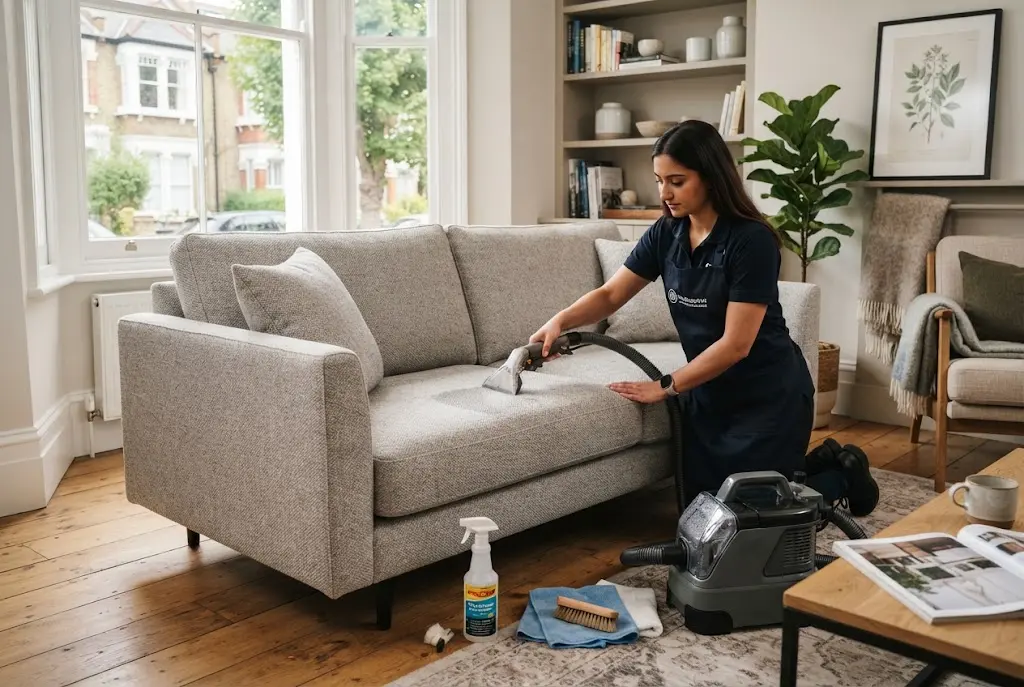
Learning how to clean fabric sofa upholstery properly can help keep your living space fresh, comfortable and well maintained. Fabric sofas naturally collect dust, crumbs, pet hair, body oils and occasional spills through everyday use. However, cleaning them requires more care than simply applying water and detergent. The fabric type, manufacturer’s instructions and condition of the upholstery should all be considered before you begin.
Whether you want to carry out routine maintenance or deal with a visible mark, the safest approach is to start with dry cleaning methods, identify the upholstery requirements and test any cleaning product before treating a larger area. If you are looking for the best way to clean fabric sofa upholstery at home, the following process provides a practical starting point.
How to Clean Fabric Sofa Safely
Before using any cleaning solution, check the manufacturer’s care instructions. Fabric sofas can vary considerably, and a method that works on one material may damage another. Look for the cleaning code or care label and follow the manufacturer’s recommendations.
Once you know that the upholstery can be cleaned using the intended method, work through the sofa gradually. Avoid saturating the fabric, use appropriate products and give the upholstery enough time to dry.
1. Remove Cushions and Loose Items
Take removable cushions off the sofa and remove blankets, toys and other objects. Inspect the gaps between cushions because crumbs, dust and pet hair commonly collect in these areas.
If your sofa has removable cushion covers, check their individual washing instructions. Do not assume that a removable cover is automatically suitable for machine washing. The manufacturer’s instructions should determine the appropriate cleaning method.
2. Vacuum the Fabric Thoroughly
Vacuuming is one of the most important stages of cleaning sofa fabric. Use a suitable upholstery attachment and work across the seats, backs, arms, sides and exposed areas underneath the cushions.
Take your time around seams, corners and crevices. These areas can hold a surprising amount of dust and debris. Removing loose particles before using moisture also reduces the chance of turning surface dirt into muddy marks.
For households with pets, vacuuming may need to be more frequent because hair can become embedded in fabric fibres. Use an upholstery-safe attachment rather than anything that could pull or damage the material.
3. Check the Fabric Cleaning Instructions
Before applying water or a cleaning product, check the sofa’s care label. Some upholstery materials are suitable for water-based cleaning, while others may require specialist treatment.
If the manufacturer’s instructions recommend a particular cleaner, follow those directions rather than substituting a stronger household product. When you are uncertain, test the proposed method on a hidden section first.
4. Test the Cleaning Product
Testing is an important part of learning how to clean a fabric sofa without causing unnecessary damage. Apply a small amount of the selected product to an inconspicuous area and follow the recommended application instructions.
Allow the test section to dry before assessing the result. Look for colour transfer, fading, water marks, changes in texture or any other unexpected reaction. If the material reacts badly, do not continue using that product across the rest of the sofa.
How to Clean Sofa Fabric for Everyday Dirt
For routine sofa maintenance, there is usually no need to aggressively scrub the entire surface. Start by removing loose debris with a vacuum cleaner and then concentrate on areas that have become visibly dirty.
If the upholstery is suitable for wet cleaning, use an appropriate fabric or upholstery cleaner according to the manufacturer’s instructions. Work in manageable sections rather than covering the whole sofa with cleaning solution at once.
Use a clean cloth or recommended upholstery brush and work gently. Excessive scrubbing can affect the appearance or texture of some fabrics. The objective is to lift dirt without unnecessarily stressing the fibres.
Deal With Spills Quickly
Fresh spills should generally be dealt with as soon as practical. First remove any solid material without spreading it further. For liquid spills, gently blot the affected area with a clean absorbent cloth.
Avoid vigorous rubbing. Rubbing can spread the liquid across a larger section of the upholstery and may push the substance deeper into the fabric.
Once the excess liquid has been absorbed, use a suitable upholstery cleaning product if the fabric’s care instructions permit it.
How Do You Clean a Fabric Sofa With Stains?
The appropriate treatment depends on the type of stain and the upholstery material. There is no universal sofa cleaning solution that is suitable for every fabric, so avoid assuming that a product designed for one material will work safely on another.
Food and Drink Marks
Remove solid food particles carefully before treating the remaining mark. Blot liquid rather than rubbing it into the fabric. Once the excess has been removed, use an upholstery cleaner that is compatible with the sofa.
Pet Hair
Vacuum the upholstery thoroughly, paying special attention to corners and cushion seams. A suitable pet-hair removal tool can help with stubborn hair, but it should be safe for the particular fabric.
Grease and Oily Marks
Greasy marks can be challenging because oils may penetrate fabric fibres. Avoid applying strong degreasers without checking whether they are appropriate for upholstery. A purpose-designed fabric cleaner may be a safer choice.
Unpleasant Odours
If a fabric sofa develops an odour, begin by vacuuming it thoroughly and identifying the likely source. Surface odours may improve after proper cleaning and ventilation. Persistent smells, however, can indicate contamination deeper within the upholstery and may require professional cleaning.
Best Way to Clean Fabric Sofa at Home
For many homeowners, the best way to clean fabric sofa upholstery is a controlled process rather than a single aggressive treatment. The following sequence is practical for routine care:
- Read the manufacturer’s upholstery care instructions.
- Remove cushions and loose items.
- Vacuum the entire sofa carefully.
- Identify visible stains and marks.
- Choose a cleaner specifically suitable for the fabric.
- Test the product on an inconspicuous area.
- Clean small sections gently.
- Avoid excessive moisture.
- Allow the upholstery to dry thoroughly.
- Inspect the finished sofa before putting cushions back.
This approach reduces unnecessary moisture and helps you identify potential problems before they affect a large area of the sofa.
How to Clean Fabric Sofa Naturally
Some homeowners prefer to use fewer chemical cleaning products. If that is your preference, start with simple maintenance methods such as regular vacuuming and prompt treatment of spills.
However, natural ingredients are not automatically suitable for every upholstery material. Homemade cleaning mixtures can sometimes leave residue, alter fabric colour or affect the texture. Therefore, the safest option is still to check the manufacturer’s instructions before applying anything to the sofa.
Do not mix household cleaning products together. In particular, avoid combining bleach with other cleaning products because dangerous chemical reactions can occur.
How to Dry a Fabric Sofa After Cleaning
Drying is just as important as the cleaning process. Excess moisture can remain trapped inside cushions or padding, particularly when too much water has been used.
After cleaning, improve air circulation around the sofa and keep the room appropriately ventilated. Avoid covering the upholstery or putting cushions back into place while they are still significantly damp.
Allow the fabric to dry naturally according to the cleaning product’s instructions. Do not use excessive heat unless the manufacturer specifically recommends it, as high temperatures can affect certain upholstery materials.
How Often Should You Clean Sofa Fabric?
The ideal cleaning frequency depends on how the sofa is used. A sofa in a busy family living room may need more regular maintenance than one in a rarely used room.
Regular vacuuming is useful for removing dust, crumbs and hair before they accumulate. Deeper cleaning can be carried out when the upholstery becomes visibly dirty, develops persistent odours or requires attention following spills.
Homes with children or pets may also require more frequent spot cleaning. The key is to deal with contamination early rather than allowing stains and dirt to build up over a long period.
When Professional Fabric Sofa Cleaning Makes Sense
Home cleaning is useful for routine maintenance, but some situations are better handled by an experienced upholstery cleaning professional. Large stains, extensive soiling, persistent odours and delicate fabrics can all make DIY cleaning more complicated.
Professional cleaning can also be useful when previous cleaning attempts have left water marks or uneven areas. Specialist equipment and upholstery-specific techniques can provide a more controlled approach when ordinary household methods are not sufficient.
If you are unsure about the correct way to clean your upholstery, it is generally better to seek professional advice than risk permanently damaging an expensive sofa.
How to Keep Fabric Sofa Upholstery Cleaner for Longer
Once your sofa is clean, regular maintenance can reduce how often it needs intensive treatment. Vacuum the upholstery regularly, clean spills promptly and avoid allowing food crumbs and other debris to accumulate between the cushions.
If your household uses throws or washable covers, these can also help protect high-use areas where appropriate. Follow their care instructions and wash them regularly.
It is also worth paying attention to areas that receive the most contact, such as armrests, seat cushions and headrests. These sections can accumulate body oils and everyday dirt more quickly than less frequently touched parts of the sofa.
Fabric Sofa Cleaning: Final Tips
Understanding how to clean fabric sofa upholstery safely comes down to using the right method for the specific material. Start with vacuuming, follow the manufacturer’s instructions, test cleaning products before wider use and avoid excessive moisture.
For general sofa care, these habits can make a significant difference without requiring complicated equipment. If your upholstery is heavily stained or you are uncertain about its cleaning requirements, professional sofa cleaning can provide a safer alternative.
For related upholstery advice, continue with our guide on how to clean a cloth sofa. You can also learn about the broader process of how to clean a sofa or explore our dedicated guide on how to clean a couch.
With consistent maintenance and the correct cleaning technique, fabric upholstery can remain cleaner, fresher and more comfortable for longer.
