

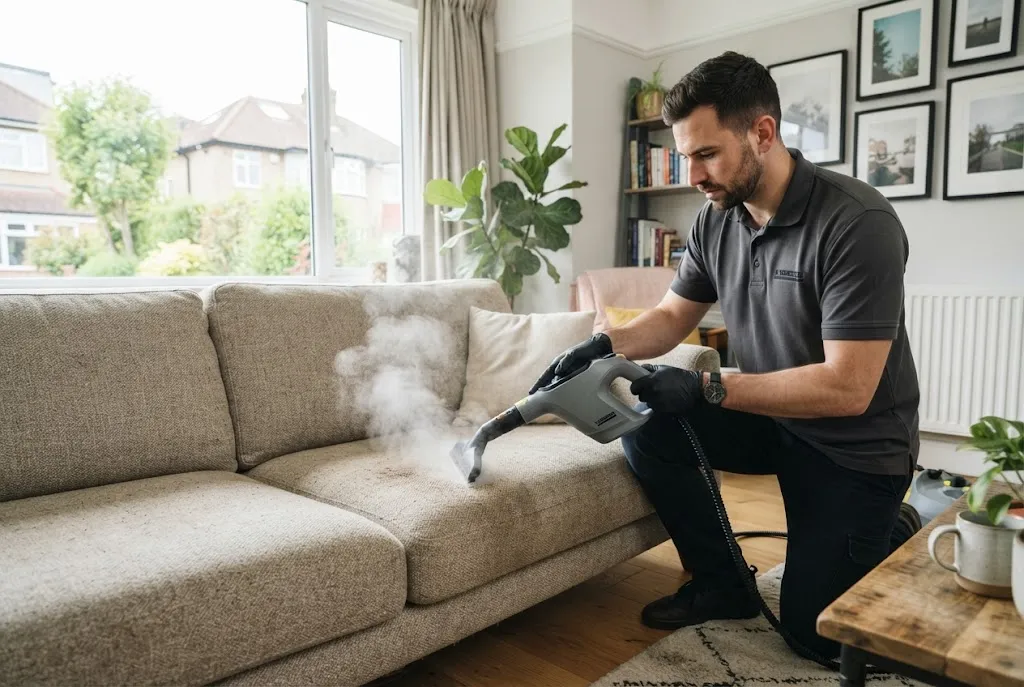
Knowing how to steam clean a sofa can help refresh upholstery, loosen dirt and reduce the need for frequent deep cleaning. Steam cleaning uses heated moisture to lift grime from suitable fabrics, but it needs to be done carefully. Not every sofa is designed to tolerate steam, and using too much moisture can leave upholstery damp for too long. This guide explains how to prepare your sofa, use a steam cleaner correctly and avoid common mistakes that can damage the fabric.
Can You Steam Clean Every Sofa?
No. Before you begin steam cleaning a sofa, check the manufacturer’s care instructions and the upholstery cleaning code, usually found on a label underneath a cushion or on the sofa frame.
Upholstery labels commonly indicate whether a fabric should be cleaned with water-based methods, solvent-based products, either method or neither. A sofa marked as suitable for water-based cleaning may be a better candidate for steam cleaning, while fabrics that require solvent-only cleaning should not be treated with a steam cleaner without professional advice.
If the label is missing or unclear, contact the manufacturer or a professional upholstery cleaning service before applying steam. Testing an inconspicuous area can also help you identify potential colour transfer or fabric problems, although a small test does not guarantee that the entire sofa will react in the same way.
What You Need to Steam Clean a Sofa
Preparing everything before you start makes the process easier and helps prevent excessive moisture. Depending on the machine and upholstery, you may need:
- A suitable upholstery steam cleaner
- A clean upholstery attachment
- A vacuum cleaner
- Clean microfiber cloths
- A soft upholstery brush, if recommended for the fabric
- Distilled or manufacturer-recommended water for the machine
- A suitable stain treatment, where appropriate
Always follow the instructions supplied with your particular steam cleaner. Different machines produce different amounts of heat and moisture, so the manufacturer’s guidance should take priority over generic cleaning advice.
How to Steam Clean a Sofa Safely
The key to effective steam cleaning sofa care is controlled moisture. The goal is to loosen and lift dirt without saturating the upholstery.
1. Read the Sofa Care Instructions
Start by checking the sofa’s cleaning label and manufacturer’s instructions. Identify the upholstery material and determine whether water-based cleaning is permitted.
Pay particular attention to delicate materials, loose dyes, decorative finishes and areas that may contain glued components. If the manufacturer’s instructions prohibit steam or water-based cleaning, choose another cleaning method instead.
2. Remove Cushions and Loose Items
Take removable cushions off the sofa where possible. Remove blankets, throws and other items from the seating area so you can access the upholstery properly.
Check beneath the cushions for crumbs, dust and other debris. This preparation step makes the later cleaning process more effective and prevents loose dirt from becoming wet during steam cleaning.
3. Vacuum the Entire Sofa
Vacuum the sofa thoroughly before introducing any moisture. Use an upholstery attachment to remove dust, hair, crumbs and loose particles from the seats, back cushions, sides and crevices.
Pay special attention to seams and gaps around cushions. Vacuuming first is an important part of learning how to steam clean a couch because a steam cleaner is not designed to replace thorough dry vacuuming.
4. Treat Suitable Stains First
Inspect the sofa for visible stains and identify what caused them if possible. A suitable upholstery stain treatment may be useful for specific marks, but always check that the product is compatible with your fabric.
Do not automatically apply strong household cleaners to upholstery. Some products can cause discolouration, leave residues or affect delicate fibres. If a stain is particularly large, old or difficult to identify, professional treatment may be safer.
5. Prepare the Steam Cleaner
Fill the steam cleaner according to its instructions and attach the upholstery tool recommended by the manufacturer. Allow the machine to reach its operating temperature before beginning.
Do not add detergents, fragrances or other chemicals to the water tank unless the machine specifically permits them. Using an unsuitable solution can damage the machine and may leave unwanted residue on the sofa.
6. Test an Inconspicuous Area
Before cleaning the visible parts of the sofa, test the steam cleaner on a hidden section. Use the machine according to its normal instructions and observe the fabric after the test area has dried.
Look for colour changes, water marks, texture changes or other unexpected reactions. If the fabric reacts badly, stop the process rather than continuing across the entire sofa.
7. Work in Small Sections
When the test area is satisfactory, begin cleaning one small section at a time. Move the upholstery attachment steadily rather than keeping steam concentrated on one spot.
Work systematically from one section to another so you do not accidentally miss areas. Avoid repeatedly passing over the same location unless the machine’s instructions specifically recommend doing so.
8. Avoid Over-Wetting the Upholstery
One of the most important parts of knowing how to clean sofa with steam cleaner is controlling moisture. Steam cleaning should not leave the sofa soaked.
Excess moisture can increase drying time and may contribute to unpleasant odours or other upholstery problems. Use the least amount of moisture that provides the desired cleaning result, following the steam cleaner manufacturer’s instructions.
9. Clean the Cushions Carefully
If the cushions are suitable for steam cleaning, treat them in the same controlled manner. Clean one area at a time and avoid saturating the filling.
Do not automatically steam both sides of a cushion. Check the care instructions first, especially if the cushion contains materials that should not become wet.
10. Allow the Sofa to Dry Completely
Proper drying is just as important as the cleaning process. Increase airflow around the sofa by opening suitable windows, using fans or improving room ventilation when conditions allow.
Keep the sofa unused until the upholstery is completely dry. Avoid covering damp upholstery with blankets or cushions because this can slow evaporation.
How Long Does a Steam Cleaned Sofa Take to Dry?
Drying time depends on the fabric, amount of moisture used, room temperature, humidity, airflow and the construction of the sofa. A lightly treated surface may dry relatively quickly, while deeper upholstery can take considerably longer.
Rather than relying on a fixed number of hours, check the sofa before using it again. The upholstery should feel completely dry rather than cool or damp to the touch. Good ventilation can help speed up the process.
Common Mistakes When You Steam Clean a Sofa
Steam cleaning can be effective when performed correctly, but several common mistakes can create problems.
Using Steam Without Checking the Fabric
Never assume that every sofa can tolerate steam. Upholstery materials have different cleaning requirements, and ignoring the manufacturer’s instructions can result in damage.
Skipping Vacuuming
Steam should not be used as a substitute for vacuuming. Loose dirt should be removed first so the cleaning process starts with a cleaner surface.
Applying Too Much Moisture
More water does not necessarily mean better cleaning. Excess moisture can make upholstery difficult to dry and may create additional problems.
Holding the Steam Tool in One Place
Keeping a hot steam tool stationary over one section can expose the fabric to unnecessary heat and moisture. Keep the tool moving according to the equipment manufacturer’s instructions.
Ignoring Drying
Using the sofa while it is still damp can interfere with proper drying. Give the upholstery enough time and airflow to dry fully before returning cushions and normal use.
Steam Cleaning Sofa vs Traditional Upholstery Cleaning
Steam cleaning is one method of cleaning upholstery, but it is not automatically suitable for every sofa or every type of soil. The appropriate approach depends on the fabric, condition of the upholstery, type of staining and manufacturer’s cleaning instructions.
For routine maintenance, regular vacuuming and prompt attention to spills can help keep a sofa looking cleaner between deeper treatments. When upholstery has significant staining, persistent odours or delicate materials, professional furniture cleaning may be more appropriate.
Understanding the difference between routine maintenance and deep sofa cleaning can also help you choose the right approach for the condition of your furniture.
When Should You Use Professional Sofa Cleaning?
Consider professional cleaning when you are unsure about the upholstery material, the manufacturer’s instructions recommend specialist treatment, or the sofa has stubborn stains that have not responded to appropriate home cleaning.
Professional cleaners can also be useful when a large sofa needs extensive treatment or when you want to minimise the risk of excessive moisture. This is particularly relevant for valuable, delicate or heavily used furniture.
How to Keep a Sofa Clean After Steam Cleaning
Once the sofa is completely dry, regular maintenance can help extend the time between deeper cleaning sessions. Vacuum the upholstery regularly, remove crumbs and debris promptly, and deal with spills as soon as the fabric’s care instructions allow.
Using removable washable covers where appropriate can also reduce the amount of dirt reaching the upholstery. Keep pets, food and drinks under control where practical, particularly in high-use areas of the sofa.
If you are choosing a cleaning product for routine maintenance, make sure it is specifically suitable for your upholstery rather than assuming that a general household cleaner will be safe.
Final Tips for Steam Cleaning a Sofa
The safest approach to how to steam clean a sofa is to check the fabric first, vacuum thoroughly, test an inconspicuous area and use controlled amounts of steam. Work methodically across small sections and avoid over-wetting the upholstery.
Most importantly, follow the sofa manufacturer’s cleaning instructions and the steam cleaner manufacturer’s directions. If the material is unsuitable for water-based cleaning or you are unsure about the correct method, professional upholstery cleaning can help protect the furniture while addressing deeper dirt and stains.
With the right preparation and careful technique, steam cleaning can be a useful part of a wider sofa-care routine without replacing regular vacuuming, stain prevention and appropriate professional cleaning when required.

1 Comment
Pingback: How to Deep Clean a Sofa: A Complete Guide