

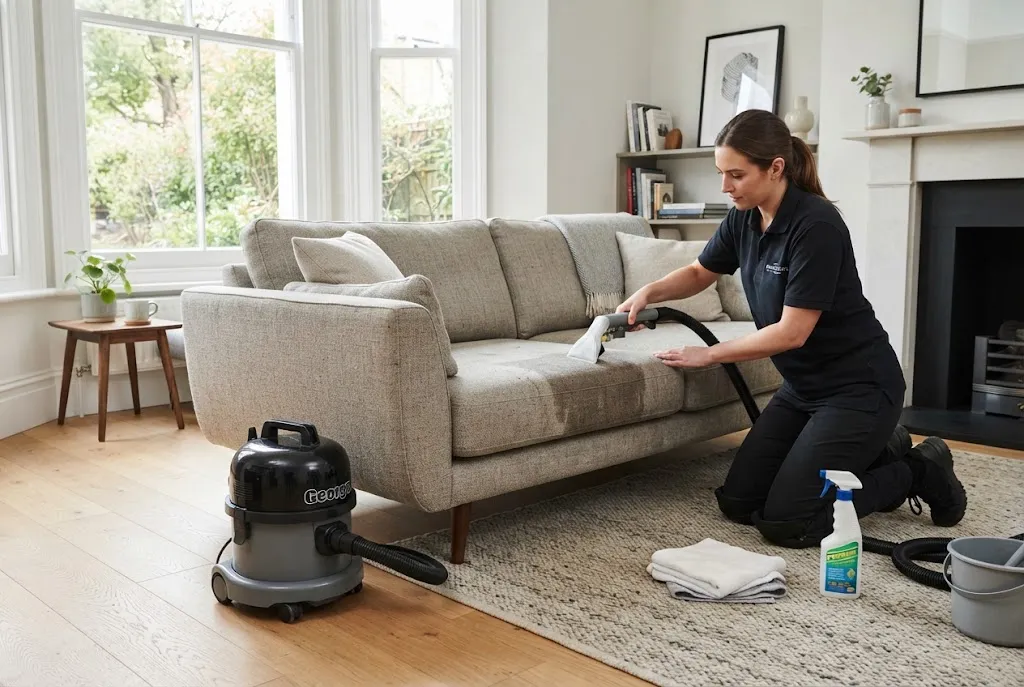
Learning how to deep clean a sofa can help remove built-up dirt, stains, dust and everyday grime that regular vacuuming cannot fully tackle. Sofas collect skin oils, food particles, pet hair and other debris over time, particularly in busy households. However, deep cleaning needs to be approached carefully because different upholstery fabrics have different care requirements. This guide explains how to deep clean a sofa safely, from checking the fabric and preparing the furniture to treating stains and drying the upholstery properly.
Why Deep Clean a Sofa?
Regular vacuuming is an important part of sofa maintenance, but it mainly removes loose surface debris. Over time, dirt can become embedded deeper into upholstery, while spills and stains may become more difficult to remove.
A proper sofa deep cleaning routine can help refresh the appearance of upholstery and remove accumulated dirt from areas that receive frequent use. It can also give you an opportunity to inspect the fabric for stains, wear and other issues that may otherwise go unnoticed.
How often a sofa needs deeper cleaning depends on its use, upholstery material, household conditions and the manufacturer’s care instructions. A frequently used family sofa may need more attention than furniture that is only used occasionally.
Can You Deep Clean Every Sofa?
Not every sofa should be cleaned using the same method. Before starting, look for the manufacturer’s cleaning label or care instructions. These should indicate which cleaning methods are suitable for the upholstery.
Some fabrics can tolerate water-based cleaning, while others require specialist or solvent-based treatment. Certain delicate materials may need professional attention rather than a home deep-cleaning method.
If you cannot find the care information, contact the manufacturer or seek advice from a professional upholstery cleaner before applying water or cleaning products.
What You Need for Sofa Deep Cleaning
The equipment required will depend on the upholstery and cleaning method, but a basic home setup may include:
- A vacuum cleaner with an upholstery attachment
- Clean microfiber cloths
- A suitable upholstery cleaning solution
- A soft upholstery brush, where appropriate
- A bucket or suitable container for water
- A clean sponge or cloth
- An upholstery or carpet extraction machine if recommended for the fabric
- Fans or good ventilation to assist drying
Always check the instructions for individual cleaning products and equipment. Avoid mixing cleaning chemicals unless the manufacturer specifically states that doing so is safe.
How to Deep Clean a Sofa Step by Step
1. Check the Upholstery Care Label
Start by identifying the upholstery fabric and checking its cleaning instructions. This is the most important preparation step because the wrong cleaning method can cause colour bleeding, shrinkage, staining or damage to the fabric.
Do not assume that a product advertised as a general fabric cleaner is suitable for every sofa. Use products designed for your particular upholstery and follow the manufacturer’s directions.
2. Remove Cushions and Accessories
Remove loose cushions, throws and other removable items from the sofa. If the cushion covers are removable and machine washable, check their care labels before washing them separately.
Look underneath and between the cushions for crumbs, dust, hair and other debris. Removing these materials before wet cleaning prevents them from becoming trapped in damp upholstery.
3. Vacuum the Sofa Thoroughly
Vacuum the entire sofa before applying any cleaning solution. Use an upholstery attachment where possible and work slowly across the seats, back cushions, sides and crevices.
Pay particular attention to seams and areas between cushions. If your sofa has removable cushions, vacuum both accessible surfaces where the manufacturer’s instructions allow it.
Thorough vacuuming is essential to effective how to deep clean a couch routines because wet cleaning should not be used as a substitute for removing loose dirt first.
4. Identify and Treat Stains
Inspect the upholstery for visible stains. If you know what caused a stain, select a suitable treatment for that type of mark and fabric.
Apply the product according to its instructions rather than using excessive quantities. Avoid aggressive scrubbing because rubbing can spread some stains or damage the appearance of upholstery fibres.
For old, large or particularly difficult stains, professional treatment may be more appropriate than repeated attempts with household products.
5. Test Your Cleaning Method
Before cleaning the entire sofa, test the selected solution or cleaning method on a small, inconspicuous section. Allow the test area to dry before judging the result.
Check for colour changes, marks, texture changes or other unexpected reactions. If the fabric reacts badly, stop and use a different approach recommended for the upholstery.
6. Prepare the Cleaning Solution
If the sofa is suitable for water-based cleaning, prepare the upholstery cleaning solution according to the product instructions. Using more detergent than recommended does not necessarily produce better results.
Too much cleaning solution can leave residue behind, which may make the upholstery feel stiff or attract additional dirt. Accurate dilution is therefore an important part of effective sofa deep cleaning.
7. Clean Small Sections at a Time
Divide the sofa into manageable sections and clean one area at a time. This makes it easier to apply the correct amount of solution and ensures that no sections are accidentally missed.
Work systematically across the sofa rather than repeatedly treating the same area. Follow the instructions for your chosen cleaning method and avoid excessive moisture.
8. Do Not Over-Wet the Sofa
One of the biggest mistakes when you deep clean sofa upholstery at home is using too much water. Upholstery can take a long time to dry when it becomes heavily saturated.
Excess moisture may also create unpleasant odours or contribute to other problems if the sofa does not dry properly. Use controlled amounts of moisture and follow the instructions provided by your cleaning equipment or product.
9. Extract or Remove Excess Moisture
If you are using an upholstery extraction machine that is suitable for your sofa, follow its instructions carefully to remove as much moisture as practical after cleaning.
If you are cleaning manually, use clean absorbent cloths to lift excess moisture where appropriate. Avoid aggressively rubbing the fabric.
The objective is to leave the upholstery clean without unnecessarily saturating the underlying padding.
10. Dry the Sofa Completely
Drying is a crucial part of how do you deep clean a couch properly. Improve airflow around the sofa by opening suitable windows or using fans when conditions allow.
Keep cushions separated where practical so air can circulate around them. Do not cover the sofa or return removable cushions to damp areas until everything is completely dry.
The actual drying time varies according to the fabric, amount of moisture, room temperature, humidity and ventilation. Always check the upholstery rather than relying on a fixed drying time.
How to Deep Clean a Couch Without Damaging It
The safest approach to deep cleaning is to match the method to the upholstery. Start with the manufacturer’s instructions, use a compatible cleaning product and test the method before treating larger areas.
Avoid household products that have not been designed for upholstery unless the manufacturer confirms that they are suitable. Strong chemicals, excessive heat, aggressive brushing and over-wetting can all create unnecessary risks.
It is also important to remember that sofa upholstery is not simply a decorative surface. The fabric sits over padding and structural materials, so moisture needs to be controlled throughout the process.
Common Sofa Deep Cleaning Mistakes
Skipping the Care Label
Ignoring the manufacturer’s instructions is one of the easiest ways to choose an unsuitable cleaning method. Always establish what the upholstery can tolerate before beginning.
Using Too Much Detergent
Excess detergent can leave residue in the fabric. Follow the recommended dilution and application instructions instead of assuming that a stronger solution will clean better.
Scrubbing Aggressively
Hard scrubbing can affect delicate fibres and may spread some stains. Use controlled movements and the tools recommended for the upholstery.
Soaking the Padding
A sofa can look clean on the surface while retaining excessive moisture underneath. Avoid saturating the upholstery and use suitable extraction equipment where appropriate.
Using the Sofa While Damp
Allow the furniture to dry completely before normal use. Sitting on damp upholstery can slow the drying process and compress moisture into areas that are harder to ventilate.
When Should You Consider Professional Sofa Upholstery Cleaning?
Home cleaning can be suitable for some washable upholstery, but professional help may be preferable in several situations. Consider professional sofa upholstery cleaning when the fabric is delicate, the care instructions recommend specialist treatment or the sofa has extensive staining.
Professional furniture cleaning can also be useful for valuable furniture where the risk of accidental damage is a concern. Experienced cleaners can assess the upholstery and select an appropriate cleaning process rather than applying the same method to every sofa.
How to Keep Your Sofa Cleaner for Longer
Deep cleaning should form part of a broader maintenance routine rather than being the only time you clean your sofa. Regular vacuuming helps remove loose dirt before it becomes embedded in the fabric.
Deal with spills promptly using a method suitable for the upholstery. Avoid rubbing stains aggressively, and always check product instructions before applying a cleaning solution.
Removable washable covers can also provide an additional layer of protection where they are designed for regular washing. Keeping food and drinks away from upholstered furniture can further reduce accidental staining.
For households that use steam as part of their cleaning routine, it is worth understanding how to steam clean a sofa safely before using a steam cleaner on upholstery.
Deep Clean a Sofa: Final Checklist
Before considering your sofa deep cleaning complete, make sure you have:
- Checked the manufacturer’s upholstery care instructions
- Removed loose cushions and accessories
- Vacuumed the sofa thoroughly
- Identified and treated suitable stains
- Tested the cleaning method on a hidden area
- Used a compatible upholstery cleaning solution
- Avoided excessive water and detergent
- Removed as much excess moisture as practical
- Allowed the sofa to dry completely
Learning how to deep clean a sofa is ultimately about using the right method for the right material. A careful approach can refresh suitable upholstery while reducing the risk of unnecessary damage. When the fabric is delicate, heavily stained or difficult to identify, professional upholstery cleaning is often a safer option than experimenting with unsuitable products at home.

2 Comments
Pingback: Cleaning Upholstery: A Practical Guide for Furniture
Pingback: Sofa Cleaning Solution: How to Choose and Use One