

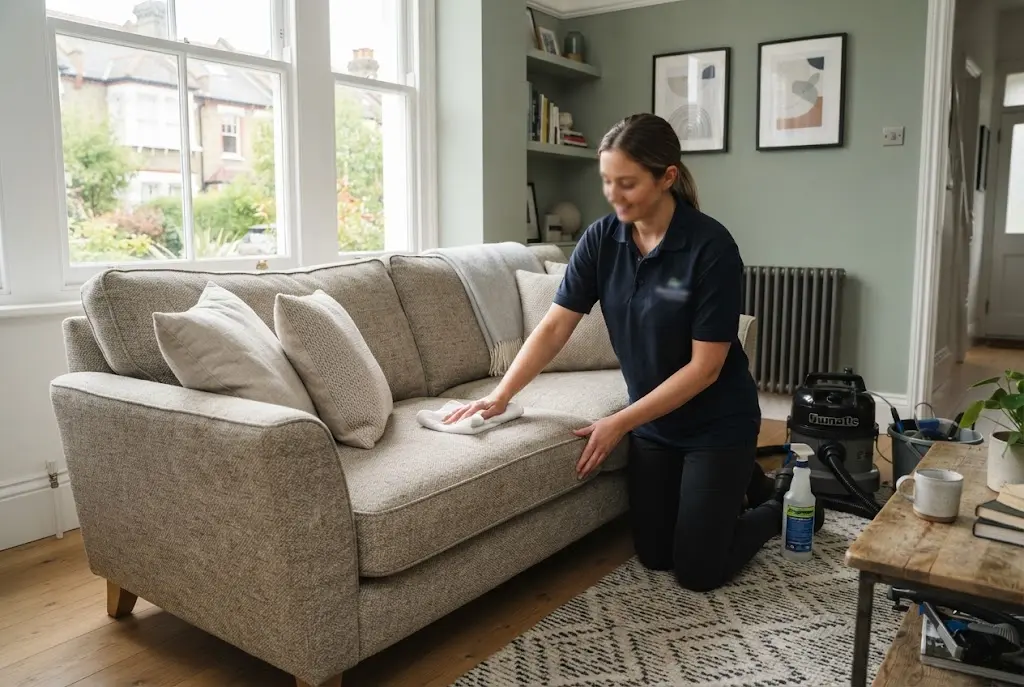
Learning how to clean a couch properly can help keep your furniture fresh, comfortable and presentable throughout the year. Couches collect dust, crumbs, pet hair, spills and everyday grime, particularly in busy households. While regular vacuuming can handle loose dirt, deeper cleaning requires a little more care. The correct method depends on the upholstery material, the manufacturer’s instructions and the type of dirt or stain you are trying to remove.
Whether you call it a couch or sofa, the basic cleaning principles are similar. Start by removing loose debris, check the upholstery care instructions, test any cleaning product and avoid using excessive moisture. If your couch is heavily soiled or made from a delicate material, professional upholstery cleaning may be more appropriate.
How to Clean a Couch Safely
The safest way to approach couch cleaning is to avoid rushing straight into wet cleaning. Begin with dry maintenance and identify what the upholstery actually needs. This helps prevent loose dirt from becoming trapped in damp fabric and reduces the risk of using an unsuitable product.
Before cleaning, look for the manufacturer’s care label or cleaning instructions. Upholstery can contain different fibres and backing materials, so a cleaning method that works on one couch may not be appropriate for another.
1. Remove Cushions and Loose Items
Take removable cushions off the couch and remove blankets, toys and other objects. Inspect the gaps between the cushions because crumbs, dust and pet hair often accumulate there.
If your couch has removable covers, check their individual washing instructions before putting them in a washing machine. A removable cover is not automatically suitable for machine washing, so always follow the manufacturer’s guidance.
2. Vacuum the Couch Thoroughly
Vacuuming should normally be the first active cleaning step. Use a suitable upholstery attachment and slowly vacuum the seats, backs, arms, sides and accessible areas underneath the cushions.
Pay particular attention to seams and corners. These areas can hold significant amounts of dust and debris that are easy to overlook during routine cleaning.
If you have pets, spend additional time removing hair from frequently used areas. Use an upholstery-safe attachment or tool rather than anything that could pull at the fabric.
3. Check the Upholstery Before Using Water
Never assume that every couch can be cleaned with water. Check the manufacturer’s instructions before applying any liquid. Some upholstery materials are suitable for carefully controlled wet cleaning, while others may require specialist treatment.
If wet cleaning is permitted, choose a product specifically intended for the upholstery. Test it on an inconspicuous area first and allow the test section to dry before continuing.
How to Clean Couch Upholstery Step by Step
Once the loose dirt has been removed and the upholstery has been checked, you can move on to targeted cleaning. Work gradually instead of applying a large amount of cleaning solution across the entire couch.
4. Treat Stains Individually
Identify visible stains and deal with them separately. Fresh spills should generally be addressed promptly because leaving them untreated can make them more difficult to remove.
For liquid spills, use a clean absorbent cloth to blot the excess. Avoid aggressive rubbing, which can spread the spill or push it deeper into the upholstery.
For dried residue, carefully remove loose material before applying an appropriate upholstery cleaner. Follow the product instructions and use only the amount required.
5. Clean Small Sections
If the upholstery is suitable for the chosen cleaning method, work in small sections. Apply the cleaning solution carefully and avoid saturating the material.
Use a clean cloth, sponge or suitable upholstery brush according to the manufacturer’s recommendations. Gentle cleaning is preferable to aggressive scrubbing because excessive friction can affect some fabrics and finishes.
6. Rinse or Remove Residue as Directed
Some upholstery cleaning products require residue to be removed after application, while others are designed to dry into the fabric. Follow the product instructions rather than improvising.
Leaving excessive cleaning product behind can attract additional dirt or leave the upholstery feeling stiff or sticky. Controlled application is therefore important.
Best Way to Clean a Couch at Home
The best way to clean a couch depends on its upholstery, but a practical home routine can follow these steps:
- Check the manufacturer’s care instructions.
- Remove cushions and loose objects.
- Vacuum the entire couch thoroughly.
- Identify stains and heavily used areas.
- Select a suitable upholstery cleaner.
- Test the product on a hidden section.
- Treat individual stains carefully.
- Clean larger sections gradually if appropriate.
- Avoid excessive moisture.
- Allow the upholstery to dry completely.
This approach is generally more controlled than soaking the entire couch or using an untested household cleaning product.
Couch Cleaning for Common Stains
Different types of dirt can require different approaches. The safest method is always determined by the upholstery manufacturer’s instructions and the cleaning product’s directions.
Food and Drink Spills
Remove solid food particles carefully and blot excess liquid with a clean cloth. Avoid rubbing the affected area vigorously. Once the excess has been removed, use a compatible upholstery cleaner if the fabric permits it.
Pet Hair
Vacuum slowly across the upholstery, concentrating on cushions, seams and areas where pets regularly sit. A suitable pet-hair removal tool can help with stubborn hair, provided it is safe for the material.
Greasy Marks
Grease and oily marks can be difficult because they may penetrate the upholstery fibres. Avoid applying a strong household degreaser unless it is specifically approved for the material. A suitable upholstery cleaner may provide a safer option.
Everyday Dust
Regular vacuuming is usually the most practical way to manage surface dust. Pay attention to the back, sides, arms and areas beneath removable cushions rather than cleaning only the visible seating surface.
Unpleasant Odours
If a couch develops an unpleasant smell, begin by vacuuming it thoroughly and identifying the likely source. Surface odours may improve following appropriate cleaning and ventilation. Persistent odours can indicate contamination deeper within the upholstery and may require professional treatment.
How to Wash a Couch Without Damaging It
Many people search for how to wash a couch, but upholstery should not automatically be treated like ordinary washable clothing. Excessive water can penetrate padding and make the couch difficult to dry.
Instead of soaking the upholstery, use a controlled amount of suitable cleaning solution if the manufacturer’s instructions allow wet cleaning. Work in small areas and avoid repeatedly saturating the same section.
After cleaning, allow the couch to dry thoroughly. Improve air circulation around the furniture and keep the room appropriately ventilated. Do not put damp cushions back into place or cover the couch before the upholstery has dried.
How to Clean a Cloth Couch
Cloth upholstery needs careful handling because different fabrics can respond differently to water, detergents and mechanical cleaning. Start with thorough vacuuming before considering any liquid treatment.
If your couch is made from cloth, follow the manufacturer’s cleaning instructions and use a product specifically intended for the material. For more detailed guidance, see our dedicated guide on how to clean a cloth sofa.
For fabric upholstery, you can also follow our guide on how to clean fabric sofa, which covers fabric-specific cleaning considerations in greater detail.
How to Clean a Couch at Home Naturally
Some homeowners prefer simple cleaning methods and want to minimise the use of commercial products. Regular vacuuming, prompt spill treatment and good general furniture maintenance can reduce the need for intensive cleaning.
However, natural ingredients are not automatically safe for every upholstery material. Homemade cleaning mixtures can potentially leave residue, change colour or affect the texture of some fabrics.
Always check the manufacturer’s instructions before using a homemade cleaning solution and test any proposed treatment on a hidden section first. Never mix household cleaning products together, particularly products containing bleach, because some combinations can create dangerous fumes.
How Often Should You Clean a Couch?
Cleaning frequency depends on how the couch is used. A heavily used family couch may need more frequent maintenance than furniture in a rarely used room.
Regular vacuuming can help prevent dust, crumbs and pet hair from building up. Spot cleaning should be carried out when spills occur, while deeper cleaning can be considered when the upholstery becomes visibly dirty or develops persistent odours.
High-contact areas such as armrests, seat cushions and headrests may require additional attention because body oils and everyday dirt can accumulate there more quickly.
When to Hire a Professional Couch Cleaner
DIY couch cleaning is useful for regular maintenance, but professional cleaning can be worth considering when upholstery is heavily soiled, stained or difficult to identify. Delicate materials can also make home cleaning risky if you do not know which products or methods are suitable.
Professional upholstery cleaners have access to specialist equipment and cleaning techniques that can be more appropriate for extensive soiling. This can also be useful when previous DIY cleaning has resulted in water marks or uneven areas.
If you are unsure how to clean your couch safely, professional advice can help you avoid damaging an expensive piece of furniture.
How to Keep Your Couch Cleaner for Longer
Regular maintenance is one of the simplest ways to reduce the need for intensive couch cleaning. Vacuum the upholstery routinely and remove crumbs and debris from between the cushions.
Deal with spills promptly rather than allowing them to dry into the fabric. If you use washable throws or covers on high-use areas, clean them according to their care instructions.
It can also help to keep food and drinks away from the couch when practical. Small preventative habits can reduce the amount of dirt and staining that reaches the upholstery.
Final Tips for Cleaning a Couch
Understanding how to clean a couch starts with identifying the upholstery and following its care requirements. Vacuum thoroughly before wet cleaning, treat stains carefully, test products before wider use and avoid excessive moisture.
If you are looking for broader sofa-cleaning guidance, our guide on how to clean a sofa covers the general process. For fabric upholstery, you can also read how to clean fabric sofa. If you need specific advice for a fabric couch, see our dedicated guide on how to clean a fabric couch.
With regular vacuuming, prompt stain treatment and suitable cleaning methods, your couch can remain fresher, cleaner and more comfortable for longer.
