

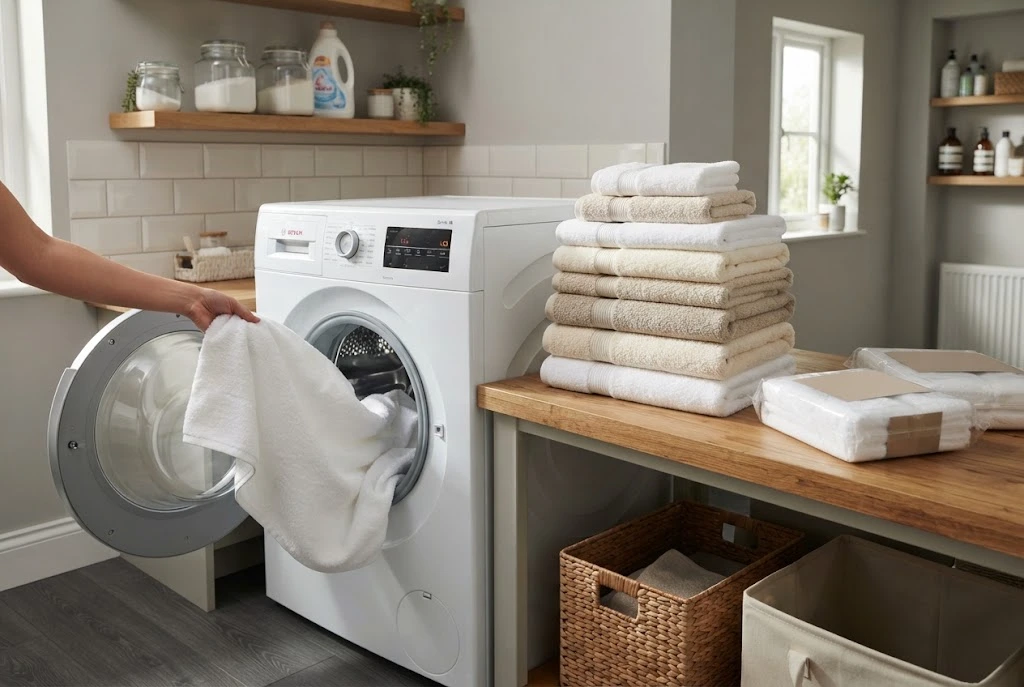
Learning how to wash new towels properly can help remove manufacturing residues, loose fibres and excess dye before you use them. Although a brand-new towel may look perfectly clean, washing it first is a sensible part of good laundry care. It can also help prepare the fibres for better everyday use and make it easier to establish a suitable washing routine from the beginning.
New towels can sometimes feel unusually smooth because of finishes applied during manufacturing or packaging. They may also shed some loose fibres during their first few washes. A suitable first wash can help prepare the towel while reducing the chance of transferring loose lint onto other laundry.
Whether you have bought bath towels, hand towels, face towels or guest towels, the basic process is straightforward. Check the care label, separate colours, use an appropriate detergent and avoid overcrowding the washing machine.
How to Wash New Towels for the First Time
The first wash does not need to be complicated. The most important thing is to follow the manufacturer’s care instructions and avoid treating new towels like delicate clothing unless the label says otherwise.
Before putting your towels into the washing machine, remove any packaging, tags or loose materials. Separate white towels from coloured towels and, where possible, wash dark or strongly coloured towels with similar shades.
A simple first-wash routine is:
- Check the towel’s care label.
- Separate towels according to colour.
- Wash new towels with similar fabrics rather than delicate clothing.
- Do not overload the washing machine.
- Use the recommended amount of laundry detergent.
- Select a suitable wash temperature and cycle.
- Avoid regular fabric softener if absorbency is important.
- Remove the towels promptly after the cycle finishes.
- Dry them thoroughly before using or storing them.
Following these steps gives the towel fibres a good start without introducing unnecessary products or excessive heat.
Should You Wash Towels Before Use?
Yes, washing towels before their first use is generally a sensible practice. A new towel may have loose fibres, manufacturing residues or excess dye that you would rather remove before the towel comes into contact with your skin.
Washing also gives you an opportunity to establish how the towel behaves in your particular washing machine. Some towels shed more lint than others during their first few washes, while certain colours may release a small amount of excess dye.
There is no need to create a complicated special treatment simply because the towel is new. In most cases, a normal wash that follows the care label is sufficient.
If you want a broader guide to towel washing, our article on how to wash towels explains temperatures, washing-machine settings, detergent use and drying in more detail.
What Temperature Should You Wash New Towels At?
The correct temperature depends on the towel’s care label. Do not assume that every new towel should automatically be washed at the hottest setting available.
Many everyday cotton towels are designed for regular machine washing, but manufacturers can specify different temperature limits. Following the label helps protect the fibres and prevents unnecessary shrinkage or colour damage.
For ordinary everyday towel washing, 40°C is commonly suitable when permitted by the care instructions. A higher temperature may be appropriate in particular circumstances, but hotter is not automatically better for every load.
If the towel has a specialist fabric, decorative details or a blend of materials, pay particular attention to the manufacturer’s instructions before selecting a programme.
Best Setting to Wash Towels for the First Time
If you are wondering about the best setting to wash towels, start with the cycle recommended for the fabric rather than looking for one universal towel programme.
For standard cotton towels, a cotton or regular towel-friendly cycle may be appropriate. The exact programme names vary between washing machines, so check your appliance manual if you are unsure.
Avoid stuffing the drum completely full. Towels absorb a considerable amount of water, become heavy during washing and need enough space to move around the drum.
A suitable cycle should allow the towels to become thoroughly wet, cleaned and rinsed. If your machine offers an additional rinse and you notice detergent residue, that option may be useful depending on the appliance and load.
Why You Should Not Overload the Machine
Overloading is particularly unhelpful when washing towels. Thick fabrics need room for water and detergent to circulate through the fibres.
A crowded drum can also make rinsing less effective. This matters because excessive detergent residue can contribute to stiff-feeling towels and may affect their absorbency.
For new towels, leaving some room in the drum can also help loose fibres wash away rather than becoming trapped against other laundry.
Should You Wash New Towels With Clothes?
It is usually better to avoid washing new towels with delicate clothes. Towels are heavier and rougher in texture than many everyday garments, and new towels may release loose lint during their first few washes.
Instead, wash them with other suitable towels or similarly durable laundry. Keep colours together and avoid combining a brand-new dark towel with light garments that could pick up loose dye or lint.
This does not mean that towels always need to be washed completely alone. The important point is to combine them with laundry that can safely share the same wash temperature, cycle and colour group.
What Detergent Should You Use for New Towels?
A standard quality laundry detergent is generally sufficient for washing new towels. You do not normally need a special cleaning product simply because the towels have never been used.
Follow the detergent manufacturer’s dosage instructions. Adding extra detergent does not necessarily produce a cleaner towel. In fact, too much product can leave residue inside thick fibres, which may contribute to stiffness or reduced absorbency.
If you have several new towels, consider the total weight of the load when deciding how much detergent to use. Always follow the product’s instructions rather than guessing based on how full the drum looks.
Should You Use Fabric Softener on New Towels?
It is generally better to avoid fabric softener when washing new towels, particularly if your priority is absorbency. Fabric conditioner can make fabrics feel smoother, but it may leave a coating over towel fibres.
That coating can interfere with the towel’s ability to absorb water effectively. A new towel may already feel soft, so there is usually little reason to add conditioner during its first wash.
If you are unsure about fabric conditioner, our detailed guide on whether you should use softener on towels explains why softness and absorbency are not always the same thing.
Instead of relying on softener, concentrate on using the correct detergent quantity, avoiding an overloaded machine and drying the towels properly.
How to Keep New Towels Soft After Washing
Once you have completed the first wash, good habits can help maintain the towel’s texture. If your goal is to learn how to keep towels soft over time, the washing and drying process matters more than adding extra products.
Use an appropriate amount of detergent and avoid excessive heat unless the care label specifically permits it. Remove towels promptly after washing and shake them out before drying.
If you air dry towels, hang them where air can circulate freely. Avoid folding a wet towel over itself in a poorly ventilated room because the inner layers can take much longer to dry.
If you use a tumble dryer, follow the care label and avoid unnecessarily high temperatures. Make sure towels are completely dry before folding them and placing them in a cupboard.
Why Do New Towels Shed Lint?
Some lint shedding is normal when towels are new. Towels are made from fibres that can release loose material during the first few washes, particularly if they have a thick or highly textured pile.
This is one reason it is useful to wash new towels separately from delicate clothing. Loose fibres can otherwise transfer onto darker garments or fabrics that attract lint.
Lint shedding should generally reduce as the towels are washed and used. However, the amount can vary according to the towel’s construction, material and quality.
Cleaning the washing machine’s lint or filter system where applicable can also help keep laundry equipment working effectively. Always follow the manufacturer’s instructions when maintaining your appliance.
How to Wash New Coloured Towels
Coloured towels deserve a little extra attention during their first few washes. Separate them from white and very light fabrics, especially when the colour is particularly dark or vibrant.
Washing similar shades together reduces the potential impact of colour transfer. It also makes the load easier to manage because you can select a temperature and cycle suitable for the whole group.
Do not assume that a towel will never release excess dye simply because it has been labelled colourfast. Following the care instructions and separating strong colours during early washes is a sensible precaution.
How to Wash New White Towels
White towels can usually be washed with other suitable white towels and laundry that can safely share the same wash programme. Avoid adding coloured garments simply because they are made from a similar fabric.
Use the temperature recommended by the manufacturer and measure detergent correctly. There is no need to use excessive detergent simply because you want to keep white towels bright.
Keep an eye on the condition of the towels after washing. If they feel coated or stiff, review detergent dosage and rinsing rather than automatically adding fabric conditioner.
Can You Wash New Towels With Other New Towels?
Yes, provided the towels have compatible care instructions and colours. Washing several new towels together can be practical because they have similar fabric characteristics and are likely to release loose fibres during the early washes.
However, do not fill the machine to its maximum capacity just because you have several new towels waiting to be washed. The towels need sufficient room to move through the water and rinse effectively.
If you have a mixture of very dark, bright and white towels, divide them into appropriate colour groups instead of putting everything into one load.
How Often Should New Towels Be Washed?
After the initial wash, new towels can be treated like other regularly used towels. The appropriate washing frequency depends on how often they are used, how well they dry between uses and who is using them.
Bath towels that are used regularly should be washed often enough to keep them fresh, particularly if they remain damp for extended periods. Hand towels in busy households may require more frequent washing because several people can use them throughout the day.
The most important habit is allowing towels to dry thoroughly between uses. A towel that remains damp for long periods can develop unpleasant odours more quickly.
Can You Use Vinegar When Washing New Towels?
Some laundry routines use white distilled vinegar as an occasional treatment for residue or odours. However, there is generally no need to introduce vinegar simply because a towel is new.
Start with a normal wash using an appropriate detergent and the care label’s recommended settings. If you later experience persistent residue or odour problems, you can investigate other towel-care methods.
If you are considering vinegar for an existing towel-care problem, read our guide on how to wash towels with vinegar first. Always check your washing machine manufacturer’s guidance before adding vinegar to laundry, and never mix vinegar with chlorine bleach.
Common Mistakes When Washing New Towels
Avoiding a few simple mistakes can make the first wash more effective.
- Using towels immediately without washing them: A first wash helps remove loose fibres and manufacturing residues.
- Overloading the drum: Thick towels need space to move and rinse.
- Using too much detergent: Excess product can remain trapped in the fibres.
- Using fabric softener automatically: It can reduce towel absorbency.
- Mixing strong colours with whites: New coloured towels may release excess dye.
- Washing new towels with delicate clothing: Lint and friction can be problematic.
- Using excessive heat: Always follow the towel’s care instructions.
- Leaving wet towels in the machine: Prompt drying helps prevent stale or musty smells.
A Simple First-Wash Routine for New Towels
If you want a straightforward answer to how to wash new towels, keep the first wash simple and consistent.
- Read the care label.
- Remove all packaging and tags.
- Separate towels by colour.
- Wash them with suitable, durable laundry.
- Use the recommended amount of detergent.
- Select an appropriate washing-machine cycle and temperature.
- Do not use regular fabric softener if absorbency is important.
- Remove towels promptly after washing.
- Shake them out before drying.
- Dry them completely before their first use.
Once this first wash is complete, continue using sensible towel-care habits. Avoid excessive detergent and unnecessary fabric conditioner, and make sure towels are properly dried after each wash.
Final Thoughts on Washing New Towels
Knowing how to wash new towels is simple, but the first wash is worth doing before a towel becomes part of your everyday routine. Washing helps remove loose fibres and potential manufacturing residues while giving you a clean starting point for future care.
Check the care label, separate colours and avoid overloading the machine. Use an appropriate detergent quantity and choose a suitable temperature and cycle. For towels where absorbency matters, skipping regular fabric softener is also a sensible choice.
After washing, remove the towels promptly and dry them thoroughly. These basic habits can help new towels remain fresh, comfortable and absorbent as they become part of your regular laundry rotation.
Good towel care does not require a complicated collection of products. A suitable first wash followed by consistent washing, rinsing and drying practices is usually the best foundation for keeping towels in good condition.
