

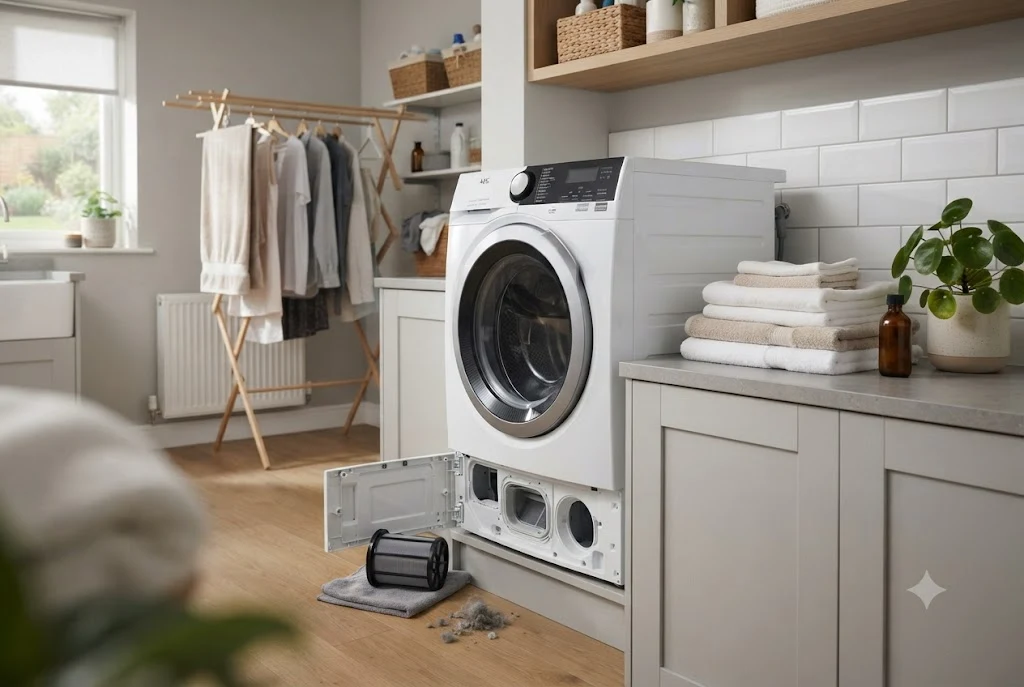
A laundry machine lint trap can help collect lint, hair, threads and small debris that would otherwise circulate through your washing machine. However, not every washing machine has a dedicated lint trap in the same location, and some modern front-loading machines rely on a drain or pump filter instead. Knowing which filter your appliance uses is therefore the first step towards proper maintenance.
Regular filter care can help prevent unpleasant smells, drainage problems and residue from building up inside the machine. It can also make laundry day easier because clothes are less likely to come out with unwanted fluff or debris. In this guide, you will learn how to identify the relevant filter, clean it safely and use simple laundry habits to reduce the amount of lint entering your machine.
What Is a Laundry Machine Lint Trap?
A laundry machine lint trap is a filter or filtering area designed to catch lint, fibres and other small particles during a wash or drying process. The exact design depends on the washing machine.
Some top-loading washing machines have a dedicated lint filter inside the drum or around the agitator area. Other models may use a drain pump or debris filter, particularly front-loading machines. Washer-dryer combinations can also have separate filters for the drying function.
For this reason, it is important not to assume that every washing machine has the same type of filter. Your appliance manual is the safest source for locating the correct filter and following model-specific instructions.
Samsung, for example, explains that its front-loading machines may use a drain pump filter that collects lint and small objects. A blocked filter can contribute to drainage problems, so regular cleaning is an important part of machine maintenance.
Why Should You Clean a Laundry Machine Lint Trap?
Lint does not simply disappear after a wash cycle. Fibres released from towels, fleece, jumpers, bedding and other fabrics can travel with the wash water. Hair, threads and small objects can also find their way into the machine’s filtering system.
When a filter becomes heavily blocked, several problems can develop. Water may drain more slowly, the machine may take longer to complete a cycle, or clothes may remain wetter than expected at the end of the wash.
A dirty filter can also contribute to unpleasant smells because damp lint, hair and residue can remain trapped in a warm, wet environment.
Cleaning the filter does not replace normal washing machine maintenance, but it is a simple habit that can help keep the appliance in better working condition.
How to Find Your Laundry Machine Lint Trap
The location of the filter depends on the washing machine design. Before opening anything, switch the machine off and check the manufacturer’s instructions.
Front-loading washing machines
On many front-loading machines, the relevant filter is located behind a small access panel near the bottom front of the appliance. It may be described as a drain pump filter, debris filter or lint filter.
The access panel can sometimes be opened by hand, while other models may require a coin or similar tool. Do not force the panel if it does not open easily because the design varies between models.
Top-loading washing machines
Some top-loading machines have a removable lint filter inside the drum. Depending on the design, it may be attached to the side of the tub or positioned near the agitator.
However, not every top-loading washing machine includes a dedicated lint filter. Always check the appliance documentation before attempting to remove a component.
Washer-dryer machines
A washer-dryer may have different filters for washing and drying. The drying system can have a dedicated lint filter, while the washing side may use a drain pump filter.
These filters should not be treated as interchangeable. Follow the manufacturer’s instructions for each one.
How to Clean a Laundry Machine Lint Trap
Once you have confirmed which filter your machine uses, cleaning it is usually straightforward. The exact procedure will vary, so use these steps as general guidance rather than a replacement for your appliance manual.
1. Turn off and unplug the machine
Before working on an accessible filter, switch off the washing machine and disconnect it from the electrical supply where appropriate. This reduces the risk of accidentally starting the machine while you are carrying out maintenance.
2. Prepare for trapped water
If your machine has a front drain pump filter, there may be residual water behind the filter. Place an old towel on the floor and keep a shallow container nearby before opening the filter area.
Some machines have an emergency drain hose that allows remaining water to be released first. If your model has one, follow the manufacturer’s instructions for using it.
3. Remove the filter carefully
Open the filter access area and remove the filter according to the manufacturer’s instructions. Do not force it, particularly if it feels stuck.
Take your time because trapped water may begin to escape as the filter is removed.
4. Remove lint and debris
Pull away visible lint, hair, threads and other debris. Check the filter carefully for small objects such as coins, buttons or hair clips.
These objects can sometimes become trapped alongside fabric fibres, so inspecting the filter thoroughly is worthwhile.
5. Rinse the filter
Rinse the removable filter under warm running water to loosen remaining dirt and fibres. A soft brush can be useful for stubborn residue, provided the manufacturer’s instructions allow it.
Clean the filter housing as well. A damp cloth can help remove lint or residue that has collected around the opening.
6. Check the surrounding area
Before replacing the filter, look inside the accessible filter housing for obvious debris. Never put your fingers deep into a mechanism or attempt to dismantle internal components.
If something appears damaged, broken or inaccessible, professional appliance support may be safer than trying to remove it yourself.
7. Reinstall the filter securely
Replace the filter and tighten or lock it according to the manufacturer’s instructions. It needs to be properly seated to reduce the risk of leaks or machine faults.
Close the access panel and check the area for signs of water leakage before returning to normal washing.
How Often Should You Clean a Laundry Machine Lint Trap?
There is no single cleaning schedule that applies to every washing machine. The recommended frequency depends on the appliance, how often it is used and the types of laundry being washed.
Homes that frequently wash towels, fleece garments, pet bedding or heavily soiled clothing may see more lint and debris than households washing lighter fabrics.
Instead of relying on a universal timetable, check the manufacturer’s maintenance recommendations. Some manufacturers recommend periodic filter cleaning, while certain machines may provide alerts or instructions based on the appliance design.
It is also sensible to inspect the filter if you notice slow drainage, unusual smells, excessive residue or clothes that remain unusually wet after the spin cycle.
Can Washing Bags Reduce Lint and Debris?
A washing bag can be useful for protecting delicate garments and keeping smaller laundry items together during a cycle. They are particularly handy for items such as lingerie, lightweight fabrics and small washable accessories.
Using washing bags for washing machine loads can also reduce the chance of small items becoming separated from the rest of the laundry. However, a washing bag is not a substitute for cleaning the machine’s filter.
Similarly, a laundry bag for washing machine should be used according to its care instructions and the garment manufacturer’s recommendations. Do not overload the bag, because tightly packed items may not wash or rinse properly.
If you regularly wash small or delicate garments, keeping a few suitable laundry bags for washing machine use can make sorting and handling laundry easier.
How to Reduce Lint in Your Washing Machine
Cleaning the filter is only one part of good laundry care. A few everyday habits can reduce the amount of lint entering the machine in the first place.
Separate heavy lint-producing fabrics
Towels, fleece and fluffy fabrics can release more fibres than smoother garments. Washing similar fabrics together can make it easier to manage lint.
Check pockets before washing
Coins, tissues, paper and small objects can create additional debris and may become trapped in the filter. Emptying pockets before every wash takes only a few seconds.
Do not overload the drum
Overloading can restrict movement inside the drum and prevent clothes from being washed and rinsed effectively. Follow the load guidance provided for your machine.
Use the correct amount of detergent
More detergent does not necessarily mean cleaner clothes. Excess product can contribute to residue, particularly when the machine is regularly used with unsuitable quantities.
Leave the machine able to dry
After a wash, leave the door and detergent drawer open where the appliance design and household setup allow it. Allowing moisture to escape can help reduce the damp environment in which unpleasant smells develop.
What If the Washing Machine Still Does Not Drain?
If you have cleaned the relevant filter but the machine still struggles to drain, there may be another cause. Check the drain hose for obvious kinks or blockages and consult your appliance manual for model-specific troubleshooting.
A blocked pump filter can affect drainage, but it is not the only possible cause. Electrical faults, pump problems, hose blockages and other mechanical issues may require professional attention.
For safety, do not dismantle electrical or mechanical components unless you are qualified and the manufacturer’s instructions specifically support the procedure.
Keep Your Whole Laundry Routine Cleaner
A clean filter works best alongside good laundry habits. Sorting clothes before washing, using suitable wash cycles and keeping the washing machine itself clean can all contribute to better laundry results.
For a wider approach to garment care, learning about sorting laundry can help you separate fabrics and colours more effectively before each wash.
After washing, clothes also need proper finishing and care. If you are working towards a more efficient routine, you can also explore clean and iron techniques for handling freshly washed garments.
Keeping your iron clean is another useful part of the process. A dirty soleplate can transfer marks or residue onto freshly laundered clothing, so knowing how to clean an iron can help complete your garment-care routine.
Final Thoughts
Knowing how your laundry machine lint trap works can make routine washing machine care much easier. The filter may be a dedicated lint catcher, a drain pump filter or another component depending on the appliance.
Clean the correct filter according to your manufacturer’s instructions, remove visible lint and debris, and take extra care with any trapped water. At the same time, simple habits such as checking pockets, avoiding overloaded loads and using suitable washing bags can help keep your laundry routine organised.
Most importantly, do not assume every washing machine has the same filter design. When in doubt, consult the model-specific manual before removing or cleaning any component. A few minutes of careful maintenance can help you avoid unnecessary drainage problems and keep your laundry routine running smoothly.
“`
