

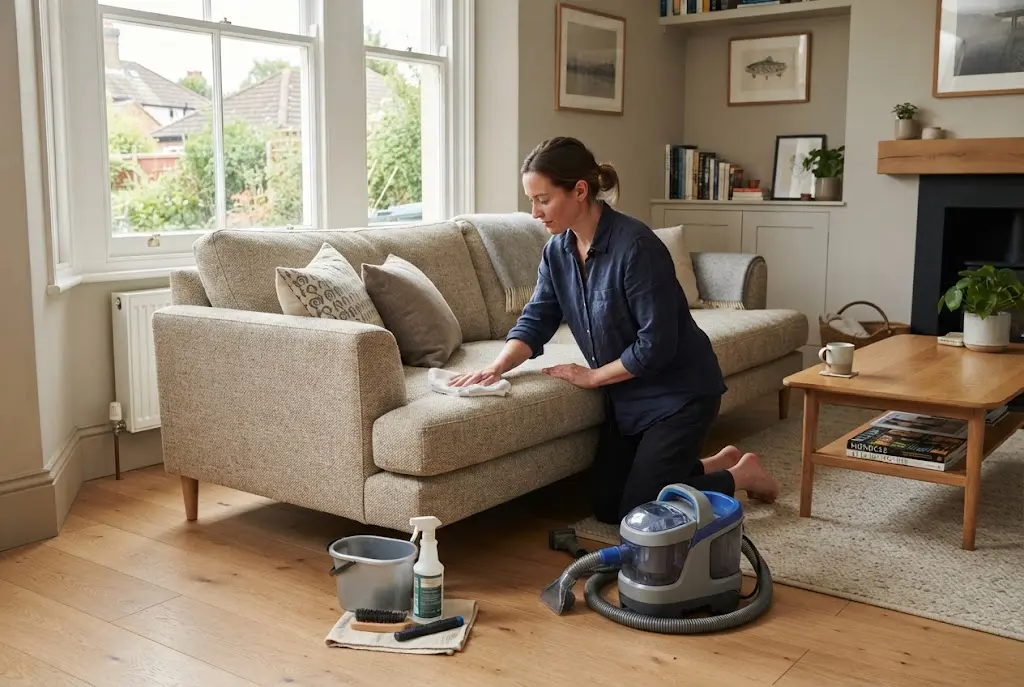
Learning how to clean cloth sofa upholstery properly can help keep your furniture looking fresh and feeling comfortable for longer. Cloth sofas are exposed to everyday dust, crumbs, pet hair, spills and body oils, so even a sofa that looks reasonably clean can benefit from regular maintenance. The key is to use a cleaning method that suits the material rather than treating every sofa in exactly the same way.
Before you start cleaning a cloth sofa, check its care label or manufacturer’s instructions. Some materials can tolerate carefully controlled moisture, while others require specialist cleaning. If you already know the upholstery is suitable for home cleaning, a careful combination of vacuuming, spot treatment and gentle upholstery cleaning can deal with many everyday problems.
How to Clean Cloth Sofa Safely
The safest way to approach cloth sofa cleaning is to begin with dry cleaning methods and only introduce a suitable cleaning solution when necessary. This prevents loose dirt from becoming wet and harder to remove and helps limit the amount of moisture introduced into the upholstery.
Professional cleaning guidance also stresses the importance of using appropriate cleaning methods and products for the job. The British Cleaning Council identifies product knowledge and appropriate cleaning equipment as important parts of effective cleaning practice. British Cleaning Council cleaning guidance provides additional information about cleaning principles and product use.
1. Read the Sofa Care Label
Start by checking the manufacturer’s instructions. Look for information about whether the upholstery can be cleaned with water, whether a particular cleaning product is recommended and whether professional cleaning is required.
This step should not be skipped simply because the sofa appears to be made from ordinary cloth. Upholstery can contain different fibres, treatments and backing materials, and they may react differently to moisture or cleaning chemicals.
2. Remove the Cushions
Take removable cushions off the sofa and remove blankets, toys and other objects. Check underneath and between the cushions because these areas often collect crumbs, dust and hair.
If the cushions have removable covers, inspect their individual care instructions before washing them. A removable cover does not necessarily mean it should be placed in a washing machine.
3. Vacuum the Entire Sofa
Thorough vacuuming is an essential part of learning how to clean a cloth couch. Use an upholstery attachment and slowly clean the seats, backs, arms, sides and accessible areas underneath the cushions.
Pay particular attention to seams, corners and crevices. Dust and small particles can become trapped in these areas, especially when a sofa is used every day.
If you have pets, spend additional time removing hair from the upholstery. Use an attachment or tool that is appropriate for the fabric and avoid anything that could pull at loose fibres.
How to Clean a Cloth Sofa After Vacuuming
Once the loose dirt has been removed, inspect the sofa for stains, marks and areas that appear more heavily soiled. Do not immediately apply a cleaning solution to the entire sofa. Instead, identify the affected areas and choose a product that is specifically suitable for the upholstery.
Before treating a large section, test the product on a hidden area. Allow it to dry and check for colour changes, fading, marks or changes in texture. If the fabric reacts unexpectedly, stop using the product.
4. Treat Fresh Spills Quickly
Fresh spills are generally easier to manage when addressed promptly. Remove solid material carefully and use a clean absorbent cloth to blot excess liquid.
Avoid vigorous rubbing. Scrubbing can spread a spill across a larger section of the sofa and may force the substance deeper into the fibres.
After blotting, follow the upholstery manufacturer’s instructions for treating the remaining mark. Use only a suitable amount of cleaning solution and avoid soaking the fabric.
5. Clean Small Sections at a Time
If your cloth sofa is suitable for the cleaning method you have selected, work on manageable sections. This makes it easier to control moisture and prevents you from applying too much product across the entire sofa.
Use a clean cloth, sponge or upholstery brush as recommended by the cleaning product and fabric manufacturer. Work gently rather than aggressively scrubbing the surface.
When cleaning products are involved, follow the label instructions carefully. Avoid mixing different cleaning chemicals together, as some combinations can produce harmful reactions.
Best Way to Clean Cloth Sofa at Home
The best way to clean cloth sofa upholstery depends on the material and its care requirements, but a sensible home-cleaning routine generally follows this order:
- Check the manufacturer’s care instructions.
- Remove cushions and loose objects.
- Vacuum the entire sofa thoroughly.
- Identify stains and heavily used areas.
- Select a suitable upholstery cleaning product.
- Test the product on an inconspicuous area.
- Treat stains individually.
- Clean the remaining upholstery in small sections if appropriate.
- Use as little moisture as the cleaning method requires.
- Allow the sofa to dry completely before regular use.
This gradual approach is preferable to soaking the sofa or applying an untested household cleaner across the entire surface.
How to Clean a Cloth Couch Without Over-Wetting
One of the biggest problems with DIY upholstery cleaning is excessive moisture. Cloth upholstery may take a long time to dry if too much water or cleaning solution is used, particularly when moisture reaches the padding underneath.
For this reason, use controlled amounts of liquid and follow the instructions for the chosen product. Do not repeatedly saturate an area in an attempt to remove a stubborn mark.
After cleaning, provide good air circulation around the sofa and allow the upholstery to dry fully. Do not cover the sofa or return damp cushions to their normal position before they have dried.
How to Clean Material Sofa for Different Types of Dirt
Everyday dirt does not always require the same treatment as a visible stain. Understanding the difference can make sofa maintenance easier and reduce unnecessary use of cleaning products.
Dust and Everyday Dirt
Vacuuming is usually the first step. Concentrate on areas that receive frequent use, including seat cushions, armrests and the sections around seams.
Food Crumbs
Remove solid particles before using any liquid cleaner. A vacuum attachment can help collect crumbs from narrow gaps between cushions.
Pet Hair
Vacuum slowly and use a suitable pet-hair removal tool if required. Avoid harsh scraping that could damage the cloth fibres.
Liquid Spills
Blot the excess liquid with a clean absorbent cloth. Avoid rubbing the spill outward and check the upholstery instructions before applying a cleaning product.
Persistent Odours
Begin by vacuuming the sofa thoroughly and identifying the likely source of the smell. If the odour remains after appropriate surface cleaning, the issue may require deeper upholstery treatment.
What Makes a Good Cloth Sofa Cleaner?
A good cloth sofa cleaner is not necessarily the strongest product available. The most important consideration is whether it is suitable for the specific upholstery.
Check the product label for information about fabric compatibility and follow the recommended dilution and application instructions. Avoid assuming that a product designed for carpets, hard floors or other household surfaces is automatically suitable for a sofa.
It is also sensible to be cautious about products making unusually broad cleaning claims. The British Cleaning Council advises buyers to be cautious about cleaning-product claims and to use reputable suppliers. This is another reason to follow the sofa manufacturer’s recommendations rather than choosing a product solely because it appears powerful.
How to Clean Cloth Sofa Naturally
Some people prefer to minimise the use of commercial cleaning products. If you want a simpler approach, regular vacuuming and prompt spill treatment can form the foundation of cloth sofa care.
However, natural ingredients should not automatically be considered safe for every upholstery fabric. Homemade mixtures can sometimes leave residue, change the colour of the material or affect its texture.
Always test any homemade or natural cleaning mixture on a hidden section before applying it to a visible part of the sofa. If the manufacturer recommends a particular upholstery cleaner, following those instructions is generally a safer option.
How Often Should You Clean a Cloth Sofa?
There is no universal cleaning schedule because different sofas experience different levels of use. A sofa in a busy family room may require more frequent maintenance than one in a formal or rarely used space.
Regular vacuuming can help prevent dust, crumbs and hair from accumulating. Spot cleaning should be carried out when spills happen, while deeper cleaning can be considered when the upholstery becomes visibly dirty or develops persistent odours.
Households with children or pets may find that high-contact areas need additional attention. Armrests, seat cushions and frequently used sections can accumulate dirt faster than other parts of the sofa.
When to Use a Professional Cloth Sofa Cleaner
DIY cleaning is useful for routine maintenance, but there are times when professional upholstery cleaning may be more appropriate. Extensive staining, deeply embedded dirt, persistent odours and delicate materials can all make home cleaning more difficult.
Professional cleaners may also be useful when you are unsure which cleaning method is appropriate for your sofa. Specialist upholstery equipment can provide a more controlled cleaning process than improvised household methods.
If a previous cleaning attempt has caused water marks, colour changes or uneven results, avoid repeatedly applying more products. Professional assessment may be a safer next step.
How to Keep a Cloth Sofa Cleaner for Longer
Regular maintenance can reduce the amount of intensive cleaning your sofa needs. Vacuum the upholstery regularly and pay attention to the gaps between cushions.
Deal with spills as soon as practical rather than allowing them to dry into the fabric. If you use washable throws or covers on high-use areas, clean them according to their care instructions.
It is also useful to avoid eating messy foods directly over the sofa where possible. Small habits like these can reduce the amount of dirt that reaches the upholstery in the first place.
Final Tips for Cleaning a Cloth Sofa
Knowing how to clean cloth sofa upholstery safely is mainly about using the right method for the material. Start with the manufacturer’s care instructions, remove loose dirt with thorough vacuuming, treat stains carefully and avoid excessive moisture.
The same principles apply when you need to clean a sofa generally, although the exact method should always reflect the upholstery type. If your furniture has fabric upholstery, our guide on how to clean fabric sofa provides additional guidance. For people who use the term couch rather than sofa, our dedicated guide to how to clean a couch covers the same wider cleaning topic.
With regular vacuuming, prompt stain treatment and suitable cleaning methods, a cloth sofa can remain cleaner and fresher while avoiding unnecessary damage to its upholstery.

1 Comment
Pingback: How to Clean a Couch: A Practical Step-by-Step Guide