

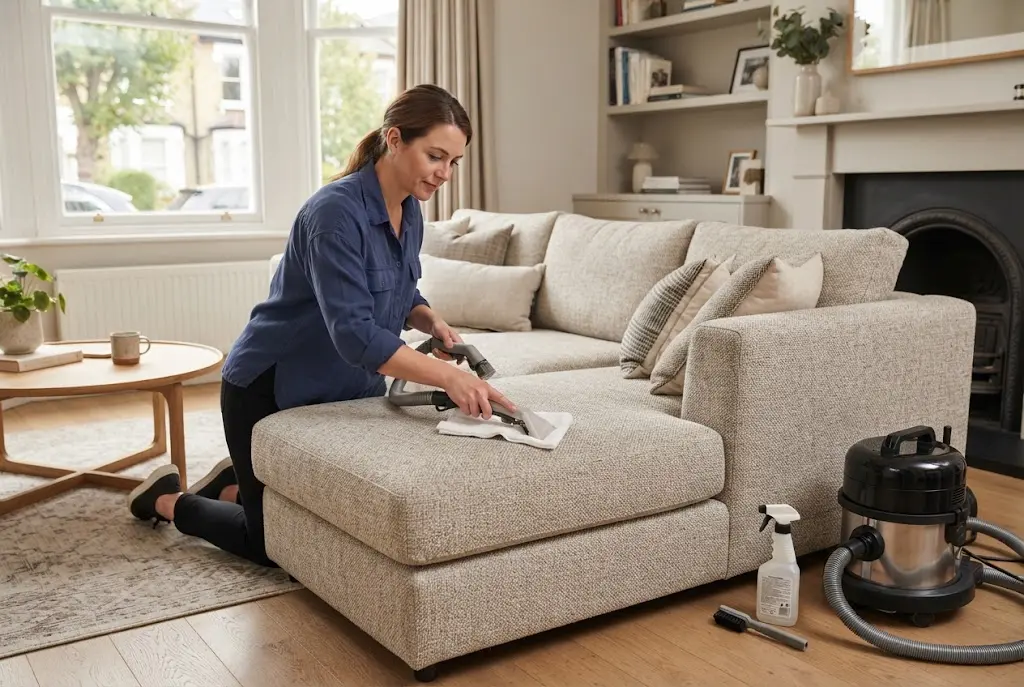
Learning how to clean fabric couch upholstery correctly can help you keep your furniture looking fresh and comfortable while avoiding unnecessary damage. Fabric couches naturally collect dust, crumbs, pet hair, spills and everyday grime. Although regular vacuuming can remove much of this surface dirt, deeper cleaning requires a more careful approach.
The safest method depends on the upholstery material and the manufacturer’s care instructions. Before using water or a cleaning product, check the couch label and identify whether the fabric is suitable for the proposed treatment. With the right preparation, you can deal with everyday dirt and many minor stains at home while reducing the risk of colour changes, excessive moisture or fabric damage.
How to Clean a Fabric Couch Safely
The first rule of fabric couch cleaning is simple: do not assume that every fabric can be cleaned in the same way. Upholstery can be made from different fibres and blends, and each material may have different care requirements.
Start by checking the manufacturer’s instructions. If the label recommends professional cleaning, follow that advice instead of experimenting with household products. If home cleaning is permitted, begin with dry cleaning methods before introducing any moisture.
1. Remove Cushions and Loose Items
Remove loose cushions, blankets and other objects from the couch. Check between and underneath the cushions for crumbs, dust, pet hair and other debris.
If your couch has removable cushion covers, read their care instructions separately. A cover that can be removed does not necessarily mean it can safely be washed in a standard washing machine.
2. Vacuum the Fabric Couch
Thorough vacuuming is one of the most important stages when learning how to clean a fabric couch. Use a suitable upholstery attachment and move slowly across the seats, back cushions, arms and other accessible surfaces.
Pay particular attention to seams and corners. These areas often collect debris that is missed during quick vacuuming. If pets regularly use the couch, spend additional time removing embedded hair.
Vacuuming before wet cleaning also helps prevent loose dirt from becoming mixed with cleaning solution and spreading across the upholstery.
3. Inspect the Upholstery
After vacuuming, inspect the couch in good lighting. Look for stains, discolouration, food residue and areas that appear more heavily used than the rest of the furniture.
Do not automatically treat every mark with the same product. Identify the type of stain where possible and select a cleaner that is specifically suitable for the upholstery.
How to Clean Fabric Couch Upholstery Step by Step
Once the fabric has been checked and loose dirt removed, you can move on to targeted cleaning. A gradual approach is preferable to covering the entire couch with water or cleaning solution.
4. Test the Cleaning Product
Before using a fabric cleaner across a visible section, test it on a small, hidden area. Follow the product’s instructions and allow the test area to dry.
Check for colour transfer, fading, water marks, texture changes or any other unexpected reaction. If the fabric reacts badly, do not continue using the product.
This simple test can help prevent a small cleaning problem from becoming a much larger upholstery problem.
5. Blot Fresh Spills
If a liquid has recently been spilled, act promptly. Use a clean absorbent cloth to blot as much of the liquid as possible.
Avoid aggressive rubbing. Scrubbing can spread the spill over a wider area and may force it deeper into the fabric fibres. Instead, use gentle blotting movements and follow the manufacturer’s cleaning instructions for the remaining mark.
6. Treat Stains Individually
For visible stains, apply an upholstery-safe cleaner according to its instructions. Work on the affected area rather than unnecessarily treating the entire couch.
Use a clean cloth or suitable upholstery brush if recommended. Avoid excessive pressure and do not repeatedly saturate the same area.
Best Way to Clean Fabric Couch at Home
The best way to clean fabric couch upholstery will depend on the specific material, but a practical routine is:
- Check the manufacturer’s care instructions.
- Remove cushions and loose items.
- Vacuum the entire couch carefully.
- Identify stains and heavily used areas.
- Choose a cleaner suitable for the upholstery.
- Test the product on an inconspicuous section.
- Blot fresh spills rather than rubbing them.
- Treat visible stains individually.
- Clean larger sections only when appropriate.
- Use controlled amounts of moisture.
- Allow the upholstery to dry completely.
This process is more controlled than applying a large amount of cleaning solution to the entire couch at once.
How Do You Clean a Fabric Couch With Common Stains?
Different types of stains can behave differently on upholstery. The correct treatment should always be based on the fabric manufacturer’s instructions and the cleaning product being used.
Food and Drink Stains
Remove solid food particles carefully and blot excess liquid with a clean cloth. Avoid rubbing the affected area because this can spread the stain and push material further into the fibres.
Once the excess has been removed, use a suitable upholstery cleaner if the fabric permits the treatment.
Pet Hair and Dirt
Vacuum slowly over the fabric and concentrate on areas where pets regularly sit. If necessary, use a pet-hair removal tool that is safe for the upholstery.
Avoid sharp tools or aggressive scraping because these can pull or damage fabric fibres.
Greasy Marks
Grease and oily residue can be difficult to remove because they may penetrate the upholstery. Do not automatically use a household degreaser, as it may not be suitable for fabric.
Instead, select an upholstery product designed for the specific material and follow its instructions carefully.
Persistent Odours
If your fabric couch develops an unpleasant odour, begin by vacuuming it thoroughly and checking for the source. Surface odours may improve after suitable cleaning and ventilation.
If the smell remains despite appropriate surface cleaning, deeper contamination may be involved and professional upholstery cleaning may be more suitable.
Good Fabric Cleaner for a Couch: What to Look For
When choosing a good fabric cleaner for a couch, compatibility is more important than simply choosing the strongest product. Check whether the product is designed for upholstery and whether it is appropriate for your particular fabric.
Follow the product’s instructions for application, dilution and drying. Using more product than recommended does not necessarily improve the result and may leave residue behind.
Avoid mixing different cleaning products. Some chemical combinations can create harmful reactions, particularly when products containing bleach are involved.
How to Clean Fabric Couches at Home Without Over-Wetting
Excessive moisture is one of the main concerns with home upholstery cleaning. If too much liquid penetrates the fabric and padding, the couch may take a long time to dry.
Use only the amount of cleaning solution required by the product instructions. Work in small sections and avoid repeatedly soaking the same area.
After cleaning, allow the couch to dry thoroughly. Improve air circulation around the furniture and keep the room appropriately ventilated. Avoid covering the couch or replacing damp cushions before the upholstery has dried.
How to Clean a Fabric Couch Naturally
Some homeowners prefer to use simple or natural cleaning methods. Regular vacuuming is a useful starting point because it removes loose dirt without adding moisture.
However, natural ingredients are not automatically safe for every fabric. Homemade mixtures can sometimes leave residue, alter colour or change the texture of upholstery.
If you decide to use a homemade cleaning mixture, test it on a hidden area first and allow the section to dry before applying it elsewhere. If the manufacturer specifies an approved upholstery cleaner, following those instructions is generally the safer approach.
How to Dry a Fabric Couch After Cleaning
Proper drying is an important part of cleaning a fabric couch. Do not assume the job is finished as soon as the visible stain disappears.
Allow the upholstery to dry fully before returning the cushions to their usual positions or covering the couch. Keep air moving around the furniture and ventilate the room where practical.
Avoid applying excessive heat unless the manufacturer’s instructions specifically permit it. Some upholstery materials can be affected by high temperatures.
How Often Should You Clean a Fabric Couch?
The ideal cleaning frequency depends on the amount of use the couch receives. A busy family living room may require more frequent maintenance than a couch that is only occasionally used.
Regular vacuuming can help control dust, crumbs and pet hair. Spot cleaning should be carried out when spills occur, while deeper cleaning can be considered when the upholstery becomes visibly dirty or develops persistent odours.
High-contact areas such as armrests, seat cushions and headrests may need additional attention because they can accumulate body oils and everyday grime more quickly.
When to Use Professional Fabric Couch Cleaning
DIY cleaning can be useful for routine maintenance, but professional cleaning may be more appropriate when a fabric couch is heavily soiled, extensively stained or made from a delicate material.
Professional upholstery cleaners have access to specialist equipment and cleaning methods that may provide better control over moisture and difficult contamination.
If you are uncertain about the correct cleaning method, seeking professional advice can be preferable to repeatedly testing household products on expensive upholstery.
How to Keep a Fabric Couch Cleaner for Longer
Regular maintenance can reduce the need for intensive cleaning. Vacuum your couch routinely, especially around seams and underneath removable cushions.
Deal with spills promptly and avoid allowing food crumbs or other debris to accumulate. If washable throws or covers are used on high-contact areas, clean them according to their care instructions.
It can also help to establish simple household habits, such as avoiding particularly messy food on the couch and keeping pets’ resting areas clean.
Final Tips for Cleaning a Fabric Couch
Knowing how to clean fabric couch upholstery safely means understanding the material before applying any cleaning method. Start with the manufacturer’s instructions, vacuum thoroughly, test cleaning products and treat stains carefully.
If you want broader upholstery advice, our guide on how to clean a sofa covers the general sofa-cleaning process. You can also read how to clean fabric sofa for fabric-specific guidance or explore how to clean a cloth sofa for additional advice on cloth upholstery.
For general couch maintenance, our guide to how to clean a couch provides another useful overview of routine upholstery care.
With regular maintenance, prompt stain treatment and suitable cleaning products, a fabric couch can remain cleaner, fresher and more comfortable for longer.
