

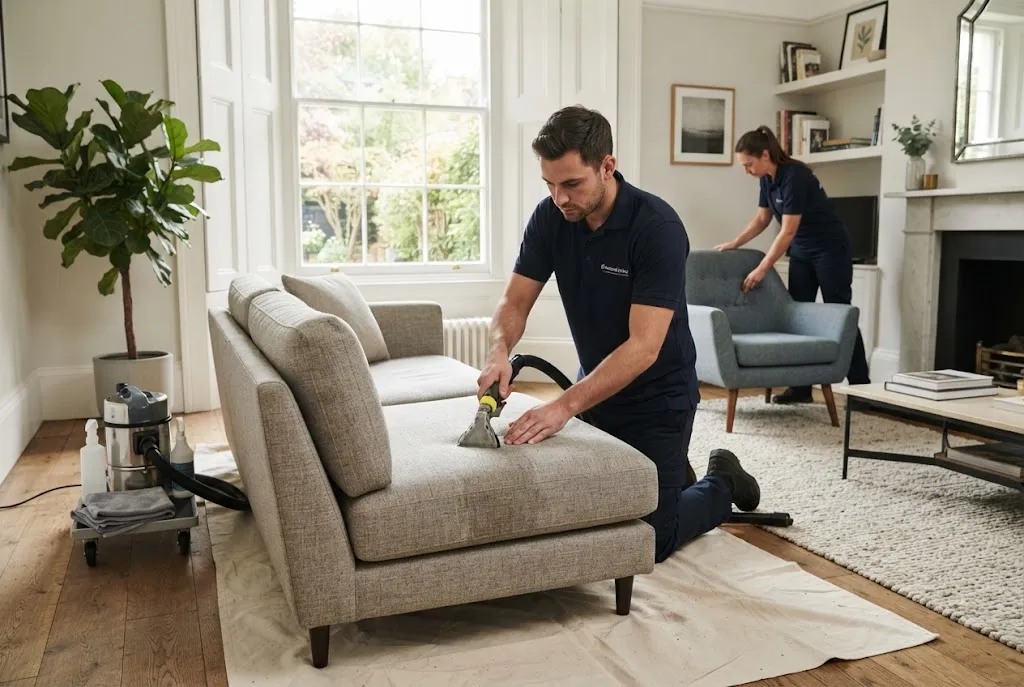
Cleaning upholstery regularly can help keep sofas, chairs and other upholstered furniture looking fresher and feeling more comfortable. Fabric furniture collects dust, crumbs, pet hair, body oils and spills through everyday use, so occasional vacuuming may not be enough to keep it in good condition. However, upholstery should never be cleaned using a one-size-fits-all method. Different fabrics and furniture constructions require different levels of care. This guide explains how to approach upholstery cleaning safely, what to check before starting and when professional furniture cleaning may be the better option.
What Is Upholstery Cleaning?
Upholstery cleaning is the process of removing dirt, dust, stains and other contamination from the fabric or material covering furniture such as sofas, armchairs, dining chairs and upholstered beds.
The cleaning method can range from routine vacuuming and spot treatment to deeper water-based or specialist cleaning. The appropriate approach depends on the upholstery material, manufacturer’s instructions, condition of the furniture and type of dirt or staining involved.
Good upholstery care is not simply about making furniture look clean. It is also about avoiding methods that could damage fibres, alter colours or introduce excessive moisture into the furniture.
Why Is Cleaning Upholstery Important?
Upholstered furniture is used frequently in many homes, which means dirt can gradually accumulate in places that are not immediately visible. Dust and debris can settle between cushions and along seams, while spills can penetrate the fabric if they are not dealt with promptly.
Regular maintenance can reduce the amount of dirt that builds up between deeper cleaning sessions. It can also make it easier to identify stains and fabric damage before they become more difficult to address.
FIRA, the Furniture Industry Research Association, provides consumer guidance covering upholstery fabrics, foams, fillings and furniture care. Its guidance highlights the importance of understanding the materials used in upholstered furniture and following appropriate care information.
Check Your Upholstery Before Cleaning
Before applying water, detergent, steam or any other cleaning product, identify the material you are dealing with. Look for the manufacturer’s care label and any instructions supplied when the furniture was purchased.
These instructions can tell you whether the upholstery can be cleaned using water-based methods, requires a different approach or should only be handled professionally.
If the label is missing or unclear, avoid guessing. Contact the manufacturer or ask a professional upholstery cleaner for advice, particularly when dealing with expensive, delicate or unusual furniture.
How to Start Cleaning Upholstery Safely
Vacuum the Furniture First
Begin by removing loose dirt with a vacuum cleaner and suitable upholstery attachment. Work across the seats, back cushions, arms, sides and other accessible surfaces.
Pay close attention to seams, gaps and areas underneath removable cushions. Removing dry debris before using any liquid cleaning method helps prevent loose dirt from becoming damp and harder to remove.
Remove Loose Cushions
Where possible, take removable cushions away from the main furniture frame. This gives you better access to hidden areas and makes it easier to inspect the upholstery.
Check underneath the cushions for crumbs, dust and pet hair. If cushion covers can be removed, read their individual care labels before washing them.
Identify Stains
Inspect the furniture carefully and identify visible marks before applying a cleaning product. Knowing whether a stain comes from food, a drink, grease, mud or another substance can help determine the most appropriate treatment.
Do not assume that a strong cleaning product will work better. Some chemicals can affect upholstery colour or leave residues, particularly when used on fabrics for which they were not designed.
Test Any Cleaning Product
Always test a new cleaning solution on a small, hidden area first. Allow the test area to dry before assessing the result.
Look for colour changes, staining, texture changes or other unexpected reactions. If the material reacts badly, stop rather than applying the product to the rest of the furniture.
Cleaning Furniture Upholstery: Choosing the Right Method
Cleaning furniture upholstery requires a method that matches the material. There is no universal process that is appropriate for every fabric.
For lightly soiled furniture, thorough vacuuming may be sufficient as part of regular maintenance. For suitable washable fabrics, a compatible upholstery cleaning solution may be used according to its instructions. Some furniture may also be suitable for steam cleaning, while delicate or specialist materials may require professional treatment.
The key is to avoid introducing a cleaning method simply because it worked on another piece of furniture. The same room can contain sofas and chairs made from completely different materials.
Upholstery Fabric Cleaning at Home
Upholstery fabric cleaning at home should begin with the manufacturer’s instructions rather than the cleaning product itself.
Once you have confirmed that the fabric can tolerate your chosen method, work in small sections. Apply only the amount of cleaning solution recommended by the product manufacturer and avoid excessive moisture.
When using a liquid method, do not assume that soaking the fabric will produce a deeper clean. Excess moisture can take longer to evaporate and may penetrate into the padding underneath the visible upholstery.
After cleaning, allow the furniture to dry thoroughly. Good ventilation can help, but drying time will depend on the material, amount of moisture used, room conditions and furniture construction.
Cleaning Furniture Without Damaging the Fabric
One of the most important principles of cleaning furniture is to avoid aggressive treatment. Excessive scrubbing, strong chemicals and uncontrolled moisture can cause problems that are more difficult to fix than the original stain.
Use gentle, controlled movements and follow the directions supplied with the cleaning product or equipment. If the manufacturer recommends professional treatment, it is generally safer to follow that recommendation than to experiment with an alternative method.
Leather upholstery also requires its own care approach. FIRA advises regular dust removal and vacuuming with a soft brush for leather furniture and warns against soaking the material or using unsuitable household detergents and abrasive cleaners.
How to Deal With Common Upholstery Problems
Dust and Everyday Dirt
Regular vacuuming is usually the simplest way to manage loose dust and everyday debris. Focus on high-use areas and furniture crevices rather than only vacuuming the most visible surfaces.
Food and Drink Spills
Deal with spills as soon as practical using a method compatible with the upholstery. Blotting may be more appropriate than vigorous rubbing for some spills, but the correct approach depends on the fabric and substance involved.
Pet Hair
Vacuuming with an appropriate upholstery attachment can remove much of the loose hair. A suitable lint-removal tool may also help with stubborn hair, provided it does not damage the fabric.
Persistent Stains
Stubborn stains may require a specialist cleaning process. Repeatedly applying different household products can make the situation worse by creating residue or affecting the colour of the upholstery.
Cleaning S Upholstery: Avoiding Common Mistakes
Whether you call it cleaning s upholstery or general upholstery care, several mistakes are worth avoiding.
- Cleaning without checking the manufacturer’s instructions
- Using a product that is not designed for the upholstery material
- Skipping vacuuming before wet cleaning
- Using excessive water
- Scrubbing delicate fabric aggressively
- Mixing different cleaning chemicals
- Using furniture before it has dried completely
- Ignoring persistent stains that require specialist treatment
These mistakes can turn a straightforward cleaning task into a much more complicated upholstery problem.
When Is Professional Furniture Cleaning Worth Considering?
Professional furniture cleaning can be useful when upholstery is heavily soiled, contains difficult stains or is made from a material that requires specialist treatment.
Professional cleaning can also be appropriate for valuable furniture where accidental damage would be expensive to repair. A trained cleaner can assess the upholstery and select a method based on its material and condition.
If you are unsure whether your sofa requires routine maintenance or a more intensive treatment, compare the requirements of deep sofa cleaning with the manufacturer’s recommended care instructions.
Steam Cleaning and Upholstery
Steam can be useful for certain upholstery materials, but it should not automatically be considered suitable for every sofa or chair. The fabric must first be confirmed as compatible with the method.
If your furniture is suitable for steam treatment, controlled application is important. Avoid excessive moisture and allow the upholstery to dry completely afterwards.
For suitable sofas, our guide on how to steam clean a sofa explains the preparation, testing and drying considerations involved in using a steam cleaner.
How to Maintain Upholstered Furniture Between Deep Cleans
Good maintenance can reduce the need for frequent intensive cleaning. Vacuum upholstered furniture regularly, particularly in high-use areas and around cushions.
Deal with spills promptly and use only products that are suitable for the particular material. Avoid allowing dirt to accumulate in seams and hard-to-reach areas.
Where furniture has removable washable covers, follow their care instructions and wash them at the recommended temperature. Do not assume that every removable cover is suitable for machine washing.
It is also useful to keep the manufacturer’s care information available. This can save time when you need to respond quickly to a spill or decide whether a particular cleaning method is appropriate.
Final Tips for Cleaning Upholstery
Effective cleaning upholstery starts with identifying the material and understanding its care requirements. Vacuum regularly, treat spills appropriately, test cleaning products before wider application and avoid excessive moisture.
For delicate fabrics, valuable furniture or persistent stains, professional cleaning may provide a safer solution than repeated home treatments. The goal should not simply be to make upholstery look clean temporarily, but to maintain the furniture without compromising its fabric, construction or finish.
With a consistent maintenance routine and the right cleaning method, upholstered furniture can remain cleaner and more presentable while reducing the need for unnecessarily aggressive cleaning.

1 Comment
Pingback: How to Clean Carpet: A Complete Guide for Homeowners