

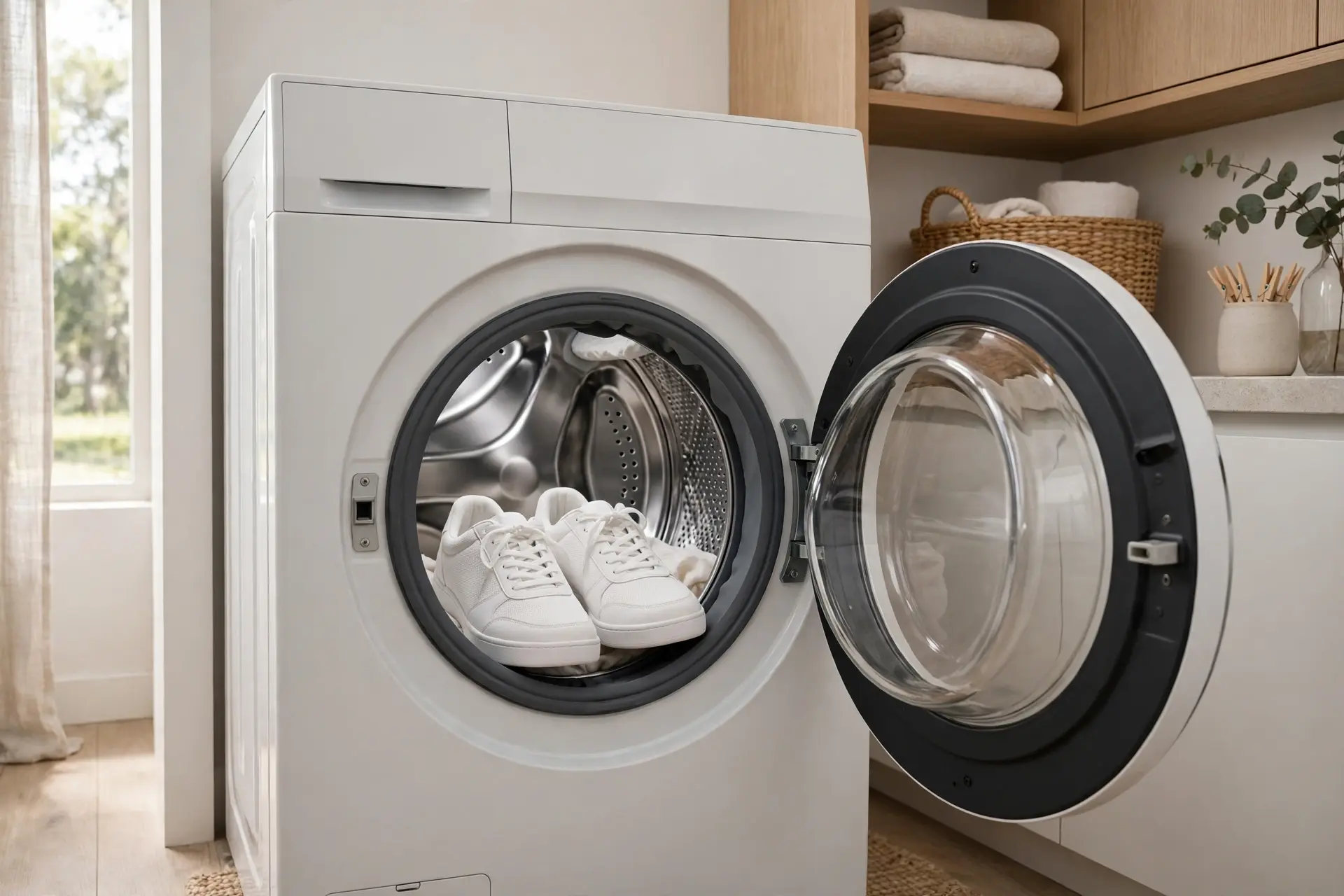
Trainers pick up mud, sweat and street dirt faster than almost anything else in your wardrobe, and many people either never wash them or throw them in the machine on a hot cycle and hope for the best. The good news is that you can wash trainers in the washing machine safely, as long as you prepare them properly and choose the right settings. Done well, a machine wash removes odours and ground-in grime that a surface wipe cannot reach, and your trainers come out looking close to new.
This guide covers which trainers can go in the machine, how to prepare them, the exact settings to use, and how to dry them without warping the soles or cracking the uppers.
Which Trainers Can Go in the Washing Machine?
Most everyday trainers made from canvas, mesh, knit fabric or synthetic materials wash well in a machine. Running shoes, gym trainers and classic canvas plimsolls are usually fine. The exceptions matter, though. Leather trainers can crack and stiffen in water, suede and nubuck will mark and lose their texture, and anything with glued decorative details, heavy embellishment or delicate stitching may not survive the drum. Always check the care label inside the tongue or heel first; our guide to laundry symbols explained decodes every symbol you are likely to find there. If the label says hand wash only, believe it, and wash that pair in a basin instead.
Step 1: Prepare Your Trainers Before Washing
Preparation makes the difference between a clean pair of trainers and a damaged one. Start by knocking the soles together outdoors to dislodge dried mud and grit, then use an old toothbrush or a stiff brush to scrub the soles and clear stones from the tread. Loose dirt left on the shoes will simply swirl around the drum and redeposit on the fabric.
Next, remove the laces and insoles. Laces tangle around other items and come out grey if they stay threaded, so wash them separately in a small mesh bag or soak them in warm soapy water. Insoles hold most of the sweat and odour, and they wash better outside the shoe where water can reach both sides; if they are foam insoles, hand washing them in the sink is gentler than the machine. Finally, treat any obvious stains with a small amount of liquid detergent worked in with the toothbrush, and leave it for ten minutes before the wash.
Step 2: Protect the Trainers and Your Machine
Never wash trainers loose in an empty drum. The repeated impact can dent the drum, unbalance the machine and batter the shoes themselves. Place each pair inside a mesh laundry bag or an old pillowcase tied at the top, and add a couple of old towels to the load. The towels cushion the impact, reduce the noise considerably and help balance the spin. If you are washing at a launderette rather than at home, the same approach works; our guide to finding a public washing machine near you explains what to look for in a well-maintained machine.
Step 3: Choose the Right Wash Settings
Settings are where most trainer washes go wrong. Choose a gentle or delicate cycle, cold water or a maximum of 30 degrees, and a slow spin. Hot water can melt the glues that bond soles to uppers, fade colours and warp foam midsoles, while a fast spin throws the shoes around hard enough to deform them. Use a small amount of liquid detergent rather than powder, because powder can lodge in mesh fabric and leave white residue, and skip fabric softener entirely: it coats technical fabrics, traps odours and can break down the adhesives in the shoe.
One pair per load is ideal, two at most. Overloading stops water and detergent circulating properly, so the trainers come out barely cleaner than they went in. If your trainers are white and looking tired, a scoop of oxygen-based stain remover in the wash helps restore brightness without the risks of chlorine bleach.
Step 4: Dry Trainers Properly (Never Tumble Dry)
Heat is the enemy after washing too. Tumble drying can shrink uppers, crack synthetic leather and melt sole glue, so always air dry trainers instead. Stuff each shoe with newspaper or clean dry towels to hold its shape and draw out moisture, then stand them in a warm, ventilated spot away from direct heat. A radiator will dry them faster but can warp the soles, so a hallway or airing cupboard is better. Expect a full day, sometimes two in winter, before they are completely dry; wearing them damp is what brings the odour straight back. If you dry a lot of laundry indoors, a compact appliance can help with the general load, as our guide to choosing a portable dryer for clothes explains, though trainers themselves should still air dry.
What About Leather and Suede Trainers?
Leather and suede pairs should stay out of the machine. Wipe leather trainers with a damp cloth and mild soap, clean the soles with a brush, and use a leather conditioner once they are dry to stop cracking. Suede needs a suede brush and a specialist eraser for marks, and should never be soaked. For expensive or delicate pairs, professional cleaning is the safest route; our comparison of wet cleaning vs dry cleaning explains how professional cleaners handle items that cannot go in a home machine.
Common Mistakes When Machine Washing Trainers
A few habits ruin more trainers than the machine itself. Washing with the laces still in leaves dirty lines across the tongue and tangles the load. Using a standard 40 or 60 degree cycle because it works for towels is the fastest way to melt sole glue and fade colours. Leaving washed trainers in the closed machine for hours invites a musty smell that is hard to shift, so take them out as soon as the cycle ends. And never put trainers on a radiator or in front of a fan heater to speed things up; steady room-temperature air dries them safely, even if it takes longer. Avoid those four mistakes and the method in this guide is safe for almost any fabric trainer.
How Often Should You Wash Trainers?
For gym and running trainers worn several times a week, a machine wash every month or two keeps odours under control, with the insoles aired after every few wears. Everyday fashion trainers need washing only when they look dirty or start to smell, usually a few times a year. Washing too often shortens the life of the adhesives and foams, so spot clean between washes and save the full machine wash for when it is genuinely needed. Follow the steps above and you can wash trainers in the washing machine with confidence, keeping them fresh, comfortable and in shape for far longer.
