

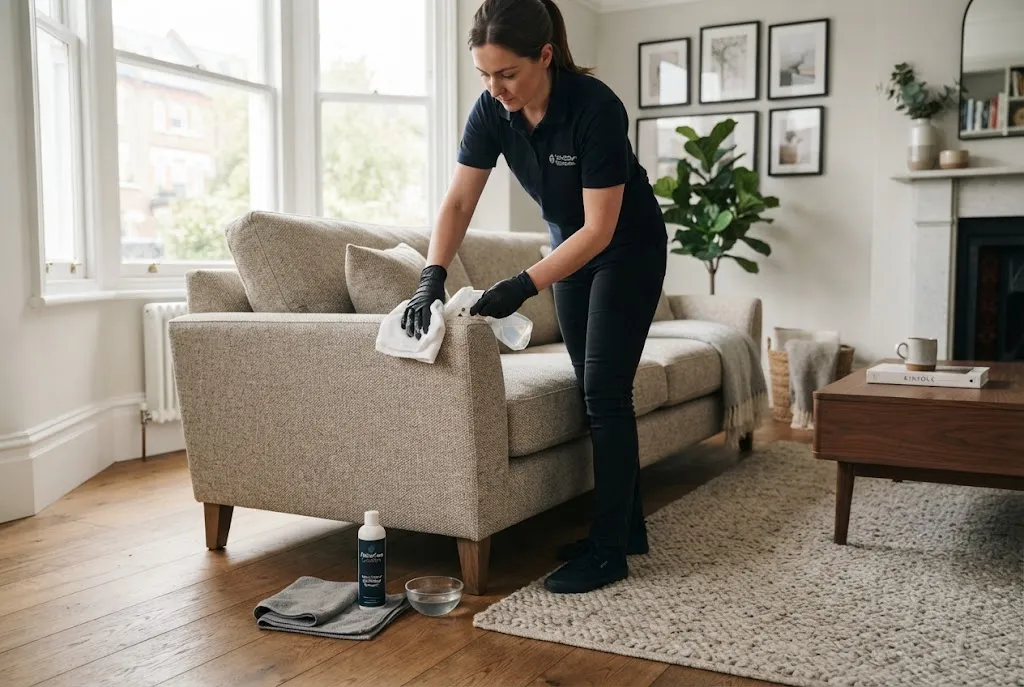
Choosing the right sofa cleaning solution can make a significant difference when dealing with everyday dirt, marks and spills on upholstered furniture. However, the strongest-looking product is not necessarily the safest or most effective choice. Sofa fabrics vary considerably, and a product that works well on one material may damage another. Before using any cleaner, check the sofa manufacturer’s care instructions, identify the upholstery type and test the product on an inconspicuous area.
Whether you are dealing with light everyday dirt or a noticeable stain, the aim should be to clean the upholstery without leaving excessive moisture or chemical residue behind. This guide explains what to look for in a sofa cleaner, how to use one safely and when a professional approach may be more suitable.
What Is a Sofa Cleaning Solution?
A sofa cleaning solution is a product formulated to help remove dirt, stains and other marks from upholstery. Depending on the formulation, a cleaner may be designed specifically for fabric sofas, synthetic upholstery, particular stain types or use with upholstery-cleaning machines.
Some products are ready to use, while others require dilution with water. There are also products designed specifically for spot treatment rather than cleaning an entire sofa.
The important point is that there is no single couch cleaning solution that is automatically suitable for every type of upholstery. The fabric and manufacturer’s instructions should determine what you use.
How to Choose a Sofa Cleaning Solution
Check the Upholstery Care Label
Start by checking the care label or manufacturer’s instructions. This should be your first reference before choosing any sofa cleaning products.
Some upholstery is designed for water-based cleaning, while other materials require specialist or solvent-based methods. If the label states that the fabric should not be cleaned using water, do not assume that a standard fabric cleaner is safe.
If the care information is missing, contact the furniture manufacturer or seek advice from a professional upholstery cleaner before applying a new product.
Choose a Product Made for Upholstery
Whenever possible, choose a cleaner specifically formulated for the type of upholstery you are treating. A product designed for carpets, hard floors or kitchens may contain ingredients that are unsuitable for delicate furniture fabric.
A suitable fabric cleaner for sofa upholstery should have clear instructions explaining which materials it can be used on and how it should be applied.
Consider the Type of Stain
Not every stain requires the same treatment. Food, drinks, grease, mud and general dirt can behave differently when they come into contact with upholstery fibres.
For a small isolated mark, a suitable spot-treatment product may be more appropriate than cleaning the entire sofa. Treating a small area also reduces the amount of moisture introduced into the furniture.
Avoid Unnecessarily Harsh Products
A stronger chemical does not automatically mean a better clean. Aggressive products can affect colours, finishes or delicate fibres, particularly when used on materials for which they were not designed.
Always follow the manufacturer’s recommended dilution and application instructions rather than increasing the concentration in an attempt to remove a difficult stain more quickly.
How to Use a Sofa Cleaning Solution Safely
1. Vacuum the Sofa First
Remove loose dirt, dust, crumbs and pet hair before applying any liquid cleaner. Use a suitable upholstery attachment and work around cushions, seams and other areas where debris collects.
Vacuuming first is an important part of effective sofa care because wet cleaning should not be used as a substitute for removing dry, loose debris.
2. Test the Cleaner
Apply a small amount of the selected cleaner to an inconspicuous section of the sofa. Follow the product instructions and allow the test area to dry before assessing the result.
Look for colour changes, marks, texture changes or other unexpected reactions. If the fabric reacts badly, stop using the product rather than applying it to the rest of the sofa.
3. Apply the Recommended Amount
Use only the quantity specified by the product manufacturer. Excessive application can make upholstery unnecessarily wet and may leave cleaning residue behind.
If the product needs to be diluted, measure the quantities carefully. More concentrated does not necessarily mean more effective.
4. Work in Small Areas
For general cleaning, divide the sofa into manageable sections. This allows you to work systematically and makes it easier to control the amount of cleaning solution used.
Avoid repeatedly scrubbing the same area. Gentle, controlled cleaning is generally preferable to aggressive rubbing that may disturb the appearance of the fabric.
5. Remove Excess Moisture
Where the cleaning method involves water, remove as much excess moisture as the manufacturer’s instructions allow. Upholstery should not be unnecessarily saturated.
If you are using an upholstery extraction machine, follow the equipment manufacturer’s instructions carefully. If you are cleaning manually, suitable clean cloths may help absorb excess moisture where appropriate.
6. Let the Sofa Dry Completely
Allow the sofa to dry thoroughly before normal use. Good airflow can help, although the drying time will depend on the fabric, amount of moisture, room temperature and ventilation.
Do not cover the sofa or place cushions back onto damp areas if doing so restricts airflow. Using furniture before it has dried can slow the drying process and may leave the upholstery feeling damp.
What Makes a Good Cloth Couch Cleaner?
A good cloth couch cleaner should be suitable for the specific fabric, have clear instructions and be appropriate for the type of cleaning required. It should not require you to guess how much product to use or whether it is compatible with your upholstery.
Look for clear information about suitable materials and application instructions. If the product is intended for spot treatment only, do not automatically use it across the entire sofa.
It is also sensible to avoid products with instructions that are unclear or incomplete. UK government consumer safety guidance recommends reading and following product instructions and checking relevant warnings when using consumer products. GOV.UK consumer product safety advice provides further guidance on using household products safely.
Can You Make Your Own Sofa Cleaning Solution?
Homemade cleaning mixtures are often suggested as inexpensive alternatives to commercial upholstery products. However, a homemade mixture is not automatically safer simply because it contains familiar household ingredients.
Upholstery fabrics can react differently to water, acids, alkaline substances and other ingredients. Without knowing the fabric’s requirements, experimenting with a homemade formula can create colour or texture problems.
If you choose to use a homemade solution, first confirm that the upholstery manufacturer permits the ingredients and cleaning method. Otherwise, a purpose-made upholstery cleaner with clear fabric compatibility information may be a more straightforward option.
What You Should Never Mix With Sofa Cleaners
Never mix different cleaning chemicals unless the product manufacturers specifically state that the combination is safe. Some combinations can produce hazardous fumes.
For example, GOV.UK guidance warns that inappropriate mixing of cleaning products can result in exposure to chlorine gas when chlorine-containing products are combined with incompatible substances. UK government chlorine safety guidance explains the risks associated with inappropriate mixing of chlorine-containing cleaning products.
Keep cleaning products in their original containers and follow the safety instructions on their labels. Store them away from children and use suitable ventilation when the product instructions recommend it.
Common Sofa Cleaning Solution Mistakes
Using a Carpet Cleaner Without Checking Compatibility
A carpet and sofa may both contain fabric, but that does not mean their cleaning requirements are identical. Check that the product is specifically suitable for upholstery before using it.
Skipping the Patch Test
Even if a product claims to be suitable for fabric, testing a hidden area is a sensible precaution. Upholstery can vary in colour, construction and finish.
Using Too Much Product
More cleaner can mean more residue rather than a better result. Follow the recommended quantity and dilution carefully.
Scrubbing Too Hard
Aggressive scrubbing can disturb fabric fibres and may spread a stain. Use controlled movements and an appropriate upholstery tool instead.
Leaving Residue Behind
If a product requires rinsing or extraction, follow those instructions. Residual cleaning product can affect the feel of the upholstery and may attract additional dirt.
Ignoring Drying
Never treat drying as an optional final step. Allow sufficient airflow and wait until the upholstery is fully dry before returning the sofa to normal use.
Sofa Cleaning Products for Different Cleaning Jobs
Different cleaning tasks may require different products. A useful approach is to choose the product according to the cleaning job rather than buying the strongest cleaner available.
- Everyday dirt: Regular vacuuming may be sufficient for loose surface debris.
- Small spills: A compatible upholstery spot cleaner may be appropriate.
- General fabric cleaning: Use a product specifically designed for the upholstery material.
- Machine cleaning: Use a solution approved for the particular upholstery-cleaning machine and fabric.
- Heavy staining: Consider professional upholstery cleaning if home treatment does not produce a suitable result.
If your sofa needs more than a simple spot treatment, our guide to how to deep clean a sofa covers preparation, stain treatment, moisture control and drying.
When Is a Professional Sofa Cleaning Service Better?
A professional cleaner may be a better option when the upholstery is delicate, heavily stained or particularly valuable. Professional treatment can also be useful when you cannot identify the material or the manufacturer’s instructions recommend specialist cleaning.
Repeatedly applying different household products to a stubborn stain can make the problem more difficult. In these situations, professional assessment may help determine the most suitable cleaning method.
Professional cleaning is also worth considering when a sofa requires extensive treatment rather than a small spot clean. This can reduce the temptation to saturate the upholstery or experiment with unsuitable products.
How to Keep Your Sofa Cleaner for Longer
The best sofa cleaning routine combines regular maintenance with deeper cleaning when necessary. Vacuum the upholstery regularly to prevent loose dirt from accumulating.
Deal with spills promptly using a method approved for your fabric. Avoid rubbing aggressively, and do not automatically reach for a household cleaner without checking its compatibility with the upholstery.
Removable covers should be washed according to their individual care instructions. Keeping food and drinks away from upholstered furniture where practical can also reduce the number of stains that require treatment.
If you are considering steam treatment, read our guide on how to steam clean a sofa first to understand the importance of fabric compatibility, controlled moisture and proper drying.
Final Tips for Choosing a Sofa Cleaning Solution
The right sofa cleaning solution should match the upholstery material and the type of cleaning required. Always begin with the manufacturer’s care instructions, vacuum before wet cleaning and test a new product in an inconspicuous area.
Use the recommended amount of cleaner, avoid excessive moisture and never mix cleaning chemicals unless the manufacturers specifically confirm that it is safe. When a sofa is delicate, valuable or heavily stained, professional upholstery cleaning may be a safer alternative to experimenting with multiple products.
With the right product and careful technique, you can keep suitable sofa upholstery cleaner while reducing the risk of unnecessary fabric damage.
