

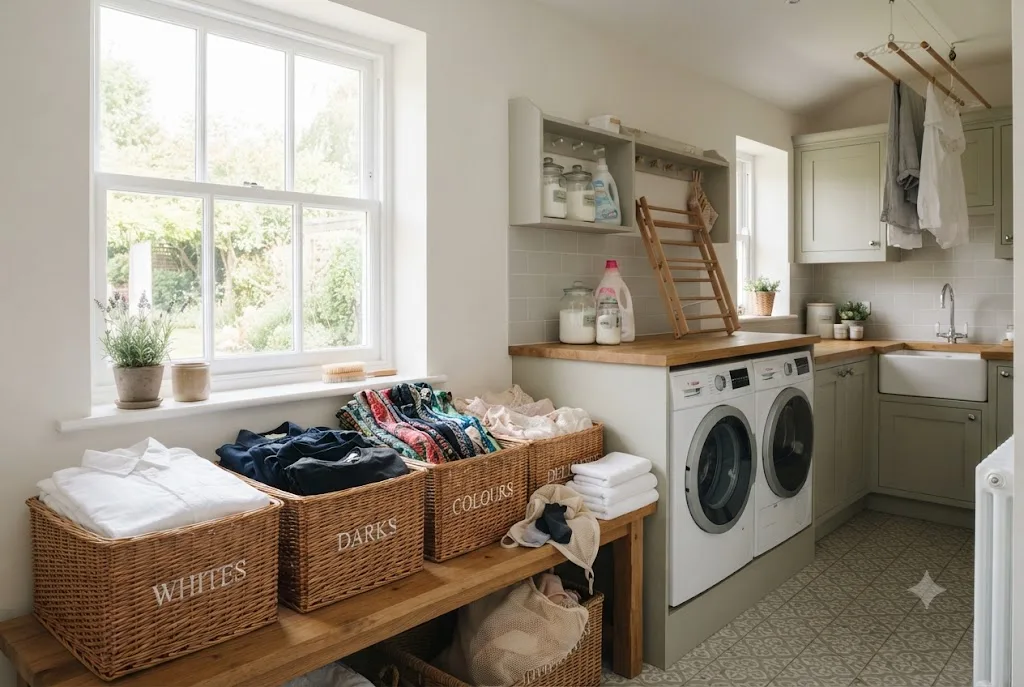
Sorting laundry before a wash can make a surprisingly big difference to how clothes look and feel afterwards. Putting everything into the same load may seem quicker, but different colours, fabrics, temperatures and levels of dirt often require different treatment. A few minutes spent separating your washing can help reduce colour transfer, protect delicate fabrics and make it easier to choose the right wash cycle.
Good laundry sorting does not need to be complicated. You do not necessarily need a separate basket for every colour or fabric in your home. The key is knowing which items should be kept apart and which can safely be washed together. This guide explains a practical way to sort clothes, when to rinse clothes before washing and how to build a simple routine that works for everyday UK households.
Why Is Sorting Laundry Important?
Clothes are made from different materials and dyes, so they do not all respond to washing in exactly the same way. A dark garment may release dye, while a delicate fabric may require a gentler cycle than a sturdy towel.
Sorting laundry helps you group items with similar care requirements. Instead of choosing one compromise wash for everything, you can select a programme that better suits each load.
Sorting can also help prevent common laundry problems such as:
- Colour transfer between garments.
- Damage to delicate fabrics.
- Lint sticking to darker clothes.
- Heavy items rubbing against lightweight fabrics.
- Small garments becoming tangled with larger items.
- Heavily soiled clothes affecting lightly soiled laundry.
It also makes the washing process more predictable. Once sorting becomes a habit, you can quickly identify which programme, temperature and detergent approach each load requires.
Sorting Laundry by Colour
Colour is one of the simplest places to start. You do not need to create a complicated system, but separating obvious groups can reduce the risk of dye transfer.
Wash whites separately
White shirts, bedding and towels can usually benefit from being kept away from strongly coloured garments. Dark or brightly dyed clothing may release colour during washing, especially when new.
Keeping whites together also makes it easier to choose a suitable wash temperature and detergent for the load.
Create a dark-colour load
Black, navy, dark grey and other deep colours can be grouped together when their care labels allow it. Washing similar colours together can help reduce the risk of lighter garments picking up dye.
Turn dark garments inside out when appropriate. This can help reduce visible fading and protect printed or finished surfaces during washing.
Separate bright colours when necessary
Red, purple, orange and other strong colours can sometimes release dye, particularly when garments are new. If you are unsure whether an item is colourfast, washing it separately the first few times can be a sensible precaution.
Always check the care label rather than assuming that a garment will behave like other clothes of the same colour.
Sorting Laundry by Fabric
Colour is important, but fabric type can be just as significant. Two garments may be the same colour while needing completely different washing methods.
Delicate fabrics
Silk, lace and other delicate materials may require gentle cycles, lower temperatures or hand washing. Keep them separate from heavy items that could cause excessive rubbing or stretching.
A suitable laundry machine lint trap maintenance routine is also useful when washing delicate items because hair, fibres and other debris can accumulate inside the machine’s filter system.
Cotton and everyday clothing
Many everyday garments are made from cotton or cotton blends and can often be washed together when their care labels are compatible. However, do not assume that every cotton item can be washed at the same temperature.
Check individual labels, especially for garments that contain prints, special finishes or mixed fibres.
Towels and heavy fabrics
Towels, thick sweatshirts and heavier cotton items create more friction during washing. Keeping them together can prevent lightweight clothing from being exposed to unnecessary rubbing.
Towels can also produce significant lint. Washing them separately from dark, smooth garments can help reduce the amount of fluff that sticks to other clothes.
Should You Sort Clothes by Washing Temperature?
Yes, where practical. Different garments may have different recommended temperatures, so temperature should be considered alongside colour and fabric.
However, you should not automatically choose a hotter wash because you believe it will produce cleaner clothes. The correct temperature is the one appropriate for the garments and the level of cleaning required.
Modern detergents and washing programmes can allow many everyday loads to be cleaned at lower temperatures, but heavily soiled items and certain household textiles may have different requirements.
The care label should always take priority over a general laundry rule.
How to Sort Heavily Soiled Clothes
Heavily stained or dirty garments are worth separating from lightly soiled clothing when practical. Muddy workwear, gardening clothes and heavily used sportswear may need different preparation or a longer wash cycle.
Check pockets and remove visible dirt before placing these items into the washing machine. Brushing off dry mud can prevent unnecessary debris from entering the drum and filter system.
For stubborn stains, pre-treat the affected area according to the garment’s care instructions before washing. Do not assume that a stronger chemical product is always better for the fabric.
When Should You Rinse Clothes Before Washing?
Most everyday clothes do not need a separate rinse before entering the washing machine. However, there are situations where rinsing or removing loose dirt first can be helpful.
If clothing is covered in fresh mud, sand or another loose substance, remove as much of it as possible before washing. A gentle rinse may be appropriate if the care instructions permit it.
However, do not automatically rinse clothes before every wash. Excessive pre-rinsing can add an unnecessary step to your routine and use additional water.
For ordinary everyday dirt, a properly selected washing programme should generally handle the cleaning process without a separate rinse.
Should You Wash New Clothes Separately?
New clothes can be worth separating during their first few washes, particularly when they are strongly coloured. Some dyes may release more readily when a garment is new.
If you have bought a dark red, navy, black or intensely coloured garment, check its care label and consider washing it with similar colours initially.
Do not rely solely on colour-catching products as a substitute for sensible sorting. They may offer additional protection, but they do not make all garments safe to wash together.
How to Sort Laundry With a Simple Basket System
You do not need a large laundry room to create an effective sorting system. A simple approach is to divide your laundry into a few practical categories.
Option 1: Three basic groups
For many households, three groups are enough:
- Whites and very light colours.
- Dark colours.
- Bright colours and mixed colours.
Once you have separated these groups, check fabric type and care labels before starting each load.
Option 2: Add a delicate section
If your household regularly washes delicate clothing, add a separate basket or laundry bag for these items.
A laundry bag for washing machine can help keep small delicate garments together during a cycle. It is particularly useful for items that could otherwise become tangled or stretched.
Option 3: Sort as you undress
Instead of leaving all laundry in one pile and sorting it later, place garments into the appropriate basket as they are removed. This turns sorting into a small daily habit rather than a large task on washing day.
For households that use laundry bags for washing machine loads, you can place suitable delicate items into the bag before adding it to the relevant basket.
What Clothes Should Not Be Washed Together?
Some combinations are best avoided even when the garments have similar colours.
For example, washing delicate lace alongside heavy towels can expose the delicate fabric to unnecessary friction. Similarly, a new dark garment should not automatically be washed with white clothing simply because both items have the same care-label temperature.
Other combinations to consider include:
- Heavy towels with delicate clothing.
- New dark garments with whites.
- Lint-producing fabrics with smooth dark garments.
- Heavily soiled workwear with lightly worn clothing.
- Garments requiring very different wash temperatures.
- Items requiring different washing methods.
The safest approach is to consider colour, fabric, care label and level of dirt together.
How to Prevent Lint When Sorting Laundry
Lint is one reason fabric type deserves attention. Towels, fleece and some fluffy materials can release fibres during washing, while black and dark synthetic fabrics tend to show those fibres clearly.
Sorting lint-producing fabrics separately can make a noticeable difference. Also check your washing machine’s relevant filter or laundry machine lint trap regularly, particularly if you wash towels, fleece or pet bedding frequently.
Do not forget pockets either. Tissues, paper receipts and other small items can break apart during a cycle and create unnecessary debris.
Do Laundry Bags Help With Sorting?
Laundry bags can be useful, but they are not a replacement for sorting. A washing bag is mainly useful for protecting suitable items and keeping small garments together.
For example, delicate underwear can be placed inside a suitable washing bag before being added to a load with compatible fabrics.
Using washing bags for washing machine loads can also make it easier to locate small items after washing. However, avoid overfilling a bag because clothes need sufficient space for water and detergent to circulate.
Always check the care instructions for both the garment and the laundry bag before washing.
How to Sort Laundry for Better Results
A practical sorting routine can be reduced to a few simple questions before every wash.
- Are the colours compatible?
- Do the fabrics require similar treatment?
- Do the care labels recommend a compatible temperature?
- Are any items heavily soiled?
- Could any garment release excessive lint?
- Do any delicate items need a washing bag?
- Does anything need stain treatment before washing?
If the answer to these questions looks compatible, the load is usually easier to plan.
Sorting Laundry Before Drying and Ironing
Sorting should not stop when the washing machine finishes. Before drying, check whether garments have specific drying instructions. Some fabrics may need to be air dried while others can tolerate a tumble dryer.
Once clothes are dry, sorting them again can make ironing easier. Grouping garments that need ironing at similar temperatures can help you move through the task more efficiently.
For anyone who irons regularly, keeping the appliance clean is also worthwhile. A dirty soleplate can transfer residue to clean garments, so following a reliable guide on how to clean an iron can be a useful part of your overall clothes-care routine.
How Sorting Fits Into a Complete Laundry Routine
Effective laundry care works best as a connected process rather than a collection of unrelated chores. Sorting determines what can be washed together, washing removes dirt, drying prepares garments for use and ironing can improve their final appearance.
If you regularly deal with larger household items, specialist care may also be necessary. For example, heated bedding should not automatically be treated like ordinary blankets. Before washing one, check the manufacturer’s instructions and follow a safe guide to how to clean heating blanket products.
Once clothes are clean, an organised clean and iron routine can help you finish laundry without allowing clean garments to sit in a pile for days.
Common Laundry Sorting Mistakes
Even people who sort regularly can fall into a few common habits that reduce the effectiveness of the process.
Sorting only by colour
Colour is useful, but it is not enough. Fabric, weight, washing temperature and care instructions also matter.
Ignoring care labels
A garment may look like ordinary cotton but still have a special finish or construction that requires different treatment. Check the label when you are unsure.
Overloading a category
Keeping all dark clothes together does not mean you should fill the drum beyond its recommended capacity. Loads still need enough room for clothes to move freely.
Forgetting new garments
Strongly dyed new clothing deserves additional attention. Washing it separately or with similar colours initially can reduce the risk of colour transfer.
Mixing lint-heavy fabrics with everything
Putting towels, fleece and other lint-producing materials with smooth dark clothes can leave unwanted fibres behind. Fabric type should therefore be part of your sorting decision.
Final Thoughts
Sorting laundry does not need to become a complicated household system. Start with colour, then consider fabric, washing temperature, level of dirt and any special care requirements.
Whites, darks and bright colours provide a useful starting point, while delicate garments, towels and heavily soiled clothing may deserve separate treatment. Washing bags can also help protect suitable small or delicate items, but they should complement rather than replace proper sorting.
Once the routine becomes familiar, sorting takes only a few moments and can make every stage of laundry easier. Check care labels, avoid unsuitable combinations and choose the wash programme based on the actual contents of the load. That simple approach can help protect clothes while making laundry day more organised and predictable.
“`
