

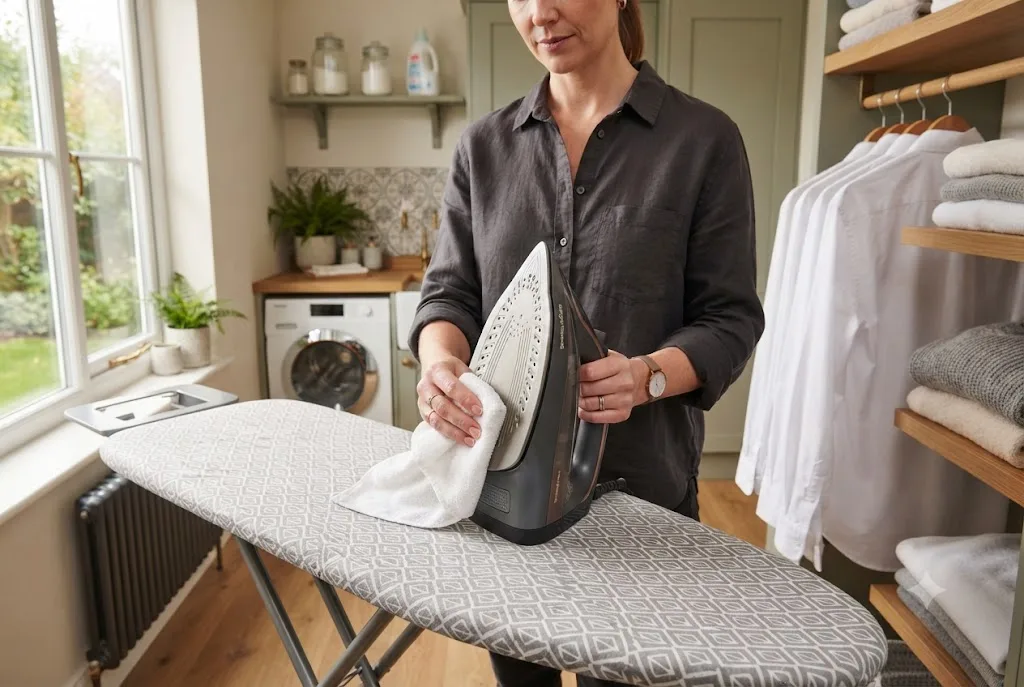
Knowing how to clean an iron can make a noticeable difference to your laundry routine. A dirty iron can collect fabric fibres, starch residue, mineral deposits and marks from clothing, which may eventually transfer back onto freshly washed garments. Regular cleaning helps keep the soleplate smooth and reduces the chance of unwanted marks appearing while you iron.
However, cleaning an iron is not simply a matter of scrubbing the bottom with any household product. Different soleplate materials and iron designs require different care. Steam irons may also need attention around their water tank and steam vents. In this guide, you will learn how to clean an iron safely, remove common residue and maintain the soleplate without unnecessarily damaging its surface.
How to Clean an Iron Safely
Before you start, check the manufacturer’s instructions for your particular iron. Soleplates can be made from stainless steel, ceramic, coated materials and other finishes, so a method that works for one appliance may not be suitable for another.
As a basic safety precaution, unplug the iron before cleaning unless the manufacturer’s instructions specifically require a different method for a particular cleaning function. Allow the appliance to cool sufficiently before handling it.
Philips advises unplugging its steam and dry irons and ensuring that the appliance has cooled before cleaning the soleplate. It also warns against using hard metal objects, scouring pads, vinegar or other chemicals on certain soleplates.
For that reason, always treat the manufacturer’s care instructions as the final authority for your specific model.
Why Does an Iron Get Dirty?
An iron’s soleplate comes into direct contact with fabrics, so it can gradually collect residue during normal use. The problem can be particularly noticeable when ironing clothes that contain synthetic fibres, fabric treatments or starch-based products.
Steam irons can also develop mineral deposits over time. The water used in the appliance can contain minerals that accumulate inside the steam system and eventually contribute to residue or staining.
Philips notes that scale can build up over time, particularly in harder-water areas, and recommends following the appropriate descaling procedure for the specific iron model.
Other common causes of a dirty soleplate include:
- Fabric fibres sticking to the hot surface.
- Starch or sizing residue from clothing.
- Marks caused by ironing at an unsuitable temperature.
- Mineral deposits around steam vents.
- Residue from cleaning or laundry products.
- Scorch marks left after contact with unsuitable fabric temperatures.
How to Clean an Iron Soleplate
The soleplate is the main area that needs attention because it touches your clothes. A simple cleaning method is often enough when the surface only has light dust or residue.
1. Unplug the iron
Switch off the iron and unplug it from the socket. Allow it to cool before handling the soleplate unless your manufacturer’s instructions specifically recommend cleaning the surface while warm.
2. Remove loose residue
Use a soft, damp cloth to wipe away loose fibres, dust and light deposits. Avoid pressing hard against the surface.
Philips recommends wiping flakes and other deposits from certain soleplates with a damp cloth and specifically warns against hard contact with metal objects.
3. Wipe the surface carefully
Work across the soleplate using gentle movements. Pay attention to the edges and areas around the steam holes, where residue can sometimes accumulate.
Do not push cloth fibres into the steam openings. If the holes appear blocked, consult the manufacturer’s instructions for the correct cleaning procedure.
4. Dry the soleplate
Once the surface is clean, use a dry, soft cloth to remove remaining moisture. Make sure the iron is completely dry before storing or using it again.
How to Clean Iron Residue From the Soleplate
If ordinary wiping does not remove the residue, resist the temptation to use an abrasive household cleaner. A coated soleplate can be scratched or damaged by unsuitable products.
Instead, check whether your iron manufacturer provides a recommended cleaning stick or soleplate cleaner. Philips, for example, offers a soleplate cleaning stick designed specifically to remove stains from compatible ironing surfaces.
Some Tefal models also provide model-specific instructions for cleaning their soleplates, with different recommendations depending on whether the surface is Durillium, stainless steel or another coating.
This is why identifying the soleplate material before choosing a cleaning product is important.
How to Clean a Clothes Iron Soleplate Without Scratching It
When searching for how to clean clothes iron plate methods, one of the most important principles is to avoid unnecessary abrasion.
The soleplate needs to glide smoothly across clothing. Scratches, damaged coatings and rough patches can affect how easily the iron moves and may increase the risk of residue sticking to the surface.
Avoid using knives, metal scrapers, wire brushes or other sharp objects to remove stubborn marks. Even when a deposit appears difficult to remove, damaging the soleplate can create a larger problem than the original stain.
Similarly, do not assume that household scouring powders are safe. Some manufacturers specifically recommend soft cloths or non-abrasive cleaning materials instead.
How to Clean a Clothes Iron Soleplate With Stuck Fabric
Fabric stuck to the soleplate can be particularly frustrating because trying to remove it aggressively may damage the iron.
First, switch off and unplug the iron. Allow it to cool to the temperature recommended by the manufacturer for cleaning. Then follow the specific instructions for removing synthetic or melted fabric from your soleplate.
Do not scrape the material with a sharp metal object unless the manufacturer explicitly recommends that method for your model.
If a dedicated soleplate cleaning product is recommended, use it according to its instructions. Some manufacturers provide cleaning sticks specifically designed for their soleplate materials.
How to Get Iron Clean When It Has Brown Marks
Brown or dark marks on an iron can come from accumulated residue, mineral deposits or fabric that has overheated. The correct solution depends on the cause and the design of the appliance.
Start by inspecting the soleplate and steam vents. If the iron is a steam model, check whether its manufacturer provides a descaling or self-cleaning function.
Philips explains that scale can contribute to brown stains and brown water in some steam irons and provides model-specific Calc-Clean procedures.
Do not automatically pour vinegar, descaler or another cleaning chemical into the water tank. Some iron manufacturers specifically prohibit certain substances, while others provide their own descaling systems.
How to Clean Iron Steam Vents
Steam vents can collect mineral residue and other deposits, particularly when an iron is used regularly.
The safest approach is to follow the cleaning instructions for your specific model. Some steam irons have a self-clean or Calc-Clean function designed to flush mineral deposits from the internal steam system.
For example, Philips describes self-cleaning procedures that release water and scale particles through the steam vents on applicable models.
Do not insert pins, needles or other sharp objects deep into the steam holes unless the manufacturer’s instructions specifically tell you to do so.
How to Clean a Iron Water Tank
If you own a steam iron, keeping the water system maintained is just as important as cleaning the soleplate. Mineral deposits can affect steam performance and may eventually contribute to marks on clothing.
Before cleaning the water tank, check the appliance manual for approved water and descaling instructions. Different models can have different requirements.
Some irons include a removable scale collector or dedicated Calc-Clean system. If yours has one, use the manufacturer’s recommended procedure rather than improvising with household descaling products.
Tefal, for example, provides model-specific maintenance instructions for scale collectors and advises users to follow the appropriate cleaning procedure for their particular appliance.
Can You Use Vinegar to Clean an Iron?
Vinegar is often suggested as a general household cleaning solution, but it should not automatically be used on an iron. The correct approach depends on the manufacturer’s instructions.
Philips specifically states that vinegar and other chemicals should not be used on the soleplate of certain steam and dry irons.
Therefore, if your iron manual does not recommend vinegar, choose the manufacturer’s approved cleaning method instead. This is particularly important for coated soleplates and steam systems.
How Often Should You Clean an Iron?
There is no universal cleaning schedule because usage varies from household to household. Someone who irons several loads every week may need to inspect the soleplate more frequently than someone who only irons occasionally.
Instead of waiting until the soleplate becomes visibly dirty, check it regularly. A quick inspection can reveal fibres, residue or marks before they transfer onto clothing.
Steam irons may require additional descaling according to their model and water conditions. Philips, for example, provides different descaling recommendations for its steam iron ranges and notes that harder water can accelerate scale formation.
Simple Habits That Keep Your Iron Cleaner
Regular cleaning is useful, but good ironing habits can reduce the amount of residue that builds up in the first place.
Use the correct temperature
Always follow the garment’s care label and choose a suitable temperature. Excessive heat can damage some fabrics and leave residue on the soleplate.
Keep fabrics clean
Ironing clothes after washing and drying helps prevent dirt and body oils from being pressed into the fabric. A well-organised laundry routine starts before the ironing board.
For better preparation, learning sorting laundry techniques can help you separate garments according to colour, fabric and care requirements before washing.
Do not iron over printed areas unnecessarily
Printed designs, plastic decorations and some synthetic finishes can react poorly to direct heat. Follow the garment manufacturer’s ironing instructions and use a protective layer when recommended.
Empty the water tank when appropriate
If your manufacturer’s instructions recommend emptying the water tank after use, make it part of your routine. Proper water management can help reduce unwanted residue and scale.
What Should You Avoid When Cleaning an Iron?
When looking for how to clean iron solutions online, you will find many household remedies. Not all of them are suitable for modern irons.
Avoid the following unless your manufacturer specifically recommends them:
- Metal scrapers or knives.
- Wire brushes.
- Abrasive scouring powders.
- Unapproved chemical cleaners.
- Vinegar on soleplates where the manufacturer prohibits it.
- Submerging the iron in water.
- Running water directly over the appliance.
- Using a damaged soleplate as though it were safe.
Tefal’s UK instructions similarly warn users not to hold certain irons or base units under tap water and provide specific cleaning methods depending on the soleplate material.
When Should You Replace an Iron?
Cleaning can remove ordinary residue, but it cannot repair every type of damage. If the soleplate coating is severely damaged, cracked or peeling, continuing to use the iron may not be worthwhile.
A damaged power cable, plug or other electrical component should also be treated seriously. Do not continue using an appliance that shows signs of electrical damage simply because the soleplate is clean.
If the iron repeatedly leaves brown marks despite appropriate cleaning and descaling, consult the manufacturer’s troubleshooting guidance. The problem may be related to the internal steam system rather than surface dirt.
How a Clean Iron Completes Your Laundry Routine
A clean iron is most useful when it forms part of a wider garment-care routine. Washing, drying, sorting and ironing all affect the final appearance of clothes.
After washing, understanding how to clean and iron clothes properly can help create a more consistent routine from laundry basket to wardrobe.
It is also worth keeping your washing machine maintained. Regularly checking the laundry machine lint trap or the relevant filter can help remove accumulated lint and debris from the appliance.
If you are handling bedding or specialist laundry, remember that not every item should be treated in the same way. Heated bedding, for example, has specific cleaning requirements that should be checked before washing.
Final Thoughts
Learning how to clean an iron does not require complicated cleaning routines. In many cases, a soft damp cloth and the manufacturer’s recommended method are enough to remove light residue from the soleplate.
The important part is avoiding unsuitable shortcuts. Abrasive tools, unapproved chemicals and excessive moisture can damage the appliance rather than improve it. Steam irons also need appropriate care for their water systems and scale build-up.
Check the instructions for your specific model, clean the soleplate regularly and deal with residue before it becomes difficult to remove. With a little routine maintenance, your iron can glide more smoothly and is less likely to transfer unwanted marks onto freshly laundered clothing.
“`
