

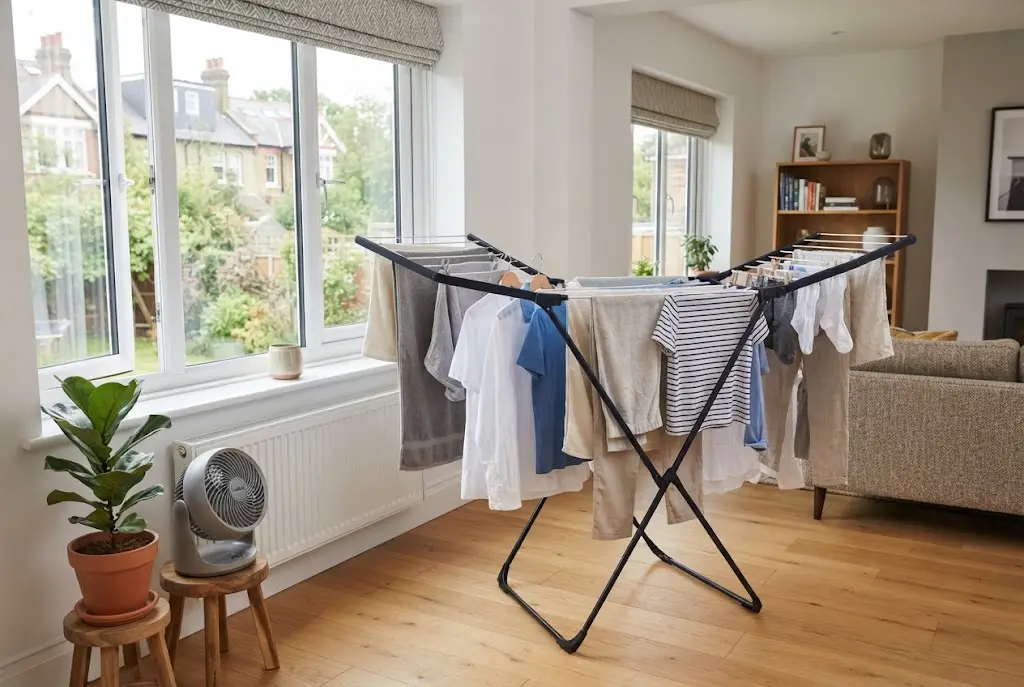
Knowing how to dry clothes fast can make laundry much easier, particularly during the UK’s colder, wetter months. Clothes can take far longer to dry when the air is cool or humid, while drying laundry indoors without enough ventilation can leave a room feeling damp. Fortunately, a few simple changes to your washing and drying routine can significantly improve drying time.
Whether you are drying clothes indoors, using a tumble dryer or making the most of a sunny day outside, the key is to remove as much water as possible before drying begins and then give moisture somewhere to escape. Good airflow, sensible spacing and the right drying location all make a difference.
How to Dry Clothes Fast
The fastest approach is usually a combination of a strong washing-machine spin cycle, good airflow and enough space between garments. The less water left in your clothes after washing, the less work your drying method has to do.
Before choosing a drying method, check each garment’s care label. Some fabrics can be tumble dried, while others need to be air dried or handled more carefully.
1. Use a Higher Spin Setting When Suitable
One of the simplest ways to speed up drying starts before the clothes even leave the washing machine. A suitable higher-speed spin cycle can extract more water from laundry, leaving garments less saturated when the wash ends.
However, do not automatically use the highest available spin speed for every load. Delicate fabrics and garments with specific care instructions may require a gentler setting.
If clothes come out of the machine dripping wet, check whether the selected programme has an appropriate spin cycle and whether the machine has been overloaded.
2. Do Not Overload the Washing Machine
An overloaded washing machine can affect how effectively clothes are washed and spun. When the drum is too full, garments have less room to move freely, which can contribute to poorer water extraction.
Follow the manufacturer’s recommended load size and avoid forcing extra clothing into the drum simply to finish the laundry in fewer cycles. A properly sized load can be easier to wash, spin and dry.
3. Shake Clothes Before Hanging Them
When the washing cycle finishes, remove the clothes promptly and give each item a good shake before putting it on an airer or washing line.
This separates fabric that has become twisted during the wash and helps smooth out heavy folds. Straighten sleeves, collars, waistbands and trouser legs before hanging them.
It is a small step, but it can improve airflow around the fabric and reduce the chance of clothes drying in tightly compressed shapes.
Drying Clothes Indoors Without Making the Room Too Damp
Drying clothes indoors is often unavoidable in the UK, especially when it is raining, cold or windy outside. However, wet laundry releases moisture into the surrounding air, so the location and ventilation of your drying area matter.
Health guidance on damp and mould recommends avoiding indoor drying where possible. If you need to dry clothes indoors, improving ventilation and using an effective spin cycle can help reduce the amount of moisture released into your home.
4. Choose a Well-Ventilated Room
Do not automatically place your airer in the warmest room. A room with poor ventilation can allow moisture from wet clothes to accumulate.
Instead, choose a space where air can circulate. If it is safe and practical, open a window slightly or use an extractor fan to help remove humid air. Keep internal doors closed where appropriate so moisture does not spread throughout the house.
Guidance from the NHS-supported Healthier Together service also recommends ventilation when clothes need to be dried indoors.
5. Give Clothes Plenty of Space
Do not hang several wet garments tightly against each other. Air needs to reach the front and back of the fabric.
Spread shirts across separate rails and leave gaps between thicker items such as towels and jumpers. If your airer is packed tightly, rotating the garments during the drying process can also expose damp areas to fresh air.
6. Use an Extra Spin Cycle
If you need to dry clothes quickly and they feel particularly wet after washing, running a suitable additional spin cycle can remove more water before you start drying.
This can be especially useful when drying laundry indoors because less residual water means less moisture has to evaporate into the room.
Always check the fabric-care instructions first and avoid unnecessary high-speed spinning for garments that require gentler treatment.
7. Use a Fan to Improve Airflow
A household fan can help air move around a drying area. Position it so that air circulates around the garments rather than blowing directly against a tightly packed rack.
Better circulation can help moisture move away from the fabric. However, a fan works best as part of a wider drying setup rather than as a replacement for ventilation.
8. Consider a Dehumidifier
A dehumidifier can be useful when indoor drying is unavoidable. By reducing moisture in the air, it can create a more suitable environment for evaporation.
Keep doors and windows configured according to the room and appliance manufacturer’s recommendations. A smaller enclosed drying area can sometimes be more efficient than spreading wet clothes throughout several rooms, provided the space has appropriate airflow and moisture management.
How to Dry Clothes Fast on a Washing Line
Outdoor drying can be one of the simplest and most energy-efficient ways to dry laundry when the weather allows it. You do not necessarily need intense sunshine. Air movement can make a major difference because moving air helps carry moisture away from wet fabric.
9. Use Outdoor Drying When Conditions Allow
Outdoor drying clothes can work surprisingly well on a bright, breezy day. Hang garments with enough space between them and make sure thicker sections are exposed to moving air.
Position shirts and tops so that air can reach the inside as well as the outside. Turn heavier garments during drying if one side remains damp.
The Energy Saving Trust has also recommended drying clothes on racks indoors or outside in warmer weather as an alternative to relying on a tumble dryer.
10. Make the Most of Wind
A breezy day can be excellent for drying clothes, even when the temperature is not particularly high. Wind increases air movement around the fabric and can help moisture evaporate.
Try to avoid bunching clothes together on the line. Use the available space properly and secure garments so they remain spread out rather than folding over themselves.
11. Bring Laundry In When It Is Dry
Do not leave completely dry laundry outside for longer than necessary. Once garments are dry, bring them indoors, fold them or hang them in the wardrobe.
This also prevents outdoor moisture from becoming a problem later in the day if weather conditions change.
How to Dry Clothes Fast in a Tumble Dryer
A tumble dryer can be convenient when you need clothes ready quickly, but using it efficiently matters. The goal is not simply to increase heat; it is to help the dryer remove moisture effectively while protecting the clothing.
12. Avoid Overloading the Dryer
A crowded drum can restrict movement and airflow around garments. Clothes need room to tumble so warm air can circulate through the load.
Follow the dryer manufacturer’s recommended load capacity and avoid mixing an excessively large amount of heavy laundry with lightweight clothing.
13. Separate Heavy and Lightweight Items
Towels, bedding and heavy cotton garments naturally hold more water than lightweight tops. If possible, drying similar-weight items together can make it easier to choose an appropriate programme.
It can also prevent lightweight clothes from becoming dry long before heavier pieces have finished.
14. Remove Clothes Immediately
When the dryer finishes, take the clothes out promptly. Shake them and hang or fold them while they are still warm.
This can reduce the formation of new creases and may also make your next laundry task easier, particularly for shirts, trousers and other garments that benefit from being hung neatly.
How Long Does It Take to Dry Clothes?
There is no single drying time that applies to every load. Drying speed depends on fabric thickness, the amount of water remaining after the wash, room temperature, humidity, airflow and the drying method.
A thin synthetic top may dry relatively quickly, while a thick towel or heavy jumper can take considerably longer. Indoor laundry can also take longer during cold or humid weather because the surrounding air becomes less effective at accepting additional moisture.
Rather than relying on a fixed number of hours, check the thickest parts of the garment. Waistbands, pockets, seams, cuffs and areas where fabric overlaps often remain damp after the rest of the item feels dry.
Where Is the Best Place to Dry Clothes Indoors?
The best indoor drying location is generally one where you can control airflow and moisture. A dedicated utility room with suitable ventilation can be useful, but not every home has one.
If you use a bedroom or living area, try to keep the airer away from walls and furniture, allow plenty of space between garments and provide appropriate ventilation.
Avoid placing wet laundry directly on radiators. While the heat may seem like an obvious shortcut, covering radiators with wet clothes can interfere with heat distribution and add substantial moisture to the room.
If condensation frequently appears on windows or walls when you dry laundry indoors, improve ventilation and consider whether a dehumidifier or alternative drying location would be appropriate.
What Makes Clothes Dry Faster: Heat or Airflow?
Both heat and airflow can influence drying, but simply making a room hotter is not always the best solution. Clothes dry as water evaporates from the fabric and moves into the surrounding air.
If the surrounding air becomes very humid, evaporation can slow down. That is why ventilation and air movement are important when drying clothes indoors.
In practical terms, aim for a balanced setup: remove as much water as possible during the washing-machine spin, spread garments apart and provide a sensible way for humid air to escape.
Common Mistakes That Slow Down Laundry Drying
- Overloading the airer: tightly packed garments restrict airflow.
- Skipping the spin cycle: clothes retain more water before drying begins.
- Drying in a closed, humid room: moisture has nowhere to escape.
- Leaving clothes bunched together: overlapping fabric takes longer to dry.
- Ignoring thick areas: pockets, seams and waistbands often stay damp.
- Using unsuitable heat: excessive heat can damage some fabrics.
- Leaving dry clothes on the rack: this wastes drying space and can allow moisture to affect the load if conditions change.
How to Dry Clothes Fast Without Damaging Them
Speed should never come at the expense of garment care. Always check washing and drying symbols before choosing a high-heat programme, tumble dryer or other drying method.
Delicate fabrics may need to be dried flat, while some garments can shrink, lose their shape or suffer surface damage when exposed to excessive heat. When in doubt, follow the garment manufacturer’s instructions rather than choosing the fastest possible method.
It is also worth remembering that faster drying is only one part of good laundry care. Once clothes are dry, storing them correctly can help keep them looking fresh and reduce wrinkles. If you often find garments coming out of storage creased, our guide to how to take wrinkles out of clothes without an iron covers several practical solutions.
Frequently Asked Questions
How can I dry clothes fast indoors?
Use an appropriate spin cycle before drying, spread clothes across an airer, improve airflow and ventilate the room. A fan or dehumidifier may also help when used appropriately.
Does an extra spin cycle make clothes dry faster?
Yes, an additional suitable spin cycle can remove more water before drying begins. This can reduce the amount of moisture that needs to evaporate later, particularly when drying clothes indoors.
Is it better to dry clothes outside?
When weather conditions allow, outdoor drying can be an effective option. Wind and good air movement can help moisture evaporate, while avoiding the additional indoor humidity created by wet laundry.
Why do my clothes take so long to dry indoors?
High indoor humidity, poor ventilation, limited airflow, tightly packed garments and excess water remaining after the wash can all slow drying. Improving the spin cycle and creating more space around the clothes can help.
Can I dry clothes directly on a radiator?
It is generally better to avoid covering radiators with wet clothes. Doing so can interfere with heat circulation and release additional moisture into the room. Use a suitable drying rack instead.
Does a fan help clothes dry faster?
A fan can improve air movement around wet garments and may help evaporation, particularly when the clothes are spread out. It works best alongside suitable ventilation rather than in a completely closed, humid room.
Learning how to dry clothes fast is mostly about removing water early and giving the remaining moisture somewhere to go. A suitable spin cycle, good spacing, airflow and sensible ventilation can make indoor drying more efficient, while outdoor drying is an excellent option whenever the weather cooperates.
Once you build these habits into your laundry routine, you can spend less time waiting for damp clothes to dry and reduce some of the common problems associated with slow indoor drying.
