

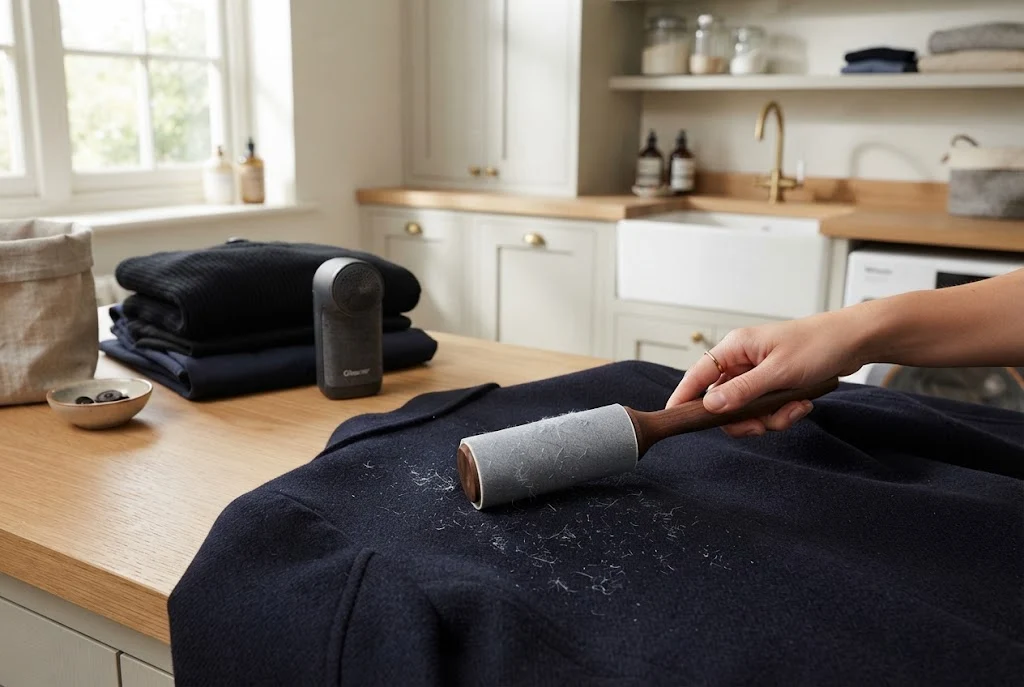
Knowing how to remove lint from clothes can make a big difference to the appearance of jumpers, trousers, coats, uniforms and everyday outfits. Fluffy fibres can collect during washing, drying or everyday wear, while tissues left in pockets can create an especially frustrating layer of white fluff across an entire load. Fortunately, most lint can be removed with a few simple household methods.
The best approach depends on the type and amount of lint. A lint roller is convenient for everyday use, while sticky tape, a clothes brush, a damp rubber glove or careful washing can help with heavier build-up. If the problem keeps returning, changing how you sort and wash your laundry may be more effective than repeatedly removing the lint afterwards.
How to Remove Lint from Clothes
If you need to remove lint quickly, start by identifying whether you are dealing with loose fibres, fluff from another garment, pet hair or small fabric bobbles. These problems can look similar but may require different tools.
For loose lint sitting on the surface, a lint roller is usually the simplest option. For stubborn patches, adhesive tape or a clothes brush can help. If the garment has developed actual bobbles, also known as pills, a fabric shaver or clothes debobbler is generally more appropriate.
1. Use a Lint Roller
A lint roller is one of the easiest ways to remove loose fibres from clothing. Roll the adhesive surface over the garment using gentle, even strokes. Replace or peel away the used adhesive layer when it becomes covered with lint.
Lint rollers are particularly useful for dark clothing because even small amounts of fluff can be highly visible against black, navy or charcoal fabrics.
Keep one near your wardrobe, coat rack or front door if you regularly need to remove lint before leaving home. A few passes can make a noticeable difference without requiring another wash.
2. Try Sticky Tape
If you do not have a lint roller, ordinary sticky tape can provide a useful alternative. Wrap a strip around your hand with the sticky side facing outwards, then gently press it against the affected area.
Lift the tape rather than aggressively rubbing the garment. Move to a clean section of tape as it becomes covered with fibres.
This method is particularly useful when you only have a small area to clean. Avoid using excessive pressure on delicate fabrics, as some materials can be more vulnerable to pulling or snagging.
3. Use a Clothes Brush
A clothes brush can help lift loose lint and surface debris from garments. Brush in one consistent direction rather than repeatedly scrubbing the same area.
This can be a useful option for coats, jackets, trousers and structured garments where you want to refresh the surface without washing the entire item.
Always use a brush that is suitable for the fabric. A very stiff brush may not be appropriate for delicate knitwear or loosely constructed materials.
4. Use a Slightly Damp Rubber Glove
A clean rubber glove can help collect loose fibres from some fabrics. Put on the glove, lightly dampen it and run your hand gently across the garment.
The moisture and friction can help gather loose lint into small clumps that are easier to pick up. Do not soak the glove or rub aggressively, particularly on delicate fabrics.
Test the technique on a hidden area first if you are unsure how the fabric will respond.
5. Use a Clothes Debobbler for Pills
If what you see is not loose lint but small balls of fibre attached to the surface, you may need a clothes debobbler rather than a conventional lint roller.
A clothes debobbler, also called a fabric shaver or fabric defuzzer, is designed to remove surface pills from suitable garments. It gently cuts away the small fibres that form bobbles while leaving the main fabric intact when used correctly.
Read the device instructions carefully and keep the garment flat while using it. Do not press too hard, and avoid areas where buttons, zips, embroidery or other details could interfere with the device.
How Do You Remove Lint from Clothes After Washing?
If you find lint covering clothes immediately after washing, the problem may have started inside the washing machine rather than on the garment itself.
One common cause is washing lint-producing fabrics together with materials that attract loose fibres. Fleece, fluffy sweatshirts, towels, flannel and some new fabrics can release more lint than smoother synthetic garments.
The American Cleaning Institute recommends separating fabrics that shed lint from garments that tend to attract it. It also advises avoiding overloaded washing machines because clothing needs enough room to move freely.
Before washing, check pockets carefully. A tissue accidentally left inside a pocket can break apart and spread tiny paper fibres throughout the load.
Separate Lint-Producing Items
When possible, wash heavy lint producers separately. Towels, fluffy dressing gowns, blankets and some fleece garments can release considerable amounts of loose fibre.
Washing them separately from dark trousers, smooth synthetic fabrics and other lint-attracting clothing can reduce the problem considerably.
Avoid Overloading the Washing Machine
Overloading does more than affect cleaning performance. It can also make it harder for loose fibres to move away from garments during the wash and rinse process.
Leave enough room for clothing to move freely and follow the washing machine manufacturer’s recommended load size.
How to Take Lint Off Clothes Without Washing Them
You do not need to wash a garment every time you notice a little fluff. In fact, unnecessary washing can create additional wear and may cause more fibres to become loose.
For a garment that is otherwise clean, use a lint roller, clothes brush or suitable tape. These methods are particularly useful before work, meetings, events or travel when you need a quick refresh.
Hang the garment up first so that you can see the entire surface. Work from the shoulders down and check areas such as pockets, sleeves, seams and the back of the garment.
How to Get Rid of Lint on Clothes in the Dryer
A tumble dryer can help remove some loose fibres, but it can also spread lint between garments if the load is poorly sorted or the appliance is not maintained properly.
Always clean the dryer’s lint filter according to the manufacturer’s instructions. A blocked or neglected filter can reduce airflow and drying performance.
Before putting clothes in the dryer, check the care label to confirm that tumble drying is suitable. Some garments need to be air dried or dried using a particular temperature.
If your dryer has an air-fluff or no-heat programme, this can sometimes be useful for refreshing suitable garments without adding unnecessary heat. However, follow your appliance and garment-care instructions rather than assuming every fabric can be treated in the same way.
How to Remove Fluff from Clothes Caused by Tissues
A tissue left in a trouser or jacket pocket can turn an ordinary wash into a frustrating lint-removal job. Small pieces of tissue can attach themselves to almost every garment in the load.
First, remove the affected clothes and shake them outside or over an easy-to-clean surface. Allow the garments to dry if they are still wet, then use a lint roller, clothes brush or suitable adhesive tape to lift the remaining pieces.
Check every pocket before washing the next load. Making pocket checking part of your normal laundry routine is much easier than removing hundreds of tiny pieces of tissue afterwards.
Removing Lint From Black Clothes
Black clothing often makes lint look worse because light-coloured fibres contrast sharply with the fabric. Fortunately, the removal process is usually straightforward.
Use a lint roller over the entire garment, paying particular attention to the shoulders, front, sleeves and lower back. If you are using adhesive tape, replace it frequently so that you continue lifting fibres rather than moving them around.
For black knitwear that has developed bobbles, use a suitable fabric shaver rather than repeatedly applying adhesive. Loose lint and pilling are different problems and should be treated accordingly.
How to Remove Lint from Delicate Clothes
Delicate fabrics require more care because aggressive brushing, scraping or shaving can damage the surface.
Start with the least aggressive method. A gentle clothes brush or carefully applied lint roller may be sufficient for loose surface fibres. If you are considering a fabric shaver, check whether the manufacturer specifically recommends it for that type of material.
Always read the garment’s care label before washing, drying or treating it. Fabric-care guidance recommends following the manufacturer’s instructions rather than guessing which treatment is appropriate for a particular garment.
How to Prevent Lint on Clothes
Removing lint is useful, but preventing it is even better. A few changes to your laundry routine can significantly reduce the amount of loose fibre transferred between garments.
Sort Laundry by Fabric Type
Do not sort laundry only by colour. Fabric type matters too.
Heavy lint-producing fabrics such as towels and fluffy fleece can be separated from smooth garments that attract fibres. This simple change can prevent a lot of lint from transferring during washing and drying.
Check Pockets Before Washing
Make pocket checking a routine part of laundry preparation. Remove tissues, receipts and other paper items before garments go into the washing machine.
This is particularly important for children’s clothing, work trousers and jackets with multiple pockets.
Clean the Washing Machine and Dryer
Regular appliance maintenance can help keep your laundry routine working efficiently. Follow the manufacturer’s cleaning instructions for the washing machine, dryer drum and lint filter.
If your dryer has a lint filter, clean it regularly rather than allowing fibres to accumulate between loads.
Do Not Overload Your Machines
Give clothing enough room to move during both washing and drying. An overloaded machine can contribute to poor washing and drying performance and may increase the amount of lint left on garments.
Lint vs Bobbles: What Is the Difference?
Lint and bobbles are often treated as the same problem, but they are not identical.
Lint is generally made up of loose fibres that sit on the surface of clothing. They can often be lifted with a lint roller, tape or clothes brush.
Bobbles, also known as pills, are small balls of fibres that form when the fabric surface experiences friction. They are attached to the garment, so a lint roller may not remove them effectively.
If you want to remove bobbles from clothing, a suitable fabric shaver or clothes debobbler may be a better choice. Use it carefully and follow the manufacturer’s instructions.
Can Washing Clothes Remove Lint?
Washing can remove some loose fibres, but washing a lint-covered garment is not always the best first solution. If the garment is already clean, washing it again may simply expose it to additional friction without solving the underlying problem.
For loose surface lint, mechanical removal is usually more practical. If the lint has come from another garment during washing, however, reviewing how you sort your laundry may prevent the same issue from happening again.
When Should You Use a Lint Remover for Clothes?
A lint remover for clothes is useful when you regularly deal with loose fibres or pet hair. Choose the tool based on the problem you are trying to solve.
- Lint roller: best for loose lint, hair and surface fluff.
- Adhesive tape: useful for small areas or emergencies.
- Clothes brush: useful for coats, trousers and structured garments.
- Fabric shaver: designed for suitable garments with surface pills.
- Clothes debobbler: useful for removing bobbles from appropriate fabrics.
Do not assume that a single tool is suitable for every garment. Delicate materials may require a gentler approach, while heavily pilled knitwear may benefit from a dedicated debobbler.
Frequently Asked Questions
How do you remove lint from clothes quickly?
The quickest method for loose lint is usually a lint roller. If you do not have one, sticky tape wrapped around your hand can work as a temporary alternative.
What is the best way to remove fluff from black clothes?
A lint roller is usually convenient for black clothing because it can cover a large surface quickly. For stubborn fibres, carefully applied adhesive tape or a clothes brush can help.
How do you remove bobbles from clothing?
Use a suitable clothes debobbler or fabric shaver on garments for which the manufacturer recommends this type of treatment. Keep the fabric flat and use gentle, controlled movements.
Why do my clothes have so much lint after washing?
Common causes include mixing lint-shedding fabrics with lint-attracting garments, overloaded loads and tissues left in pockets. Better sorting and checking pockets can help prevent the problem.
Does a washing machine cause lint?
Loose fibres can be produced or transferred during washing, particularly when different fabric types are mixed. Washing-machine overload and poor sorting can make the problem more noticeable.
Can I remove lint without washing my clothes?
Yes. If the garment is already clean, a lint roller, clothes brush or suitable adhesive tape can remove loose fibres without another wash.
Learning how to remove lint from clothes is mostly about choosing the right method for the type of fibre you are dealing with. Loose lint can usually be handled with a roller, brush or tape, while bobbles require a more specialised tool such as a fabric shaver.
Just as importantly, prevention can save time. Separate heavy lint producers, check pockets, avoid overloading your machines and maintain your laundry appliances. These small habits can help keep clothes cleaner-looking between washes and make your overall laundry routine easier.
