

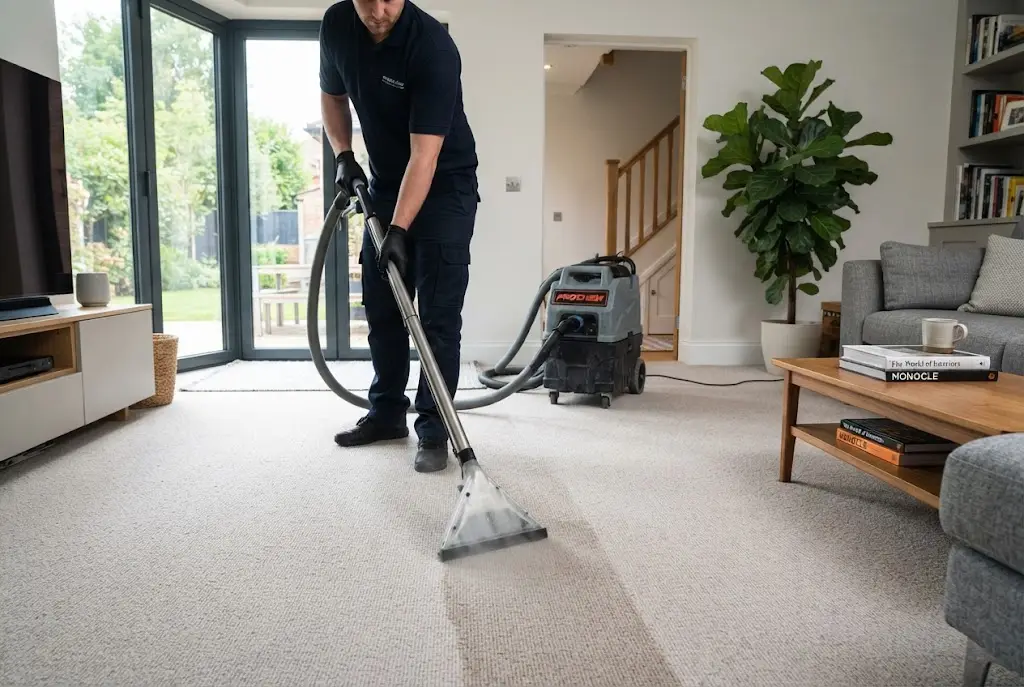
Learning how to clean carpet properly can help keep flooring looking fresh, remove everyday dirt and deal with spills before they become stubborn stains. Carpet can collect dust, crumbs, pet hair and other debris over time, while high-traffic areas can become visibly darker or worn. The right cleaning method depends on the carpet material, the type of dirt and the manufacturer’s care instructions. This guide explains how to clean a carpet at home, from routine vacuuming and stain treatment to deeper cleaning and drying.
How Often Should You Clean a Carpet?
There is no single cleaning schedule that suits every home. A carpet in a busy family household may need more frequent attention than one in a rarely used room.
Regular vacuuming is useful for removing loose dirt before it becomes embedded in the fibres. Spills and visible stains should generally be dealt with as soon as practical, using a method suitable for the carpet.
A deeper clean may be appropriate when the carpet looks dull, feels dirty underfoot or has accumulated substantial grime despite regular vacuuming. Homes with pets, children or heavy foot traffic may also require more frequent deep cleaning.
Check Your Carpet Before Cleaning
Before deciding how to clean your carpet, check the manufacturer’s care instructions. Different carpet fibres can respond differently to moisture, heat and cleaning products.
Some carpets may be suitable for water-based cleaning, while others require specialist treatment. If you are unsure what material your carpet contains or which cleaning method is appropriate, check the manufacturer’s documentation or seek professional advice.
It is also sensible to inspect the carpet for loose fibres, damaged areas, colour changes or other issues before introducing moisture.
What You Need to Clean Carpet at Home
The equipment you need will depend on the condition of the carpet and the cleaning method you choose. A basic setup may include:
- A vacuum cleaner
- A suitable carpet cleaning solution
- Clean microfiber or absorbent cloths
- A soft brush where appropriate
- A bucket for suitable cleaning methods
- A carpet cleaning machine if required
- Fans or good ventilation to help the carpet dry
Always read the instructions for your cleaning products and equipment before use. Use products specifically intended for carpets rather than assuming that a general household cleaner will be suitable.
How to Clean Carpet Step by Step
1. Remove Furniture and Loose Objects
Start by removing small furniture, toys, shoes and other objects from the carpeted area. Where practical, move larger furniture to create access to as much of the carpet as possible.
This makes the cleaning process more consistent and prevents you from leaving heavily used sections untreated simply because they were difficult to reach.
2. Vacuum the Carpet Thoroughly
Vacuuming is one of the most important stages when you clean a carpet. Move the vacuum slowly across the floor rather than rushing through the room.
Pay particular attention to high-traffic areas, edges and sections underneath furniture. If your vacuum has different settings for different floor types, select the setting recommended for your carpet.
Thorough vacuuming removes loose dirt before moisture is introduced and can make subsequent cleaning more effective.
3. Identify Stains and Problem Areas
Walk across the carpet and identify visible stains before starting deeper cleaning. Look for food marks, drink spills, mud, grease and areas that appear darker than the surrounding carpet.
Knowing what caused a stain can help you choose an appropriate treatment. However, if you are unsure what a mark contains, avoid experimenting with multiple strong chemicals.
4. Test the Cleaning Product
Before applying a new carpet cleaner across a large area, test it in a small, inconspicuous location. Follow the product instructions and allow the test area to dry before assessing the result.
Check for colour changes, fading, texture changes or other unexpected reactions. If the carpet reacts badly, stop using the product.
5. Treat Stains Carefully
Apply an appropriate stain treatment according to the manufacturer’s instructions. Avoid using excessive amounts of product or aggressively scrubbing the carpet.
For many spills, controlled blotting can be preferable to vigorous rubbing because excessive friction may spread the substance or affect the appearance of the fibres.
Always check the carpet manufacturer’s instructions before using a stain remover, particularly on delicate or specialist carpets.
6. Choose a Suitable Deep-Cleaning Method
If the carpet requires more than routine vacuuming and spot treatment, consider a deeper cleaning method suitable for the carpet.
Depending on the material and manufacturer’s recommendations, this could involve a carpet extraction machine or another approved cleaning method. Follow the equipment manufacturer’s instructions carefully.
Do not assume that every carpet can tolerate the same amount of water or cleaning solution. Excess moisture can increase drying time and may create problems if the carpet and underlying materials remain damp for too long.
7. Work in Manageable Sections
When using a wet-cleaning method, divide the room into manageable sections. This makes it easier to apply a consistent amount of cleaning solution and prevents you from repeatedly treating the same area.
Work systematically from one side of the room towards the exit where practical. This reduces the need to walk repeatedly across freshly cleaned areas.
8. Avoid Over-Wetting the Carpet
One of the most common mistakes when learning how to clean carpets is assuming that more water produces a deeper clean. Excess moisture can make carpets much harder to dry.
Use the amount of cleaning solution and water recommended by the equipment or product manufacturer. If an extraction machine is being used, follow its instructions for removing moisture after cleaning.
9. Allow the Carpet to Dry Properly
Drying is a crucial part of the cleaning process. Improve airflow through the room by opening suitable windows or using fans when conditions allow.
Keep unnecessary foot traffic off the carpet while it is still damp. Avoid placing furniture back onto wet areas unless the cleaning equipment or carpet manufacturer specifically permits it.
Drying time depends on the carpet, amount of moisture used, room temperature, humidity and ventilation. Check that the carpet is fully dry before returning the room to normal use.
How to Clean Carpet at Home Without Damaging It
The safest approach to clean carpet at home is to match the cleaning method to the carpet material. Start with the manufacturer’s instructions, use compatible products and test unfamiliar cleaners before treating larger areas.
Avoid using strong household chemicals simply because they are available. Products intended for kitchens, bathrooms or hard surfaces may not be suitable for carpet fibres.
Similarly, avoid excessive scrubbing. Carpet fibres can be affected by aggressive mechanical action, particularly when combined with moisture or cleaning chemicals.
Best Way to Clean Carpet for Everyday Dirt
For everyday carpet maintenance, regular vacuuming is usually the starting point. A consistent vacuuming routine can reduce the amount of loose dirt that becomes embedded in the fibres.
High-traffic areas may need additional attention. Entryways, hallways, stairs and areas around seating can accumulate dirt more quickly than less frequently used parts of a room.
Promptly addressing spills can also reduce the likelihood of permanent staining. Keep suitable carpet-cleaning materials available so you can respond quickly when an accident occurs.
How to Clean My Carpet After a Spill
When a spill happens, first remove any solid material carefully without spreading it further. Then follow the carpet manufacturer’s recommended method for dealing with liquid spills.
Avoid automatically pouring large amounts of water onto the stain. Excess liquid can spread the affected area and may make drying more difficult.
Use a suitable clean cloth or product according to the carpet-care instructions. Work carefully rather than repeatedly rubbing the same section.
How to Clean Carpet in High-Traffic Areas
High-traffic sections often appear darker because dirt and debris accumulate more quickly there. Begin by vacuuming these areas thoroughly.
If vacuuming does not restore the carpet’s appearance, a suitable deeper-cleaning method may be required. Treat the area consistently rather than repeatedly applying strong spot cleaners to individual marks.
It is also worth considering why a particular area becomes dirty more quickly. Entry mats, regular vacuuming and prompt spill treatment can reduce the amount of dirt reaching the carpet in the first place.
Common Carpet Cleaning Mistakes
Using the Wrong Product
Not every household cleaning product is suitable for carpet. Always check the label and carpet manufacturer’s recommendations before applying a product.
Skipping Vacuuming
Wet cleaning should not replace thorough vacuuming. Removing loose dirt first helps prepare the carpet for deeper treatment.
Using Too Much Water
Over-wetting can increase drying time and may create problems if moisture remains trapped within the carpet or underlying materials.
Scrubbing Stains Aggressively
Hard scrubbing may spread stains or affect carpet fibres. Use a controlled technique appropriate for the carpet material.
Mixing Cleaning Products
Never mix different cleaning chemicals unless the manufacturers specifically state that the combination is safe. Follow the product instructions and safety warnings.
Ignoring Drying
Cleaning is not complete until the carpet has dried properly. Maintain good airflow and keep foot traffic to a minimum while the carpet remains damp.
When Should You Use Professional Carpet Cleaning?
Professional cleaning can be useful when a carpet is heavily soiled, has persistent stains or requires a specialist treatment method. It can also be appropriate when you are unsure about the material or concerned about damaging the carpet.
Repeated attempts to remove a difficult stain using different household products can sometimes make the situation harder to resolve. Professional cleaners can assess the carpet and select a cleaning process based on its material and condition.
Professional cleaning may also be worthwhile for larger areas where using unsuitable amounts of water or cleaning solution could create unnecessary drying problems.
How to Keep Your Carpet Clean for Longer
Regular maintenance can reduce the amount of intensive cleaning required. Vacuum frequently, particularly in high-traffic areas, and deal with spills promptly.
Using doormats at entrances can help reduce the amount of outdoor dirt brought onto carpeted floors. Removing outdoor footwear where practical can also limit the amount of soil transferred onto the carpet.
Move furniture periodically where appropriate so that dirt does not accumulate permanently around the same areas. Follow the carpet manufacturer’s guidance for routine care and deeper cleaning.
For households that also need to maintain upholstered furniture, our guides on cleaning upholstery and how to deep clean a sofa provide additional advice for fabric surfaces around the home.
How Do You Clean Carpet? Final Checklist
If you are wondering how do you clean carpet effectively, use this basic checklist:
- Check the carpet manufacturer’s care instructions.
- Remove furniture and loose objects where practical.
- Vacuum the entire carpet thoroughly.
- Identify stains and treat them with a suitable product.
- Test unfamiliar cleaning products in an inconspicuous area.
- Use an appropriate deep-cleaning method when necessary.
- Avoid excessive water and cleaning solution.
- Remove excess moisture according to the equipment instructions.
- Allow the carpet to dry completely.
- Resume normal foot traffic only when the carpet is fully dry.
The best way to clean a carpet is not necessarily the most intensive method. Effective carpet care starts with regular vacuuming, prompt stain treatment and a cleaning process suited to the material. When deeper cleaning is necessary, follow the manufacturer’s instructions and control moisture carefully.
For delicate, heavily stained or difficult-to-identify carpets, professional cleaning may be the safest option. With consistent maintenance and the right cleaning approach, you can keep carpeted areas looking cleaner while reducing unnecessary wear and staining.
