

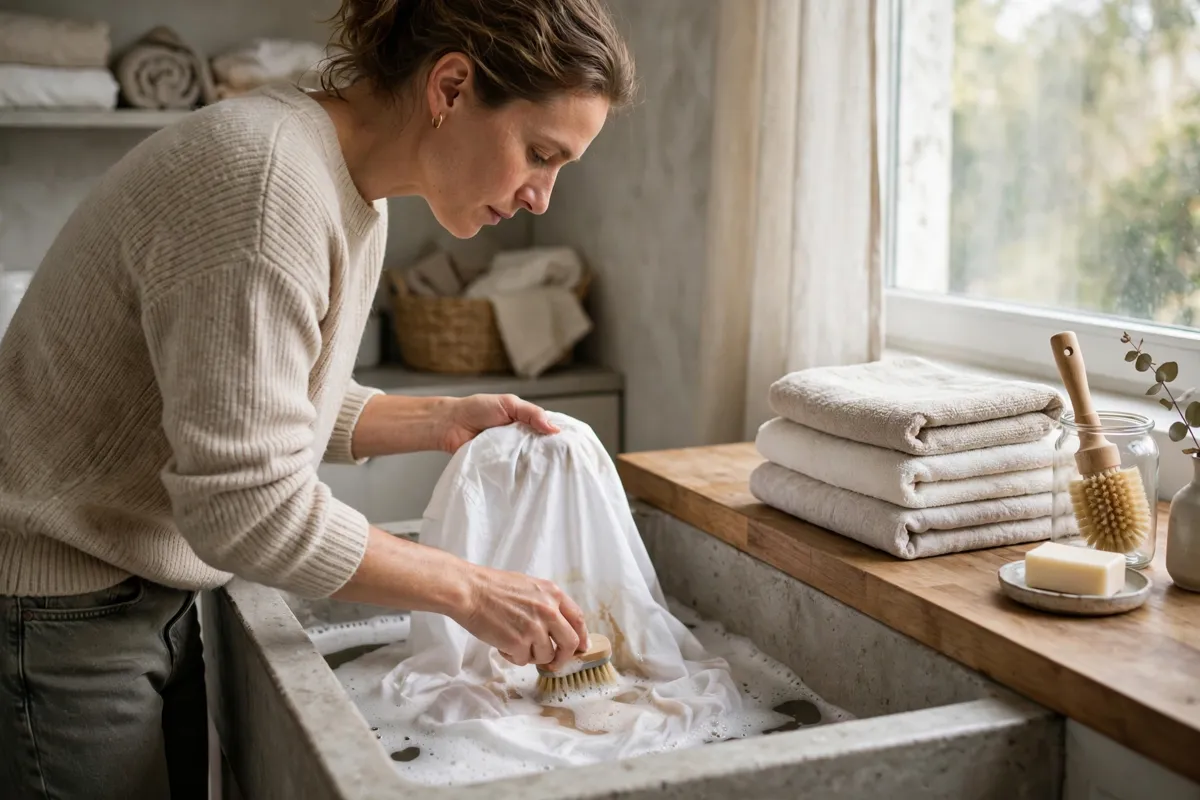
Sweat stains are one of the most stubborn laundry problems: yellow marks under the arms, stiff patches on collars, and discolouration that survives an ordinary wash. Sweat stains on clothes happen when perspiration mixes with body oils and deodorant residue, and heat from tumble drying can set them permanently. The good news is that most sweat stains can be removed at home if you treat them the right way before they set. This guide explains what causes sweat stains, how to remove them from different fabrics, and how to stop them coming back.
Why Sweat Stains Form
Sweat itself is mostly water and salt, and fresh sweat rarely stains on its own. The yellow marks most people see come from a mix of sweat, skin oils, and the aluminium compounds in many antiperspirants, which react with fabric fibres over time. White and light-coloured shirts show the damage most clearly, but dark clothes can develop stiff, shiny patches in the same areas. The longer a stained garment sits unwashed, the harder the mark becomes to shift, which is why prompt treatment matters. Heat is the enemy here: never tumble dry a stained item before treating it, because heat bonds the stain to the fibres. For related stain problems, our guide to removing deodorant stains from clothes covers marks caused by deodorant alone.
Pre-Treat Before You Wash
Pre-treatment is the step most people skip, and it makes the biggest difference. Start by turning the garment inside out and rinsing the stained area under cool water to flush out as much residue as possible. Then apply a pre-treatment directly to the stain: a paste made from bicarbonate of soda and water, plain white vinegar, or a small amount of liquid laundry detergent all work well for everyday fabrics. Work the treatment gently into the fibres with a soft brush or your fingers, and leave it for at least thirty minutes before washing. For delicate fabrics, test any treatment on a hidden area first. Avoid chlorine bleach on coloured or delicate items, since it can damage fibres and make yellowing worse. Our bleach for clothes guide explains when bleach is safe and when it is not.
Washing Sweat-Stained Clothes Properly
After pre-treating, wash the garment on the warmest setting its care label allows, using a good-quality detergent. Warm water helps dissolve the oils and residue that cold water leaves behind, but always respect the care label, especially for wool, silk, or structured items. Adding a cup of white vinegar to the rinse can help break down residue and soften fibres. If the stain is still visible after washing, repeat the pre-treatment and wash again rather than putting the item in the dryer. Patience beats heat every time with sweat stains. For general washing technique, our guide to washing clothes in vinegar explains how vinegar helps across many laundry jobs, and our lint removal tips help keep treated garments looking fresh.
Tackling Old, Set-In Sweat Stains
Old stains that have been through the dryer need a stronger approach. Soak the garment for several hours in cool water mixed with an oxygen-based stain remover or a generous amount of white vinegar, then pre-treat and wash as above. For white cotton shirts, a longer soak often lifts yellowing that a single wash cannot touch. For coloured fabrics, be more cautious: long soaks and strong treatments can fade dyes, so test first and keep soak times shorter. If a treasured item still shows a mark after two careful attempts, a professional cleaner may be able to help, particularly for structured garments like suit jackets or silk blouses. Knowing when to hand a garment over is part of good clothing care, and our ironing service guide explains what professional laundry services include and how to choose one.
Preventing Sweat Stains in the First Place
Prevention is simpler than removal. Let antiperspirant dry fully before dressing, since wet product transfers straight onto fabric. Wash gym clothes and work shirts promptly rather than leaving them in a laundry basket for days. Wear a thin undershirt under dress shirts to keep sweat and deodorant away from the outer fabric. Choose breathable fabrics in hot weather, and rotate shirts so no single garment is worn repeatedly without washing. These small habits keep your wardrobe looking newer for longer and cut down the time you spend treating stains.
Sweat Stains on Different Fabrics
Different fabrics need different care. White cotton is the most forgiving: it tolerates warm washes, vinegar soaks, and oxygen-based stain removers well. Synthetic sportswear is trickier, because its fibres hold onto odour even when stains fade; wash gym kit promptly, skip fabric softener, which coats synthetic fibres and traps smells, and let items air dry. Wool and silk need gentle handling: use cool water, a detergent made for delicates, and never scrub aggressively. For structured or dry-clean-only items, do not attempt a home soak at all. A professional cleaner can treat the stain without damaging the garment’s shape, which is almost always cheaper than replacing it.
A Quick Routine for Stain-Prone Households
If sweat stains are a recurring problem in your household, a simple routine prevents most of them. Keep a small stain-treatment kit near the laundry area: white vinegar, bicarbonate of soda, a soft brush, and a gentle liquid detergent. When a stained garment comes off, rinse it the same day and pre-treat it before it goes in the basket. Wash stain-prone items together on a warm cycle, and check every item before it goes in the dryer. This routine takes only a few extra minutes per load, but it saves shirts, reduces rewashing, and keeps the whole wardrobe looking fresher for longer.
When to Replace Rather Than Rescue
Not every stained garment is worth saving. If the fabric has thinned, the stain has survived several careful treatments, or the collar and cuffs are worn as well as stained, replacement is the sensible choice. Keep the garment for cleaning or gardening rather than throwing it away. For the rest of your wardrobe, a simple routine of prompt washing, gentle pre-treatment, and never drying a stain into place will handle most sweat stains on clothes before they become a problem. If you look after towels with the same care, our guide to washing towels covers the basics of keeping everyday laundry fresh and long-lasting.
