

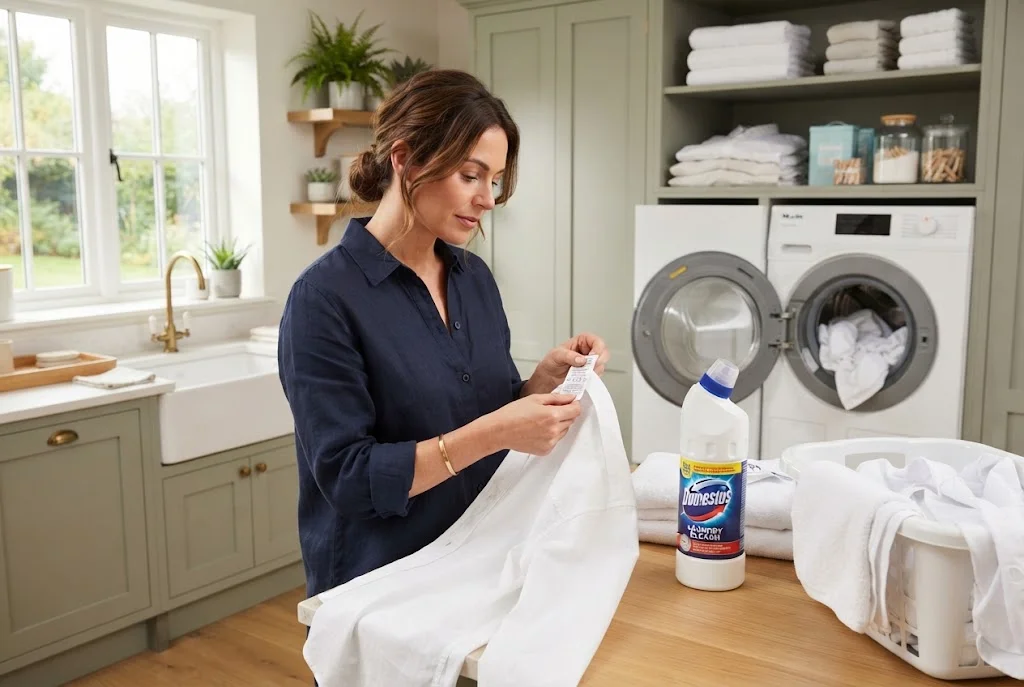
Using bleach for clothes can help brighten suitable white fabrics, tackle stubborn stains and keep laundry looking fresh. However, bleach is a powerful laundry product, so using too much or applying the wrong type to the wrong fabric can cause permanent damage.
The safest approach is to check the garment care label first, choose the right type of bleach and follow the product instructions carefully. With a few simple precautions, you can use bleach as part of your laundry routine without turning a whitening job into a damaged-clothing problem.
When Should You Use Bleach for Clothes?
Bleach is most useful when ordinary detergent has not quite restored the appearance of suitable fabrics. It can help whiten some white garments, improve the appearance of certain stains and, depending on the product, provide additional cleaning or disinfecting action.
It is not necessary for every wash, though. Most everyday laundry can be cleaned effectively with a suitable detergent and the correct wash programme. If your clothes are only lightly soiled, adding bleach may provide little benefit while increasing the risk of fabric damage.
For particularly stubborn marks, it is often better to identify the stain first and use an appropriate stain-removal method rather than automatically reaching for chlorine bleach.
Check the Care Label Before Using Bleach
The most important step is checking the garment’s care instructions. A white item is not automatically safe for every type of bleach. Fibre composition, dyes, finishes and trims can all affect whether bleaching is appropriate.
Look for the bleaching symbol on the care label. A plain triangle generally indicates that bleaching is permitted, while a crossed-out triangle means bleach should not be used. A triangle containing two diagonal lines indicates that only non-chlorine bleach should be used.
If the label says not to bleach, do not try to override the instruction because the garment looks durable. Some fabrics and finishes can be permanently weakened, discoloured or damaged by unsuitable bleaching products.
Fabrics That Need Extra Care
Take particular care with wool, silk and delicate fabrics. Chlorine bleach is generally unsuitable for these materials. Stretch fibres and garments with specialist finishes can also require special treatment.
If you are uncertain about an item, check the manufacturer’s instructions before using any bleaching product. It is better to leave a stubborn stain than risk ruining an otherwise wearable garment.
Chlorine Bleach vs Oxygen Bleach
Not all laundry bleach products work in the same way. Understanding the difference can make your laundry routine safer and more effective.
Chlorine bleach, commonly based on sodium hypochlorite, is a stronger bleaching option. It can whiten suitable fabrics and may also provide disinfecting action when used according to the product instructions. However, it is not suitable for many coloured or delicate fabrics.
Oxygen bleach, sometimes described as colour-safe or non-chlorine bleach, is generally a gentler option. It can be useful for many washable fabrics and is often a better choice when you want additional stain-fighting or whitening power without using chlorine bleach.
Neither option should be treated as universally safe. Always check both the garment care label and the bleach product instructions before use.
How to Use Bleach for Clothes Safely
Once you have established that bleaching is suitable, use the product exactly as directed. The correct method can vary depending on the type and concentration of bleach as well as your washing machine.
1. Sort the Laundry First
Separate whites, colours and delicate fabrics before starting the wash. Do not assume that a slightly coloured garment will remain unchanged simply because you are using a small amount of bleach.
Keep heavily stained or particularly delicate items separate when necessary. Good sorting is one of the easiest ways to prevent accidental colour transfer and chemical damage.
2. Read the Bleach Instructions
Check the product label for the recommended quantity, dilution instructions and suitable fabrics. Do not estimate the amount simply by pouring what looks like enough into the machine.
Using more bleach does not necessarily mean cleaner clothes. Excessive quantities can increase the risk of damage and may not improve the final result.
3. Use the Correct Washing Machine Compartment
If your washing machine has a dedicated bleach dispenser, use it according to the machine manufacturer’s instructions. Some products and machines have specific requirements for where and when bleach should be added.
Never assume that liquid bleach should simply be poured over a pile of clothes inside the drum. Undiluted chlorine bleach can damage fabric when it comes into direct contact with garments.
4. Consider a Small Test First
If you are unsure how a suitable garment will react, test the product according to its instructions on a hidden or inconspicuous area first. This is particularly useful when dealing with an item where colourfastness or fabric condition is uncertain.
If you notice unexpected colour loss, weakening or other damage, stop rather than continuing with the treatment.
Can Bleach Make White Clothes Whiter?
Yes, the right bleach can help brighten suitable white fabrics, but it is not a magic solution for every type of discolouration. Results depend on the fabric, the cause of the staining and the condition of the garment.
For example, an older white garment may have accumulated body oils, detergent residue or staining over time. A suitable bleaching product may improve its appearance, but repeated aggressive treatments can eventually affect fabric quality.
For everyday maintenance, focus on using the correct detergent, washing at the temperature recommended on the care label and avoiding overloading the machine. Bleach should be a targeted laundry aid rather than an automatic addition to every wash.
Can You Use Bleach on Coloured Clothes?
Standard chlorine bleach is generally not appropriate for coloured clothing because it can remove or alter dyes. Even a small amount can create pale patches or uneven fading.
If a coloured garment needs additional stain treatment, look for a product specifically designed for colours and check that it is compatible with the fabric. Oxygen-based products may be suitable for some coloured washable fabrics, but you should still follow the product and garment instructions.
If your goal is simply to keep clean clothes looking fresh, good washing habits are usually more important than using bleach frequently.
What Not to Mix With Bleach
One of the most important bleach safety rules is to never mix it with other cleaning products unless the product manufacturer specifically says the combination is safe.
In particular, chlorine bleach should not be mixed with ammonia or acidic cleaning products. Chemical reactions can produce dangerous fumes. The Health and Safety Executive also advises that cleaning substances should not be mixed and that product instructions should be followed carefully.
If you are using bleach, keep the area well ventilated and avoid unnecessary skin or eye contact. Store laundry chemicals safely and keep them away from children and pets.
If bleach gets onto your skin or into your eyes, follow the product’s safety instructions and seek appropriate medical advice if irritation or injury occurs. The HSE guidance on safe chemical use and handling provides further information about handling cleaning chemicals safely.
Common Mistakes When Using Bleach
Bleach can be useful, but several common mistakes can quickly turn a simple wash into a costly repair or replacement.
- Using bleach without checking the care label: The garment may not be suitable for bleaching.
- Pouring undiluted bleach directly onto fabric: Concentrated bleach can cause localised damage.
- Using too much product: More bleach does not automatically produce better results.
- Using chlorine bleach on coloured clothing: It can remove or alter dyes.
- Bleaching delicate fabrics: Materials such as wool and silk can be particularly vulnerable.
- Mixing bleach with other cleaners: Chemical reactions can create dangerous substances or fumes.
- Using bleach for every wash: Routine laundry usually does not require it.
Safer Alternatives for Whitening Clothes
If chlorine bleach is unsuitable, you still have several options. Oxygen-based laundry products can provide a gentler approach for many washable fabrics. A good-quality detergent, appropriate wash temperature and targeted stain treatment can also make a significant difference.
For stains, treat the problem before washing rather than repeatedly increasing the strength of your laundry products. Follow the stain remover’s instructions and check that it is compatible with the garment.
Another useful habit is to avoid putting a stained garment into a tumble dryer until you are satisfied that the stain has been removed. Heat can make some stains more difficult to deal with.
How to Keep Clothes Bright Without Overusing Bleach
Prevention is often easier than repeated whitening treatments. Sort laundry properly, avoid overloading the washing machine and use the correct amount of detergent for the load.
Wash garments at the temperature permitted by their care labels. Higher temperatures are not automatically better for every fabric, and unnecessary heat can contribute to fading, shrinkage or fabric wear.
It is also worth paying attention to detergent residue. Using too much detergent can leave deposits behind rather than making clothes cleaner. Follow the detergent packaging and washing machine guidance for the appropriate amount.
For households dealing with persistent laundry problems, a consistent routine usually produces better results than relying on a strong chemical treatment after every wash.
Bleach for Clothes: The Bottom Line
Bleach for clothes can be an effective way to brighten suitable white fabrics and tackle certain stubborn stains, but it needs to be used carefully. Always start with the care label, choose the right type of bleach and follow the product’s instructions for quantity and application.
Chlorine bleach is powerful but unsuitable for many fabrics and colours, while oxygen bleach can provide a gentler alternative for many washable items. Most importantly, never mix bleach with other cleaning products and never pour concentrated bleach directly onto clothing.
Used selectively and correctly, bleach can be a useful part of a well-managed laundry routine. The goal is not to use the strongest product possible, but to choose the simplest treatment that safely gets your clothes clean, bright and ready to wear.
