

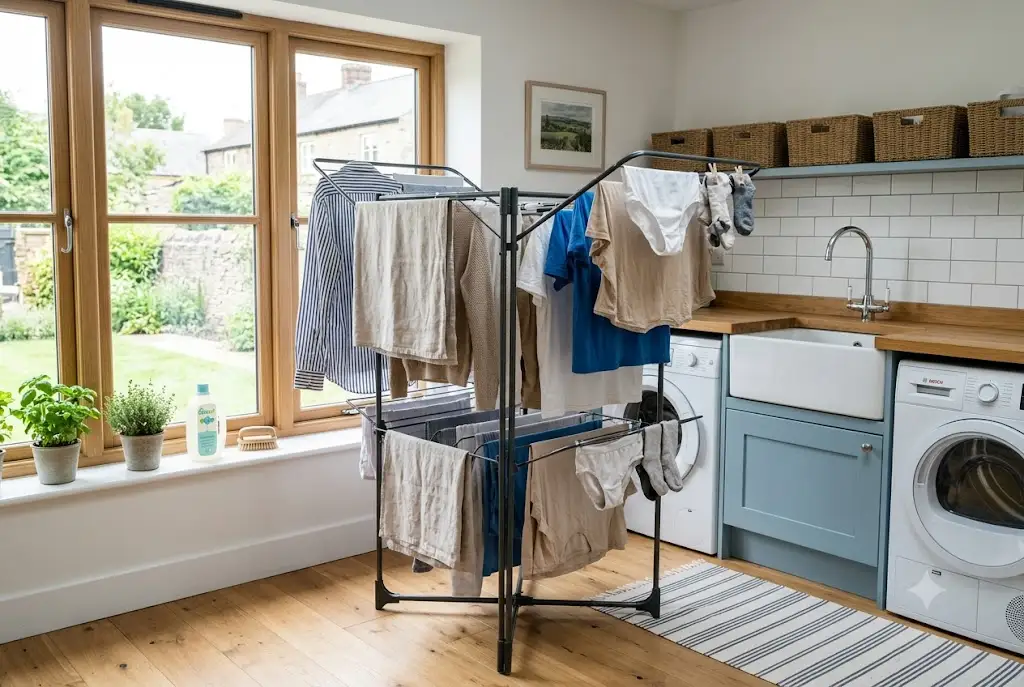
An indoor clothes drying rack is one of the most practical and cost-effective ways to dry laundry throughout the year. With the UK’s unpredictable weather, frequent rain, and shorter winter days, many households rely on indoor drying instead of outdoor washing lines. The right drying rack, combined with a few simple techniques, can help clothes dry faster while reducing energy consumption and protecting delicate fabrics.
Whether you live in a compact flat or a larger family home, this guide shares practical indoor drying hacks to help you get the most from your drying rack while maintaining a healthier indoor environment.
Why Choose an Indoor Clothes Drying Rack?
An indoor clothes drying rack offers flexibility that outdoor washing lines simply cannot provide. It allows you to dry clothes regardless of the weather while avoiding the high running costs associated with frequent tumble dryer use.
Benefits include:
- Suitable for year-round drying.
- Gentler on fabrics than high-heat drying.
- Lower energy consumption.
- Easy to fold and store.
- Available in sizes for every home.
- Ideal for delicate garments.
Types of Indoor Drying Racks
Freestanding Indoor Drying Racks
Traditional indoor drying racks are lightweight, foldable, and suitable for everyday household laundry. They offer multiple rails for different clothing types and are easy to move between rooms.
Foldable Clothes Drying Rack
A foldable clothes drying rack is perfect for homes with limited storage. Once the laundry is dry, the rack folds flat and can be stored behind a door or inside a cupboard.
Wall Mounted Laundry Drying Rack
A wall mounted laundry drying rack folds away against the wall when not in use, making it an excellent option for utility rooms, kitchens, and small apartments.
Wall Clothes Airer
A wall clothes airer provides a permanent drying solution without taking up valuable floor space. Many modern designs extend only when required.
Best Places to Position Your Clothes Drying Rack
Location has a significant impact on drying performance.
Good locations include:
- Near an open window.
- In a well-ventilated utility room.
- Close to a dehumidifier.
- Near gentle household heating.
- Conservatories with good airflow.
Avoid placing your drying rack for clothes in rooms with little ventilation, as this may increase condensation.
Indoor Clothes Air Drying Hacks
1. Spin Laundry Properly
Using a higher spin cycle removes more water before clothes reach the drying rack, reducing overall drying time.
2. Leave Space Between Garments
Overcrowding slows airflow. Spread clothing evenly across the clothes drying rack to allow air to circulate freely.
3. Use Hangers for Shirts
Shirts, dresses, and blouses often dry more evenly on hangers attached to a clothing drying rack.
4. Rotate Heavy Items
Turn towels and jeans halfway through drying to expose damp areas.
5. Separate Thick and Thin Fabrics
Heavy garments take longer to dry than lightweight clothing. Grouping similar fabrics improves drying efficiency.
Wall-Mounted Drying Solutions
If floor space is limited, several wall-mounted options are available.
- Wall drying rack for clothes
- Wall clothes drying rack
- Wall dry rack for clothes
- Wall mounted laundry drying rack
These systems maximise available space while keeping laundry neatly organised.
Using a Clothes Dryer Rack During Winter
Cold weather naturally increases drying times, but you can improve results by:
- Opening windows briefly each day.
- Using extractor fans where available.
- Running a dehumidifier nearby.
- Keeping moderate room temperatures.
- Avoiding damp, enclosed rooms.
Managing Indoor Humidity
Drying laundry indoors releases moisture into the air. Without proper ventilation, this can contribute to condensation and mould growth.
The NHS recommends maintaining good ventilation to help reduce damp and improve indoor air quality while drying clothes indoors.
When to Choose a Heated Airer Instead
If your laundry takes too long to dry during winter, a heated airer may be worth considering. Heated rails speed up moisture evaporation while remaining gentler than many tumble dryers.
Our guide to the best heated clothes airer explains how these models compare with traditional drying racks.
Portable Dryers vs Indoor Drying Racks
Portable dryers offer faster drying, while air drying racks consume no electricity and provide excellent fabric care.
If you need quicker drying for everyday laundry, read our article on the portable dryer for clothes to compare both solutions.
Common Air Drying Mistakes
- Overloading the drying rack.
- Drying clothes without enough ventilation.
- Leaving garments folded over themselves.
- Ignoring care labels.
- Drying dripping wet laundry.
Maintaining Your Laundry Rack
Regular maintenance helps your laundry rack last longer.
- Clean rails regularly.
- Dry the frame before storing.
- Inspect hinges periodically.
- Store in a dry location.
- Check rubber feet for wear.
Final Thoughts
An indoor clothes drying rack remains one of the simplest and most economical ways to dry laundry in UK homes. By choosing the right drying rack, improving airflow, and following a few practical air-drying hacks, you can reduce drying times, protect your clothing, and lower household energy use. Whether you use a freestanding rack or a wall-mounted solution, efficient indoor drying is achievable throughout every season.
