

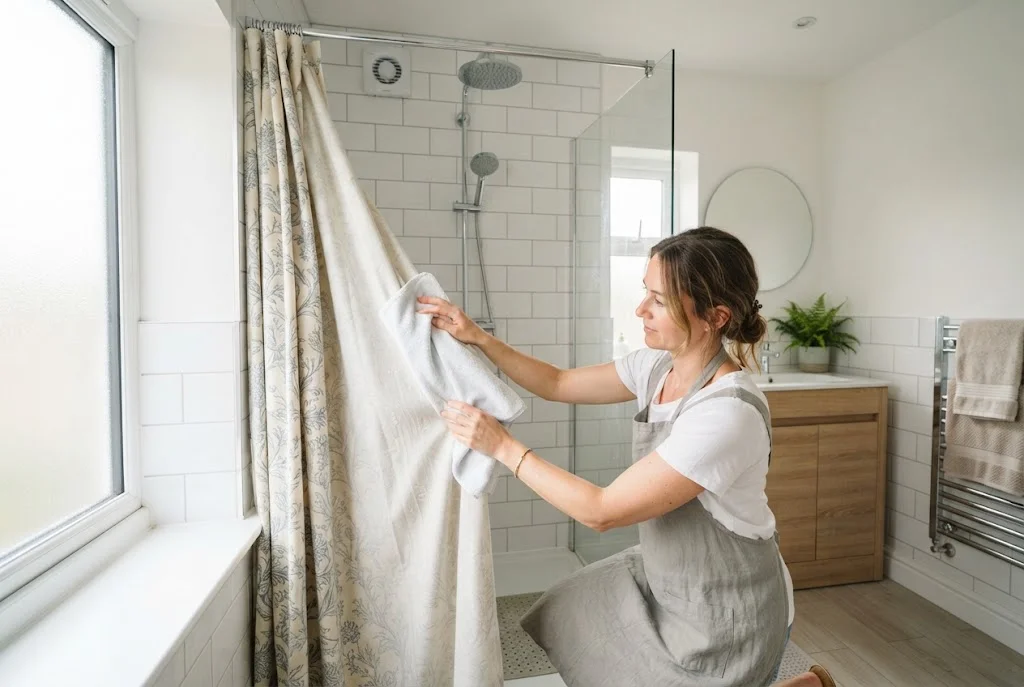
Knowing how to clean shower curtain properly can help remove soap residue, water marks, mildew and everyday bathroom grime before they become difficult to deal with. Shower curtains stay in a warm, damp environment, so regular cleaning is important for keeping them fresh and preventing unwanted build-up.
The best cleaning method depends on whether your curtain is fabric, vinyl or another washable material. Some curtains can go into the washing machine, while others need gentle hand cleaning. Always check the manufacturer’s care instructions before choosing a cleaning method.
How to Clean Shower Curtain Safely
The safest approach is to start by identifying the curtain material and checking its care label. Fabric curtains may have different washing requirements from plastic or vinyl curtains.
Remove the curtain from its hooks or rings and inspect it carefully. Look for soap scum, water marks, mildew, mould spots and areas where dirt has collected around the bottom edge.
If the curtain has a removable liner, check the liner separately. Some liners can be machine washed, while others are designed to be wiped clean or replaced when they become excessively worn.
How to Clean a Shower Curtain in the Washing Machine
If you are wondering how to clean a shower curtain using a washing machine, first confirm that the care label allows machine washing. Never assume that every fabric or plastic curtain is suitable for a standard wash cycle.
For a washable fabric curtain, use the temperature and programme recommended by the manufacturer. A gentle or suitable regular cycle may be appropriate, depending on the material.
Do not overload the washing machine. The curtain needs room to move through the water so detergent can reach the entire surface.
Use the recommended amount of detergent and avoid adding excessive cleaning products. Once the wash has finished, remove the curtain promptly and follow its drying instructions.
Can You Wash a Shower Curtain with Towels?
Some washable fabric shower curtains can be washed with suitable towels if the care instructions, colours and materials are compatible. However, separating them can make it easier to protect delicate curtains and control the wash conditions.
If the curtain has significant mould or mildew, avoid simply transferring it into a normal mixed laundry load. Follow the manufacturer’s cleaning instructions and consider the extent of the contamination before deciding how to wash it.
How to Clean a Plastic or Vinyl Shower Curtain
Plastic and vinyl shower curtains often require a different approach from fabric curtains. Check the manufacturer’s instructions first because some materials can become damaged by strong chemicals, high temperatures or abrasive cleaning.
For a wipe-clean curtain, remove it from the rail and lay it flat in a suitable cleaning area. Use a suitable bathroom or general-purpose cleaner according to its instructions.
Work over the curtain systematically, paying particular attention to the lower section where water, soap and residue tend to collect. Use a soft cloth or non-abrasive sponge unless the manufacturer’s instructions recommend another method.
Rinse the curtain thoroughly if the cleaning product requires rinsing. Allow it to dry completely before putting it back into use.
How to Remove Soap Scum from a Shower Curtain
Soap residue can build up gradually, particularly near the bottom of the curtain and around folds. If the residue is relatively light, regular cleaning can usually prevent it from becoming a thick layer.
Use a suitable bathroom cleaner or a product recommended for the curtain material. Apply it according to the manufacturer’s instructions rather than leaving a strong cleaning solution on the surface for longer than recommended.
Gently wipe the affected areas and rinse where required. Avoid aggressive scrubbing because it can damage delicate fabric coatings or plastic surfaces.
After cleaning, allow the curtain to dry fully. Good ventilation is particularly useful in a bathroom because moisture left on surfaces can contribute to condensation and mould.
How to Remove Mould from a Shower Curtain
Mould and mildew can appear on shower curtains because the bathroom provides moisture and limited drying time. Small areas of mould may sometimes be dealt with using an appropriate mould-cleaning product, provided the curtain material is compatible with it.
Always follow the cleaning product’s instructions and never mix different cleaning chemicals. The current UK government guidance on damp and mould advises using appropriate mould and mildew products in preference to bleach for mould removal, while stressing the importance of following product instructions and addressing the underlying moisture problem.
If the curtain is heavily affected by mould, badly stained or difficult to clean completely, replacing it may be more practical than repeatedly treating it.
Do Not Ignore the Cause of Mould
Cleaning the curtain removes visible contamination, but it does not necessarily solve the reason mould keeps returning. Showering produces moisture, and inadequate ventilation can allow humidity to remain in the bathroom.
Using an extractor fan where available, improving airflow and allowing the curtain to dry properly after use can help reduce the conditions that encourage mould growth.
The Drinking Water Inspectorate notes that shower curtains can develop mould or biofilm staining when areas remain damp and recommends regular cleaning, keeping affected areas as dry as possible and providing adequate ventilation.
Can You Use Bleach to Clean a Shower Curtain?
Bleach is sometimes used as a household cleaning product, but it should not automatically be the first choice for every shower curtain. Whether it is appropriate depends on the curtain material and the product manufacturer’s instructions.
If a cleaning product specifically states that it is suitable for the material, follow the instructions precisely. Never mix bleach with other cleaning products, particularly acids or ammonia-based products, because dangerous chemical reactions can occur.
If you are dealing with mould, use a suitable mould and mildew product according to its label rather than creating your own chemical mixture. For washable fabric curtains, a manufacturer-approved laundry treatment may be more appropriate than applying concentrated household bleach.
How Often Should You Clean a Shower Curtain?
There is no single cleaning schedule that works for every household. How often you should clean a shower curtain depends on how frequently the shower is used, how well the bathroom is ventilated and how quickly the curtain dries.
A shower curtain that stays wet for long periods may need more frequent attention than one that dries quickly after every shower.
Rather than waiting until you see heavy mould or a strong odour, inspect the curtain regularly. Light soap residue and early staining are generally easier to clean than established build-up.
Washing or cleaning the curtain as part of your wider bathroom routine can make maintenance much easier.
How to Stop a Shower Curtain from Getting Mouldy
Prevention is usually easier than repeatedly removing established mould. After showering, allow the curtain to spread out rather than leaving it bunched together.
Keeping the folds open allows more surface area to dry. If your bathroom has an extractor fan, use it during and after showering according to the manufacturer’s instructions. Opening an appropriate window can also improve ventilation where practical.
Try to keep the bottom of the curtain from sitting in pooled water. If the curtain is too long or repeatedly stays wet against the floor or bath edge, check whether it is positioned correctly.
Regular cleaning also matters. The Braintree District Council’s damp and mould guidance recommends changing shower curtains regularly to reduce the risk of mould returning and emphasises ventilation to reduce condensation.
How to Dry a Shower Curtain After Cleaning
Drying is just as important as cleaning. A damp curtain that is folded or bunched up immediately after washing can develop unpleasant smells and provide favourable conditions for mould growth.
For a washable fabric curtain, follow the care label for drying. Some may be suitable for tumble drying while others should be hung to dry.
For plastic or vinyl curtains, hang them fully open and allow them to air dry. Avoid exposing the material to excessive heat unless the manufacturer specifically permits it.
Make sure the curtain is completely dry before closing the bathroom or storing it. Good airflow can significantly reduce the time required for drying.
How to Clean Shower Curtain Hooks and Rails
Cleaning the curtain itself is only part of the job. Hooks, rings and rails can also collect dust, soap residue and moisture.
Remove the hooks or rings where possible and wipe them with an appropriate household cleaner. Rinse or wipe away any remaining product according to its instructions and allow them to dry before reinstalling the curtain.
For the rail, use a suitable bathroom cleaner and a soft cloth. Pay attention to joints, brackets and areas where residue has accumulated.
If you notice persistent black staining around the rail, wall or ceiling rather than only on the curtain, investigate the wider moisture and ventilation conditions rather than repeatedly cleaning the visible mark.
When Should You Replace a Shower Curtain?
Cleaning can extend the useful life of a shower curtain, but not every curtain can be restored indefinitely. Replacement may be sensible if the material has become brittle, cracked, permanently stained or heavily affected by mould.
Plastic and vinyl can deteriorate over time, while fabric curtains can lose their protective coatings or develop persistent staining.
If the curtain continues to develop heavy mould despite regular cleaning and adequate ventilation, replacing it may be a more practical solution. You should also address any persistent damp or condensation problem in the bathroom.
Simple Shower Curtain Cleaning Routine
A straightforward routine can keep the curtain in better condition without turning bathroom cleaning into a major task.
- Inspect the curtain regularly: Look for soap residue, staining and early signs of mould.
- Check the care label: Confirm whether the curtain can be machine washed or requires hand cleaning.
- Clean according to the material: Use a suitable product and method for fabric, vinyl or plastic.
- Rinse when required: Remove cleaning-product residue according to the manufacturer’s instructions.
- Dry the curtain completely: Spread it out and provide good airflow.
- Clean the surrounding area: Wipe the rail, hooks and nearby surfaces where appropriate.
- Improve ventilation: Use an extractor fan or suitable ventilation to reduce excess moisture.
How to Clean Shower Curtain: Final Tips
Learning how to clean shower curtain correctly is mainly about using the right method for the material and preventing excessive moisture from remaining on the curtain. Fabric curtains may be washable, while vinyl and plastic curtains often need careful surface cleaning.
Check the care instructions before using a washing machine or cleaning chemicals. Avoid abrasive products, do not mix cleaning chemicals and never assume that a strong product will produce a better result.
Regular cleaning, proper drying and good bathroom ventilation can help keep the curtain fresh for longer. If mould keeps returning, focus on the underlying moisture and condensation rather than repeatedly treating the same surface.
A well-maintained shower curtain is easier to clean, looks better and can form part of a simple household laundry and cleaning routine. For other fabric-care questions, you can also explore related curtain washing advice and towel drying tips within this Laundry Hacks cluster.
