

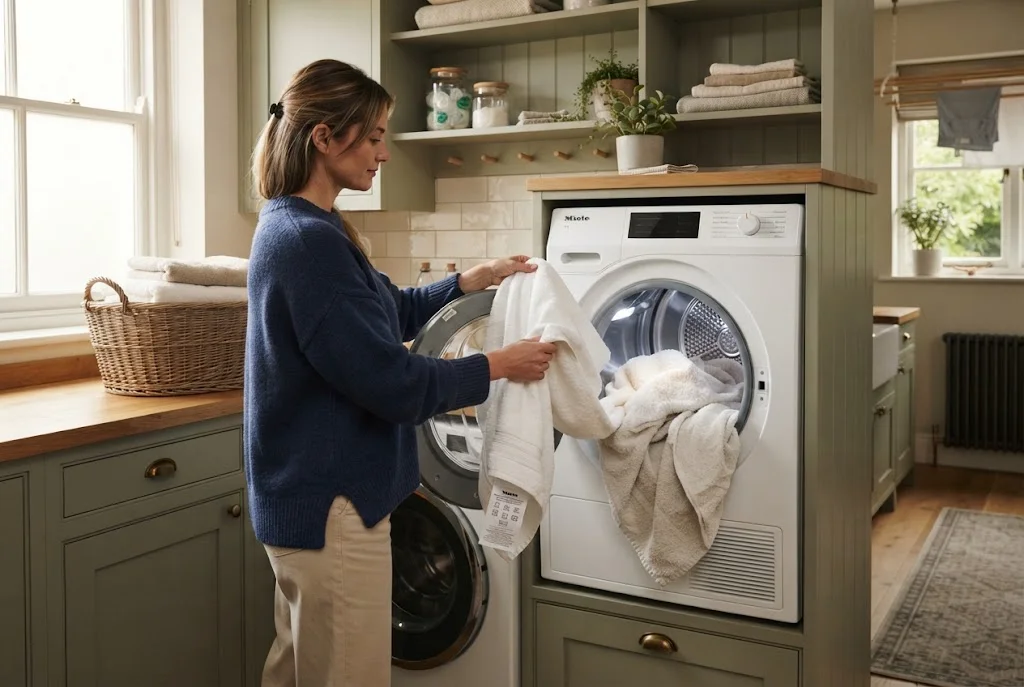
If you are wondering, can you tumble dry towels, the answer is usually yes, provided the care label allows tumble drying. Towels are commonly made from cotton or other durable materials that can tolerate machine drying, but the correct temperature and programme still matter.
Using the wrong setting can leave towels overly dry, stiff or worn. On the other hand, the right drying cycle can help towels remain comfortable, absorbent and ready to use. Understanding the care label, choosing a suitable heat level and avoiding an overloaded drum are the foundations of good towel care.
Can You Tumble Dry Towels Safely?
Most standard cotton towels can be tumble dried, but you should always check the care label before putting them in the dryer. The label will indicate whether tumble drying is permitted and may also show the recommended heat level.
A square symbol containing a circle generally indicates that tumble drying is permitted. Dots inside the circle indicate the permitted heat level, while a crossed-out symbol means the item should not be tumble dried.
Some towels may contain decorative details, special fibres or finishes that require different treatment. When the label provides specific instructions, follow those instructions rather than assuming that every towel can tolerate the same dryer programme.
What Temperature Should I Use to Tumble Dry Towels?
When choosing a towel drying temperature, the care label should come first. If the label permits tumble drying, use the lowest practical temperature that dries the towels effectively.
Many everyday cotton towels can tolerate a moderate or higher heat setting, but repeatedly using excessive heat can contribute to fabric wear over time. It can also consume more energy than necessary.
If your towels are relatively thin or made from a fabric blend, a lower temperature may be more appropriate. For heavier bath towels, you may need a longer drying cycle rather than simply increasing the heat.
Why High Heat Is Not Always Better
It can be tempting to select the hottest dryer setting to get towels dry as quickly as possible. However, excessive heat can place unnecessary stress on textile fibres.
Over time, repeated high-temperature drying may contribute to shrinkage, fading, fibre damage or a rougher feel, depending on the material. A suitable drying programme is therefore usually preferable to maximum heat.
What Setting Should I Use to Dry Towels?
If you are asking what setting to wash towels, it is important to separate the washing setting from the tumble-drying setting. The washing machine cycle cleans the towels, while the dryer setting controls how they are dried.
For tumble drying, choose a programme designed for cottons or regular laundry when the towel’s care label permits it. If your machine offers a specific towel or bedding programme and it is compatible with the care instructions, that can also be useful.
Sensor drying can be particularly helpful because the machine can adjust the cycle based on the moisture level. This may reduce unnecessary drying time compared with running a fixed programme for longer than required.
Should Towels Be Dried on High Heat?
Not necessarily. Some robust cotton towels can be dried at a higher temperature, but you should not automatically choose high heat for every load.
The ideal setting depends on the towel’s fabric, thickness and care label. A moderate setting can often provide a good balance between drying performance, energy use and fabric care.
If you regularly find that your towels feel stiff, overly dry or rough after tumble drying, try reducing the heat or using a shorter cycle. The problem may not be the towel itself but the drying conditions.
How to Tumble Dry Towels Properly
Knowing can you tumble dry towels is only the first step. How you load and operate the dryer also affects the final result.
- Check the care label: Make sure tumble drying is allowed and note any heat restrictions.
- Shake the towels out: Separate towels before placing them in the dryer so they do not remain tightly twisted together.
- Avoid overloading: Leave enough space for warm air to circulate around the load.
- Select the correct programme: Use a cotton or suitable regular-laundry programme when permitted.
- Choose an appropriate temperature: Avoid unnecessarily high heat.
- Use sensor drying when available: This can help prevent excessive drying.
- Remove towels promptly: Take them out when the cycle ends and fold or hang them as appropriate.
Why Are My Towels Stiff After Tumble Drying?
Stiff towels can have several causes, and the tumble dryer is not always the only factor. Excess detergent, detergent residue, hard water, over-drying and insufficient rinsing can all affect how towels feel.
One common mistake is using more detergent than necessary. Although extra detergent may seem helpful, residue can remain in the fibres and make towels feel less comfortable.
Over-drying can also contribute to a rough texture. If your dryer has a sensor programme, try using it instead of repeatedly running towels through a long timed cycle.
Another useful habit is to remove towels from the dryer as soon as the cycle finishes. Give them a good shake before folding them. This can help separate the fibres and prevent them from sitting compressed while hot.
Can Tumble Drying Make Towels Softer?
Tumble drying can help towels feel softer and fluffier than air drying, particularly when the dryer is used correctly. The mechanical movement of the drum helps separate fibres as the towels dry.
However, softness should not come at the expense of excessive heat. A well-chosen cycle can produce comfortable towels without unnecessarily stressing the fabric.
If you want consistently soft towels, look at the entire laundry routine rather than relying solely on the dryer. Proper detergent dosage, thorough rinsing, sensible wash temperatures and appropriate drying all contribute to the final texture.
Should You Use Fabric Conditioner on Towels?
Fabric conditioner can make some laundry feel softer, but frequent or excessive use may reduce the absorbency of towels by coating their fibres.
Because the primary purpose of a bath towel is to absorb moisture, maintaining absorbency is usually more important than achieving maximum softness. Follow the conditioner manufacturer’s instructions and avoid using more product than recommended.
If your towels already feel less absorbent, reviewing your use of fabric conditioner may be worthwhile. A simpler washing routine can sometimes restore better performance.
How Long Does It Take to Tumble Dry Towels?
There is no single drying time that applies to every towel load. Drying time depends on towel size, thickness, material, drum capacity, dryer efficiency, selected temperature and how wet the towels were after washing.
Large bath sheets naturally take longer to dry than small hand towels. A heavily loaded dryer can also increase drying time because air cannot circulate efficiently.
Rather than choosing a very long cycle automatically, use a sensor programme if your machine has one. This can help stop the cycle when the towels have reached an appropriate level of dryness.
Can You Tumble Dry Towels with Clothes?
Towels can sometimes be tumble dried with clothes when the items have compatible care instructions, but separating them can produce better results.
Heavy towels hold more moisture than lightweight clothing. This means they can take longer to dry and may require conditions that are not ideal for delicate garments.
Towels can also release lint during washing and drying. If you are drying dark clothes, delicate fabrics or lint-sensitive garments, a separate towel load can help reduce unwanted fibres.
If you are deciding whether to combine loads, check the care labels first and choose a drying programme that is safe for every item. When in doubt, separate the towels.
How to Prevent Towels from Smelling Musty
A musty towel often points to moisture being trapped for too long. Towels should be dried thoroughly after washing rather than left sitting damp inside the washing machine or in a laundry basket.
Remove towels from the washing machine promptly after the cycle ends. If you cannot dry them immediately, avoid leaving them tightly compressed in a warm, enclosed space.
Make sure the towels are completely dry before folding and storing them. If they are still damp in the centre or around thick seams, give them additional drying time.
Regularly cleaning and maintaining the washing machine and tumble dryer according to the manufacturers’ instructions can also support good laundry hygiene.
How to Make Towel Drying More Energy Efficient
Tumble dryers can use significant energy, so efficient loading and sensible settings are worthwhile. The first step is to make sure the washing machine has spun the towels effectively before they enter the dryer.
A suitable spin cycle can remove some of the water before drying begins, reducing the work the dryer needs to do. However, always stay within the washing machine’s recommended settings for the towels and other laundry in the load.
Do not overload the dryer. Although filling the drum may seem efficient, excessive loading can restrict air movement and result in longer drying times.
Sensor drying can also help prevent the machine from running longer than necessary. If towels are already dry, there is little benefit in continuing to heat and tumble them.
What If the Towel Cannot Be Tumble Dried?
If the care label says not to tumble dry, use an alternative drying method. Air drying is often the simplest option.
Hang towels in a well-ventilated area and spread them out rather than leaving them folded while wet. Good airflow helps moisture escape more efficiently.
Do not place a towel on a heat source unless the towel’s care instructions and the heating equipment specifically permit it. Safe air circulation is generally the better approach.
Can You Tumble Dry Towels? The Bottom Line
So, can you tumble dry towels? In most cases, yes, provided the care label permits it. Standard cotton towels are often suitable for machine drying, but the correct temperature and programme depend on the individual towel.
Use a suitable heat setting, avoid overloading the dryer and remove towels promptly when the cycle finishes. Sensor drying can be useful because it helps avoid unnecessary drying time.
If you are also reviewing your washing routine, remember that the correct wash temperature matters too. Always choose a cycle that suits the towels and follow the care instructions rather than automatically using the hottest available setting.
With sensible washing and drying habits, you can keep towels comfortable, absorbent and in good condition while avoiding unnecessary heat, wear and energy use.
