

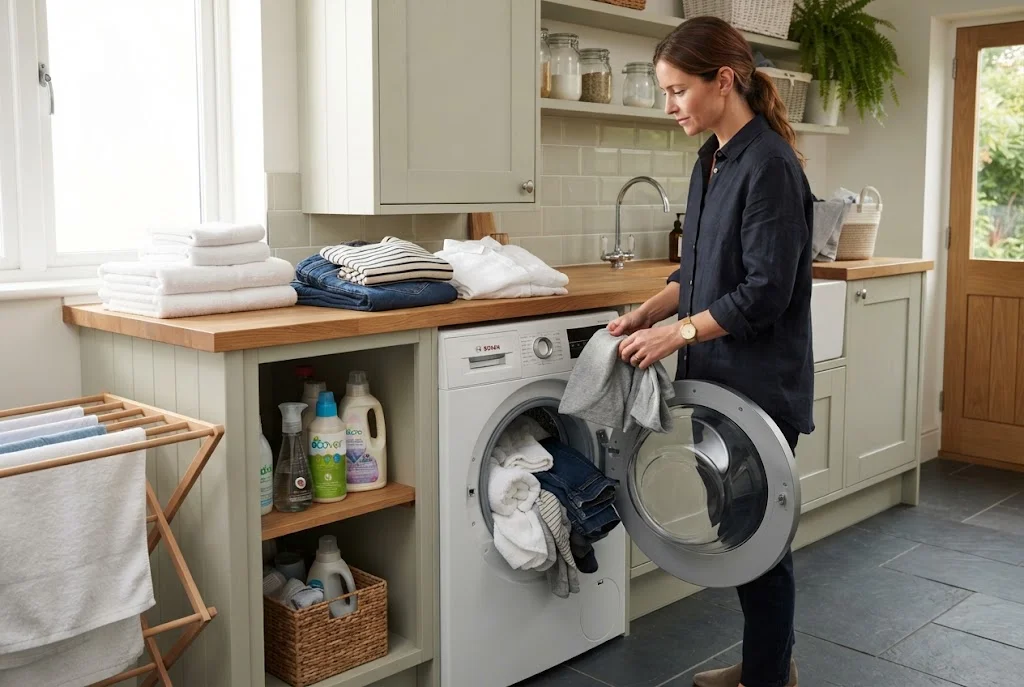
If you have ever wondered, can I wash towels with clothes, the short answer is yes, in some situations. However, towels are heavier, more absorbent and often washed differently from everyday clothing, so combining them is not always the best option.
Whether you can put towels and clothes in the same washing machine depends on the fabric, colours, care labels, wash temperature and the type of clothing involved. By understanding these factors, you can save time while avoiding lint, colour transfer, fabric damage and poorly washed laundry.
Can I Wash Towels with Clothes?
You can wash towels with some types of clothing, provided that the garments have compatible care instructions. For example, everyday cotton items that can tolerate the same wash temperature and programme may be suitable for a mixed load.
However, combining towels with delicate garments, dark clothing that sheds colour or items that require a completely different wash cycle is usually best avoided.
Towels also produce lint, particularly when they are new. That lint can stick to certain fabrics and make dark clothes look covered in tiny fibres. Heavy towels can also create a different washing environment from lightweight garments.
For the best results, think about the fabrics and care requirements rather than simply filling the washing machine whenever there is enough laundry for a load.
When Is It Safe to Wash Towels with Clothes?
A mixed towel-and-clothing load is more appropriate when the items share similar washing requirements. Before putting everything together, check several basic factors.
Check the Wash Temperature
The towels and clothes should be suitable for the same temperature. If your towels require a warmer wash while a particular garment must be washed at a lower temperature, separating the loads is the safer choice.
Always follow the care labels rather than assuming that all cotton clothing can tolerate the same heat as towels.
Consider the Fabric
Robust cotton garments may be more suitable for a mixed load than delicate materials. Towels can be rougher on lightweight fabrics because of their texture and weight.
Avoid combining towels with delicate lingerie, silk, wool, lace or other garments that require gentle handling unless the care instructions specifically allow it.
Separate Similar Colours
Colour sorting still matters when washing towels with clothes. A new dark towel can release dye, while brightly coloured garments may also affect lighter laundry.
Wash whites separately from colours and take extra care with new towels or clothing that may not be colourfast.
When Should You Wash Towels Separately?
There are several situations where washing towels separately makes more sense. If you have enough towels to create a full load, a dedicated towel wash can make the process easier and more efficient.
Towels are particularly absorbent, so they become heavy when wet. Washing several large bath towels together creates a substantial load for the machine. Adding lightweight clothing can make sorting and balancing more complicated without necessarily improving the wash.
You should also separate towels when they are heavily soiled, particularly if they have been used for cleaning, sports or other activities where they may contain substantial dirt or product residue.
Keeping towels separate can also help reduce lint on your clothes. This is particularly useful when washing dark garments or fabrics with smooth surfaces that show loose fibres easily.
How Do You Wash Towels in the Washing Machine?
If you are asking how do you wash towels in the washing machine, start by checking the care labels and sorting the towels by colour. Remove any items from pockets and make sure the washing machine is not overloaded.
Use a suitable detergent and select a programme appropriate for the towel fabric. Many everyday cotton towels are designed to tolerate regular machine washing, but the correct temperature should always be based on the care instructions.
Do not pack the drum so tightly that the towels cannot move freely. Towels need sufficient space for water and detergent to circulate through the load.
How Much Detergent Should You Use?
Use the detergent quantity recommended by the manufacturer for your load size and water conditions. Adding extra detergent does not automatically make towels cleaner.
Too much detergent can leave residue behind, which may affect how towels feel and absorb moisture. If your towels begin to feel stiff or coated, reviewing your detergent quantity and washing routine may help.
How to Machine Wash Towels Correctly
Learning how to machine wash towels is mostly about choosing compatible settings and avoiding common mistakes.
- Sort towels by colour. Keep white towels separate from darker or strongly coloured items.
- Check the care labels. Confirm the recommended temperature and washing method.
- Do not overload the drum. Towels need room to move during the wash.
- Use an appropriate detergent. Follow the dosage instructions rather than adding extra product.
- Select the correct programme. Use a cycle that matches the fabric and care instructions.
- Remove towels promptly. Take them out after the cycle finishes to reduce the chance of musty smells.
- Dry them properly. Follow the care label and choose an appropriate drying method.
What Clothes Should Not Be Washed with Towels?
Although some clothes can be safely combined with towels, certain garments are better kept separate.
- Delicate fabrics: Lightweight materials can be affected by the heavier towel load.
- Wool: Wool often requires a specialised wash programme.
- Silk: Silk requires gentle handling and may not be suitable for a standard towel cycle.
- New dark garments: These can release dye onto lighter towels.
- Lint-sensitive clothing: Smooth fabrics may collect towel fibres.
- Garments requiring cold or gentle washing: These may not be compatible with a regular towel cycle.
- Clothing with special finishes: Follow the manufacturer’s specific care instructions.
Can You Wash Towels with Jeans?
Jeans and towels can sometimes be washed together if their colours, fabrics and care instructions are compatible. However, there are good reasons to separate them.
New or dark denim can release dye, particularly during its first few washes. Towels can also produce lint that may attach to denim.
If you do combine them, choose a temperature and programme that is appropriate for both items and make sure the load is not too large. When in doubt, washing denim separately is a simple way to reduce the risk of colour transfer.
Can You Wash Towels with Underwear?
From a purely washing-machine perspective, some underwear may tolerate the same cycle as towels. However, underwear and towels have different fabric structures and care requirements, so separating them can provide better results.
Delicate underwear should not be placed in a heavy towel load. Bras, lace garments and items with elastic components may require a gentler programme or protective laundry bag.
For everyday cotton underwear that has compatible care instructions, a mixed load may be possible, but always follow the individual garment labels.
Why Do Towels Leave Lint on Clothes?
Towels are made from absorbent fibres that can release loose fibres during washing and drying. New towels are often particularly prone to shedding lint.
When you wash towels with clothes, those loose fibres can attach themselves to fabrics with a smoother surface. Dark garments tend to make this problem especially noticeable.
Washing towels separately is one of the simplest ways to reduce the problem. If you regularly find fibres on your clothing, also check the condition of the towels and washing machine filter where applicable.
How to Wash Towels Without Making Them Stiff
Towels should feel clean and absorbent after washing rather than coated with detergent or excessively stiff. Several habits can help maintain their texture.
First, avoid overloading the washing machine. A tightly packed drum can prevent proper rinsing. Second, use the recommended amount of detergent instead of assuming that more product will produce softer laundry.
When using fabric conditioner, follow the product instructions and consider whether it is suitable for towels. Excessive use of fabric softener can affect the absorbency of some towels by coating the fibres.
Dry towels thoroughly and promptly. If you use a tumble dryer, follow the care label and select an appropriate setting rather than relying on maximum heat.
Should Towels Be Washed in Hot Water?
The appropriate wash temperature depends on the towel’s care instructions and how heavily it is soiled. Do not automatically choose the hottest setting simply because the item is a towel.
Higher temperatures can use more energy and may contribute to fabric wear over time. On the other hand, some towels are specifically designed for warmer washes.
The care label should therefore be your starting point. If you are washing towels alongside clothes, choose a temperature that is safe for every item in the load.
How Often Should You Wash Towels?
How frequently a towel needs washing depends on how it is used, how quickly it dries and the environment in which it is kept.
Bath towels should be allowed to dry fully between uses rather than being left damp in a pile. If a towel remains damp for long periods or develops an unpleasant smell, it should be washed rather than repeatedly reused.
Hand towels and towels used by multiple people may require more frequent washing because they are handled more often.
Can I Wash Towels with Clothes? The Bottom Line
So, can I wash towels with clothes? Yes, but only when the items are compatible. Check the care labels, match colours, choose a suitable wash temperature and avoid combining towels with delicate or lint-sensitive clothing.
For everyday cotton garments that have similar care requirements, combining them with towels can be convenient. However, washing towels separately often produces better results, particularly when dealing with new towels, dark clothing or delicate fabrics.
Once you understand how to wash towels washing machine routines correctly, you can make better decisions about every load. The goal is simple: give each fabric the washing conditions it needs while avoiding unnecessary wear, colour transfer and lint.
