

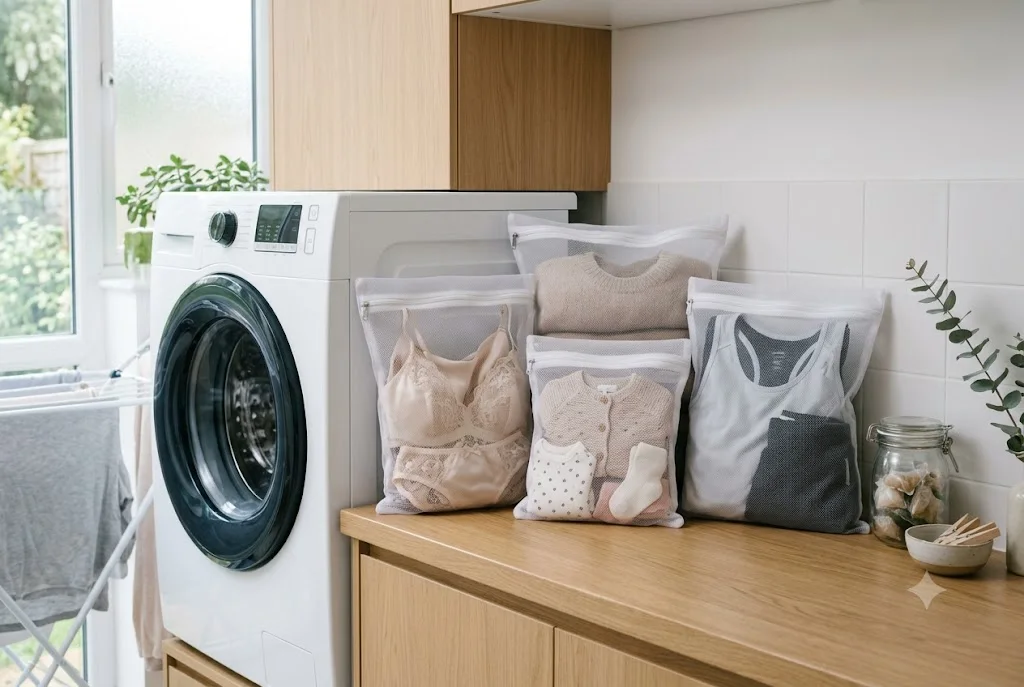
Delicate fabrics require extra care to stay looking their best. Using washing bags for delicates is one of the easiest ways to reduce wear and tear during every wash cycle. Whether you’re washing lingerie, lace, knitwear, baby clothes, sportswear, or garments with zips and embellishments, a quality washing bag helps minimise friction, stretching, and snagging inside the washing machine.
For UK households looking to extend the lifespan of their clothing, washing bags are an affordable laundry essential. In this guide, you’ll learn how they work, which fabrics benefit most, and how to use them correctly for better laundry results.
What Are Washing Bags for Delicates?
Washing bags for delicates, often called washing nets, are fine mesh bags designed to protect clothing during machine washing. Clothes are placed inside the bag before being added to the washing machine, creating a protective barrier that reduces direct contact with other garments and the drum.
Most washing bags feature a zip or secure fastening to keep clothing safely enclosed throughout the wash cycle.
Why Use a Washing Net?
A washing net helps protect delicate fabrics while still allowing water and detergent to circulate freely. This means your clothes receive an effective clean without unnecessary damage.
Benefits include:
- Reduces snagging and stretching.
- Protects lace and delicate fabrics.
- Prevents bra straps from tangling.
- Keeps socks and baby clothes together.
- Minimises friction between garments.
- Helps clothing retain its shape.
Which Clothes Should Be Washed in Laundry Bags?
Many garments benefit from additional protection during washing.
Lingerie
Bras, underwear, and lace garments are among the most common items washed inside protective mesh bags.
Knitwear
Lightweight knitwear and fine wool garments are less likely to stretch or snag when placed inside a washing bag.
Sportswear
Technical fabrics and compression clothing can last longer when protected from friction during washing.
Baby Clothes
Small baby items often become tangled with larger garments. A washing net helps keep them together.
Clothing with Zips or Embellishments
Garments featuring sequins, beads, hooks, or decorative details benefit from the extra protection provided by mesh laundry bags.
How to Use Washing Bags for Delicates Correctly
Don’t Overfill the Bag
Leave enough room for clothing to move freely inside the bag. Overloading reduces cleaning performance.
Close Fastenings
Zip up garments and fasten hooks before washing to reduce snagging.
Select the Correct Wash Cycle
Using a gentle or delicate programme helps protect sensitive fabrics even further.
Use the Right Detergent
Choose a detergent suitable for delicate fabrics and always follow the care label instructions.
Choosing the Right Washing Net
Not all washing bags are identical. Consider these features before buying:
- Fine yet durable mesh material.
- Strong zip with protective cover.
- Multiple sizes for different garments.
- Reinforced stitching.
- Breathable construction for effective cleaning.
Common Laundry Mistakes to Avoid
- Overfilling washing bags.
- Mixing heavy towels with delicate clothing.
- Ignoring garment care labels.
- Using excessively hot water.
- Leaving zips open.
- Using harsh wash programmes for delicate fabrics.
Drying Delicate Clothes After Washing
After washing, many delicate garments should be air dried rather than tumble dried. Drying naturally helps fabrics maintain their shape and reduces the risk of shrinkage.
An indoor clothes drying rack provides excellent airflow for delicate garments while helping preserve fabric quality.
If you need faster drying during colder months, our guide to the best heated clothes airer explains how gentle heated drying can be suitable for many everyday garments.
Should You Use a Portable Dryer?
Some delicate fabrics should never be exposed to high heat. Always check clothing labels before using any drying appliance.
If you regularly dry everyday laundry indoors, our article on the portable dryer for clothes explains when compact drying appliances may be a practical option.
Looking After Your Washing Bags
Proper care helps washing bags last for many laundry cycles.
- Rinse after heavily soiled loads.
- Check the zip regularly.
- Allow bags to air dry completely.
- Store flat when not in use.
- Replace damaged mesh promptly.
Fabric Care Guidance
Always follow the manufacturer’s care instructions for each garment. The NHS guidance on washing clothes and bedding also highlights the importance of appropriate washing temperatures and proper laundry hygiene for maintaining clean clothing.
Final Thoughts
Using washing bags for delicates is a simple but effective way to protect your favourite clothing from unnecessary wear. Whether you’re washing lingerie, knitwear, sportswear, or baby clothes, a quality washing net helps reduce friction, prevent tangles, and extend the life of delicate fabrics. Combined with the correct wash programme and careful air drying, these affordable accessories can make a noticeable difference to your everyday laundry routine.
