

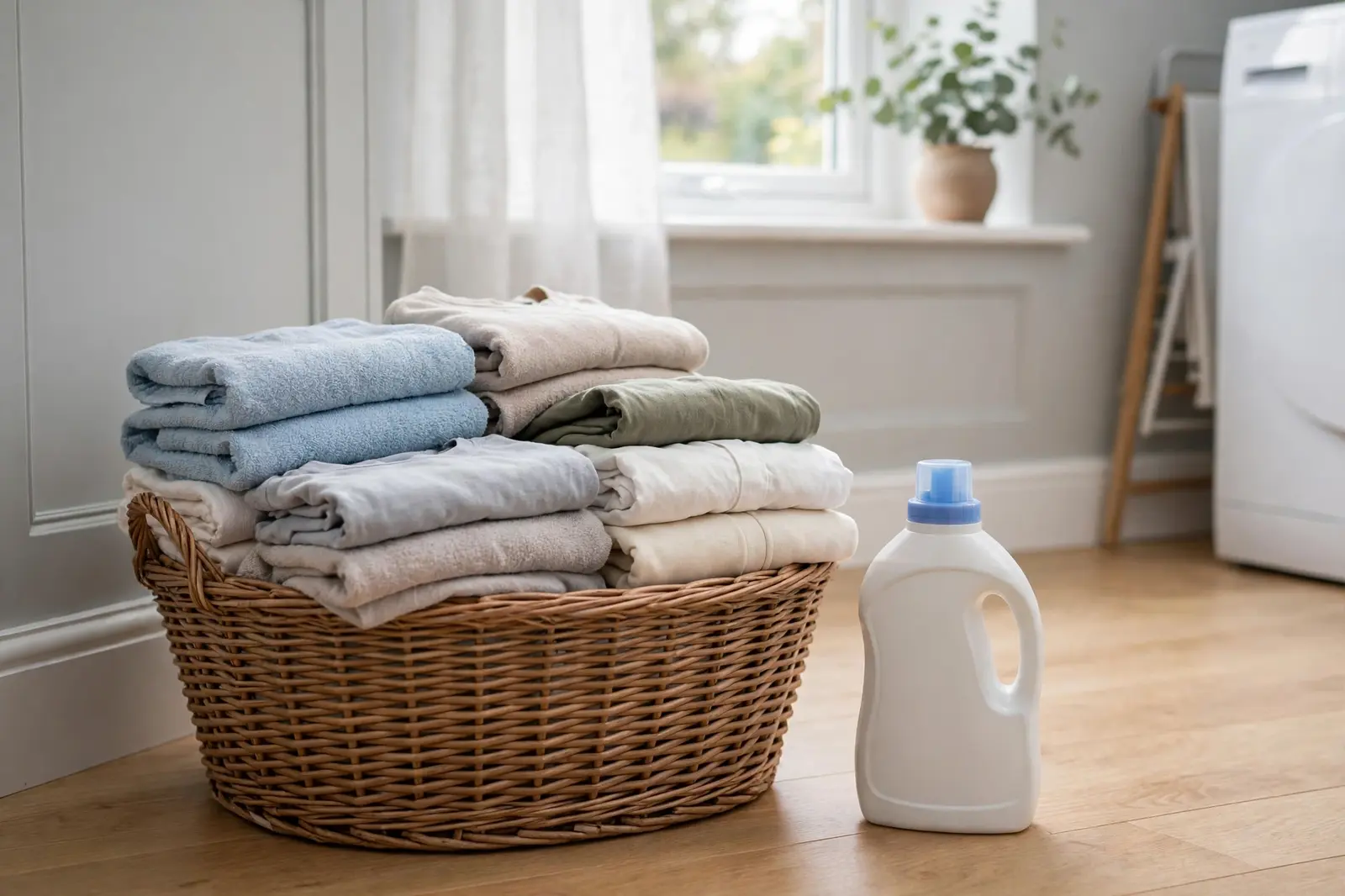
Most laundry damage is not caused by a bad washing machine. It is caused by small, everyday mistakes that seem harmless at the time: the wrong temperature, too much detergent, or a pocket nobody checked. Over months, these mistakes fade colours, stretch fabrics, and wear clothes out far sooner than they should. The good news is that every one of them is easy to avoid once you know what to look for.
This guide covers the laundry mistakes that ruin clothes most often, and the simple fixes that stop them. None of these fixes costs money or takes extra time. They just need a little attention at the right moment.
Mistake 1: Using too much detergent
More detergent does not mean cleaner clothes. Too much leaves a sticky residue on fabric that traps dirt, dulls colours, and irritates skin. It also builds up inside the machine, which leads to smells and poor rinsing over time.
Use the amount shown on the detergent packaging for your load size and water hardness, and no more. If your clothes come out feeling stiff or smelling strongly of detergent, you are almost certainly using too much. Cut the dose in half for a few washes and see the difference. A real-world example: a household that halved its detergent dose found their towels softer within two weeks, and the musty smell in the machine disappeared without any cleaning products.
Mistake 2: Washing everything at the wrong temperature
Hot water feels like the safe choice, but it shrinks cotton, fades colours, and sets some stains permanently. Most everyday washing works well at 30 degrees, and modern detergents are made for it. Save 40 degrees for bedding and towels, and 60 degrees for items that genuinely need a hygienic wash.
The care label is your guide, not a suggestion. Check it before the first wash of any new item, especially wool, silk, and anything with a print. If you are unsure, wash cool. Cool water rarely damages anything, while hot water can ruin a favourite item in a single cycle. Our guide to choosing the right laundry cleaner explains how detergent and temperature work together.
Mistake 3: Overloading the machine
A full drum feels efficient, but clothes packed tight cannot move, so water and detergent never reach every fibre. The result is clothes that come out less clean, more creased, and sometimes still smelling of sweat. Overloading also strains the machine and shortens its life.
Fill the drum to about three quarters and no more. You should be able to fit a flat hand between the top of the load and the drum. If you have a large family, two smaller loads beat one overloaded load every time, because both come out properly clean. Drying matters too: clothes dried with space around them crease less, as our guide to drying clothes fast explains.
Mistake 4: Forgetting to check pockets
Tissues are the classic pocket disaster, leaving white flecks over an entire dark load. But pens, coins, and keys cause worse damage: ink stains that never come out, zips scratched by loose metal, and in rare cases a damaged drum seal.
Make pocket-checking part of the routine. A quick pat of each pocket as you load the machine takes seconds and saves hours of rescue work. Turn jeans and printed tops inside out at the same time, which protects colours and prints during the wash. If a tissue does slip through, our guide to removing lint from clothes will help clean up the mess.
Mistake 5: Leaving wet clothes in the machine
Damp clothes left in the drum start to smell musty within a few hours, and the creases set deep. In warm weather, mildew can follow. This is one of the most common laundry mistakes, and one of the easiest to fix: take clothes out as soon as the cycle ends.
Set a timer on your phone when you start the wash, or run the machine when you know you will be home to unload it. Shake each item out as you remove it, which straightens the fibres and reduces wrinkles before drying. Clothes handled this way often need no ironing at all, and if a few wrinkles remain, our guide to removing wrinkles without an iron covers the quick fixes.
Mistake 6: Ignoring stains until wash day
A stain left for days sets into the fabric and becomes far harder to remove. Coffee, sweat, and food marks are much easier to deal with in the first hour than after a week in the laundry basket.
Blot a fresh stain straight away with cold water, never hot, and never rub it, which pushes it deeper into the fibres. Treat it before washing: a little washing-up liquid on grease, white vinegar on sweat marks, or a stain remover left for ten minutes. Our guides to removing deodorant stains and using bleach safely on clothes show how to handle the most common stains without damaging the fabric.
Mistake 7: Drying clothes the wrong way
High dryer heat shrinks cotton and damages elastic, while drying clothes in a damp, airless room leaves them smelling musty. The right method depends on the fabric: air dry delicates and wool flat, use low or medium heat in the dryer for sturdy cottons, and always leave space for air to move.
Hang shirts on hangers and peg trousers by the waistband so they dry straight. If you use a dryer, clean the lint filter after every load, since a clogged filter makes drying slower and less even. Our guide to cleaning your laundry machine lint trap explains the simple maintenance that keeps drying working well.
Mistake 8: Using the wrong product for the fabric
Not every product suits every fabric. Bleach on colours, fabric conditioner on towels, and harsh stain removers on wool all cause damage that cannot be undone. Towels washed with conditioner lose their absorbency, and delicates treated with strong chemicals can weaken and tear.
Read the product label as well as the care label, and match the product to the fabric. Keep a small set of products for different jobs: a gentle detergent for delicates, a colour-safe stain remover for everyday marks, and bleach only for whites that the label allows. Using the right product is cheaper than replacing ruined clothes, and it keeps fabrics in good condition for far longer.
Small fixes, longer-lasting clothes
None of these mistakes needs a new machine, a new detergent, or more time. Use less detergent, wash cooler, load the drum properly, check pockets, unload promptly, treat stains early, and dry clothes with care. Together, these small fixes keep colours brighter, fabrics stronger, and clothes lasting far longer than they would otherwise.
For a routine that puts all of this together, see our guide to simple laundry routine hacks, and the washer dryer combo guide if you are short on space.
